What Is Cheap Dopamine (And Should I Be Concerned?)
If you’ve opened social media lately, you couldn’t have missed this whole “cheap dopamine” trend. Especially with New Year’s resolutions — which we’ve all probably abandoned by now — this kind of content has exploded, and influencers have been hammering it into our heads from every angle.
Wellbeing
Feb 9, 2026
6 min


But what are people actually talking about when they keep telling you to stop consuming “cheap dopamine”? Is it just a trend, another “alpha entrepreneur” thing, or is it something scientifically proven?
So, introductions first. I’m Laureline. I’m a product designer, and for nearly 10 years I’ve been working on problematic phone use (since the idea of “addiction” still isn’t officially recognized by the WHO). For the past 4 years, I’ve been working on Jomo, an app I co-created with Thomas, its developer. We’ve written plenty of articles, and we’ll keep doing it as long as this topic stays relevant. So if you’re as interested as we are, feel free to check out our blog. Otherwise, enjoy the read!
Dopamine: A Quick Recap Before We Continue
Dopamine, chemistry, hormones, happiness… You hear these words everywhere. Sometimes they’re used incorrectly, sometimes they’re not even defined. The result? It’s hard to understand what’s really going on. So you know what — let’s do a quick reset.
Dopamine is a type of monoamine neurotransmitter. It’s made in your brain and acts as a chemical messenger, communicating messages between nerve cells in your brain and the rest of your body.
There you go: a definition supervised by the medical and research world. To paraphrase and simplify: dopamine is a neurotransmitter (a molecule used by the brain) that links intention / the desire to act with action itself.
Some people like to call it the “motivation hormone.”
The thing about dopamine — like many molecules in your body — is that it’s “moving,” “fluid”… meaning its level goes up or down depending on your lifestyle. And that’s where the problem begins.
High Dopamine = Low Motivation
That sounds paradoxical: if dopamine manages your motivation, and your body produces a lot of it, you should feel constantly fired up, right?
Yes… but no.
The more your dopamine is stimulated continuously, the less motivation you have for the important stuff. I know — it sounds counterintuitive, but that’s exactly how the system works.
Dopamine helps measure: “Is this effort worth it?” If your brain gets tons of dopamine all day long, it starts thinking and learning: “Why would I make that kind of effort… can’t I generate dopamine with less effort — and especially right now?”
Because no, your brain isn’t designed to suffer. It’s an extremely energy-hungry organ. Every calculation, every effort, every decision costs energy. So when your body can save some, it takes shortcuts.
Reading a book can generate dopamine. Scrolling can, too. The difference is that one is easy to get, while the other requires effort. You see where this is going? Yep. Your brain will choose scrolling. Easier. Faster. No decision needed. The choice gets made for you.
Low Dopamine = Low Motivation
So… does that mean it’s better to have less dopamine?
Again: yes… but no.
For a different reason. When dopamine is too low, you don’t even have the spark to start. When it’s low, everything feels like too much effort, nothing seems interesting, you procrastinate… even on things you normally enjoy, and you feel flat.
And that’s not laziness. It’s a lack of signal.
Basically, compared to producing too much dopamine:
If you produce too much, things become too “easy,” and you build tolerance. You need more and more to feel satisfied. It turns into a vicious cycle: either you choose low-value but highly stimulating actions (scrolling more / longer), or you escalate into riskier stimulation (for example, consuming more shocking or violent content, or putting yourself in dangerous situations).
If you don’t produce enough, you stop seeking anything. You don’t have the energy for anything — and once again you end up retreating into activities that temporarily “numb” your brain to hide the emptiness (and once again, scrolling feels like a great remedy).
Cheap Dopamine vs. Good Dopamine
So what’s the solution to this impossible equation? Finding balance in how you produce dopamine — by choosing its quality.
Because yes: what you really want isn’t more dopamine. You want better dopamine. That’s what all those social media posts are talking about: “cheap dopamine” vs. “good dopamine” (see? we’re getting there — but we’re making you generate a little good dopamine first 😬).
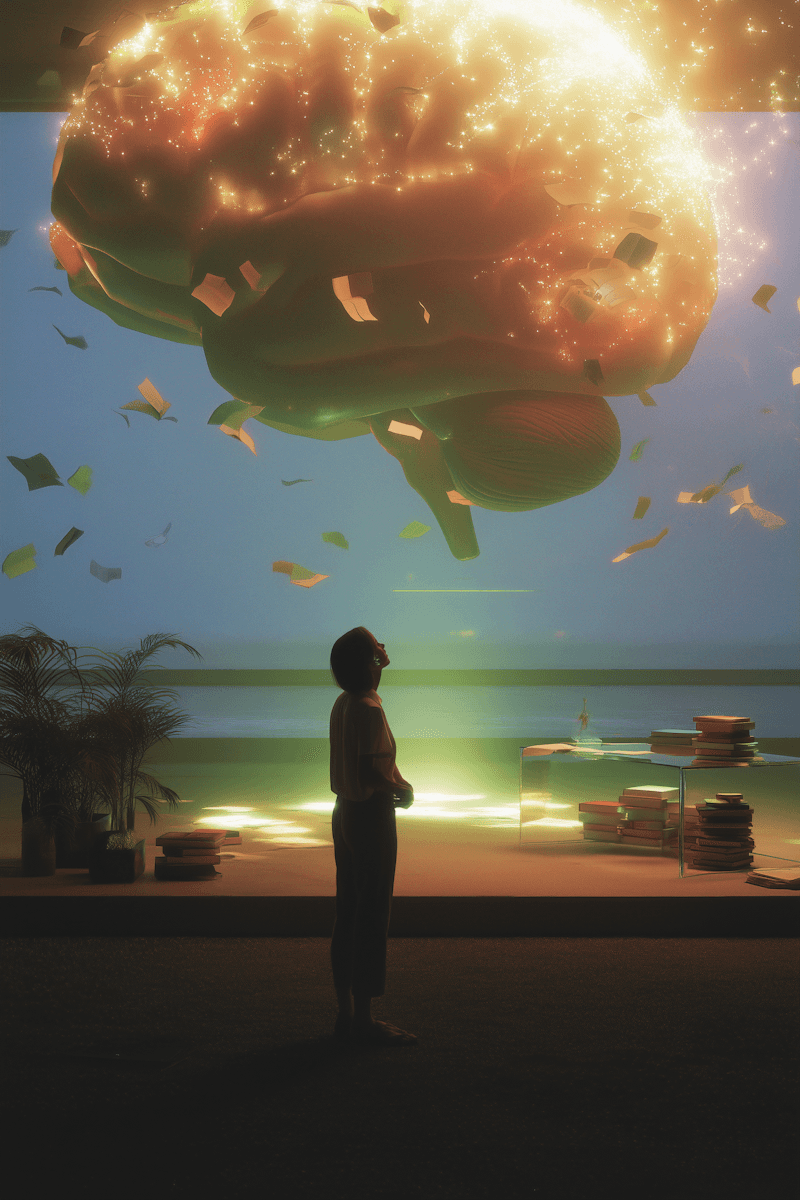
©️ Art by Tanzim
Spotting “Cheap Dopamine”
Cheap dopamine is produced instantly and without effort. Those are its two main traits. It’s also highly stimulating, but most importantly: it doesn’t leave you satisfied afterward. Result? You just want to go back as quickly as possible and grab another little shot.
Very high peak → Fast crash → Strong craving again.
What Generates “Cheap Dopamine”?
Mostly: scrolling on social media, short videos, notifications, sugar, snacking, binge-watching…
These are activities you don’t truly savor. You consume a lot, feel a very short-lived satisfaction, and then immediately want to dive back in and start over.
Understanding “Good Dopamine”
Good dopamine rises slowly and steadily, in proportion to effort. It requires a small initial push, but its effect lasts much longer. You feel real satisfaction — and most importantly, it reduces your urge to go looking for dopamine elsewhere. Like you’re “full.”
Gradual rise → long plateau → sense of accomplishment
What Generates “Good Dopamine”?
Relatively calm activities: reading, running, walking, cooking, deep work, talking with someone, learning something… These activities give you something — and you can benefit from them later too.
How Do You Know if What You’re Doing Is “Cheap” or “Good” Dopamine?
After you’ve done the activity, ask yourself one essential question: How do I feel 20 minutes AFTER?
If you feel restless, craving it, wanting to go back: that’s cheap.
If you feel calm, satisfied, grounded: that’s good.
It’s probably the simplest and most reliable test you can do. And most importantly: be honest with yourself. (You’re doing this for you — so if you lie, it only affects you.)
Why Is It So Hard? Why Does Cheap Dopamine Crush Good Dopamine?
The key is the cocktail that makes up cheap dopamine: easy access + very high stimulation. Scrolling TikTok is easy and entertaining, while doing the dishes is more annoying (not hard either, let’s not exaggerate) and less entertaining…
So of course, anything that takes effort starts to feel boring and bland: reading, working, walking… Deep down, those activities aren’t bad at all — quite the opposite — but your brain is so used to preferring easy, highly dopamine-generating activities that the equation gets solved fast.
Simply put: why suffer when you can sink into your couch, watch TikTok, and stuff your face with candy?
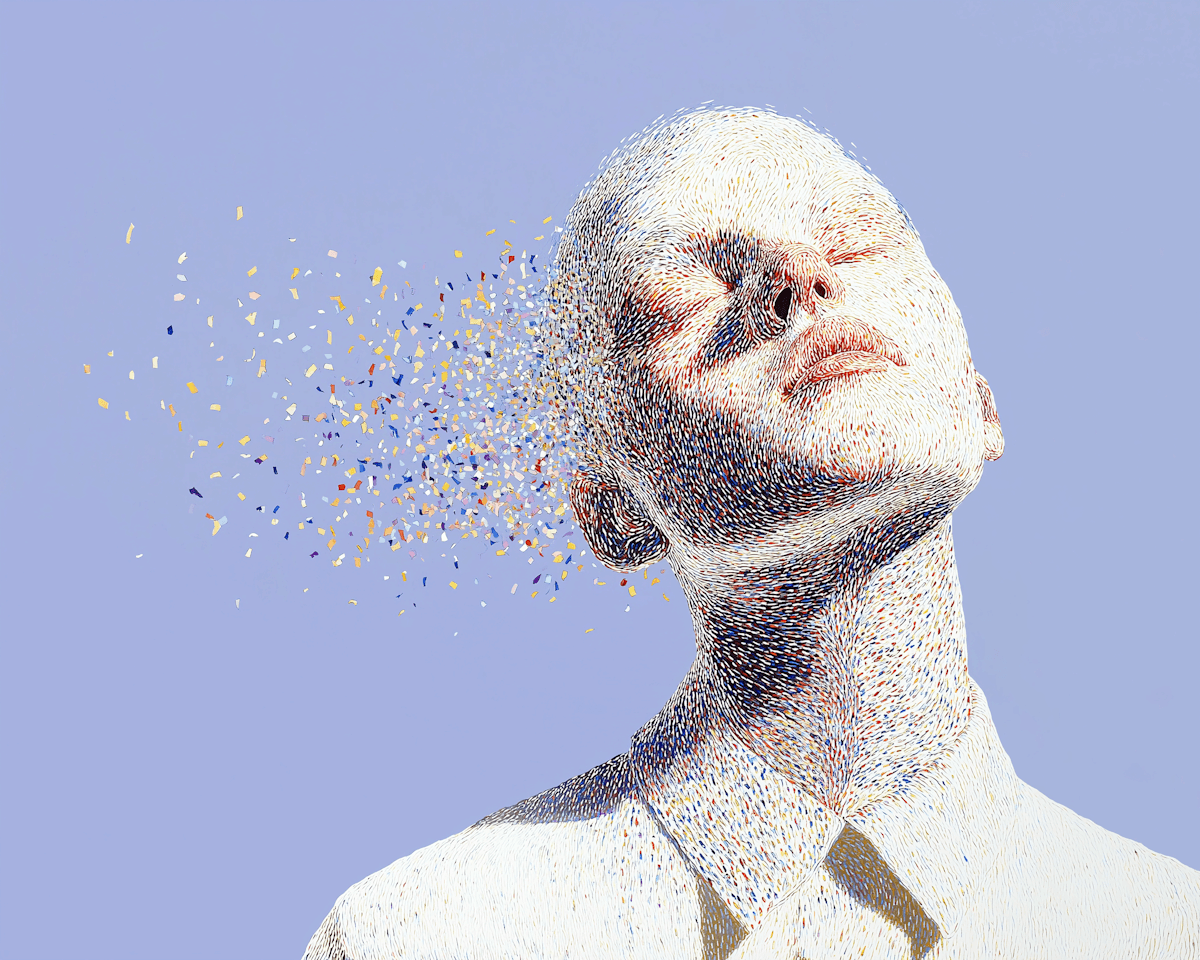
©️ Art by Dona Mara
So How Do You Reduce Cheap Dopamine (No BS)?
Like it or not: the key isn’t discipline. A lot of people are fighting the wrong enemy. The problem isn’t you — it’s what’s around you. It’s your environment, not your lack of discipline, that’s failing you.
“So I Don’t Lack Discipline?”
No.
You hear “You lack discipline,” “be strong,” “resist”… but no. It’s just easier to sell. It flatters the ego and gives you the illusion of instant control. But biologically, it’s wrong.
These influencers often sell mindsets and courses. Their sales technique targets you and your “inner demons,” because you’re the one holding the credit card. They want you to believe you’re fighting yourself. But you’re not.
In reality, you’re fighting systems built by thousands of engineers, hyper-optimized services designed to capture your attention, tested on millions of users… If you want to call it a “fight,” it’s not exactly fair.
“So I Need To Change My Environment?”
Yes.
Not “go live at the North Pole, cut off from the world” Don’t worry. (Although I do think our Inuit friends probably have a pretty great life.)
The truth behind people with “insane discipline” is simple: they often have fewer notifications, fewer apps (fewer distractions), strict rules, a phone treated like an object — not an identity (“this defines me, this is who I am”) — and strong environmental habits.
They took control of the playing field and shaped it to generate good dopamine, not the other way around. They didn’t hack their brain. Less sexy, but more true.

But what are people actually talking about when they keep telling you to stop consuming “cheap dopamine”? Is it just a trend, another “alpha entrepreneur” thing, or is it something scientifically proven?
So, introductions first. I’m Laureline. I’m a product designer, and for nearly 10 years I’ve been working on problematic phone use (since the idea of “addiction” still isn’t officially recognized by the WHO). For the past 4 years, I’ve been working on Jomo, an app I co-created with Thomas, its developer. We’ve written plenty of articles, and we’ll keep doing it as long as this topic stays relevant. So if you’re as interested as we are, feel free to check out our blog. Otherwise, enjoy the read!
Dopamine: A Quick Recap Before We Continue
Dopamine, chemistry, hormones, happiness… You hear these words everywhere. Sometimes they’re used incorrectly, sometimes they’re not even defined. The result? It’s hard to understand what’s really going on. So you know what — let’s do a quick reset.
Dopamine is a type of monoamine neurotransmitter. It’s made in your brain and acts as a chemical messenger, communicating messages between nerve cells in your brain and the rest of your body.
There you go: a definition supervised by the medical and research world. To paraphrase and simplify: dopamine is a neurotransmitter (a molecule used by the brain) that links intention / the desire to act with action itself.
Some people like to call it the “motivation hormone.”
The thing about dopamine — like many molecules in your body — is that it’s “moving,” “fluid”… meaning its level goes up or down depending on your lifestyle. And that’s where the problem begins.
High Dopamine = Low Motivation
That sounds paradoxical: if dopamine manages your motivation, and your body produces a lot of it, you should feel constantly fired up, right?
Yes… but no.
The more your dopamine is stimulated continuously, the less motivation you have for the important stuff. I know — it sounds counterintuitive, but that’s exactly how the system works.
Dopamine helps measure: “Is this effort worth it?” If your brain gets tons of dopamine all day long, it starts thinking and learning: “Why would I make that kind of effort… can’t I generate dopamine with less effort — and especially right now?”
Because no, your brain isn’t designed to suffer. It’s an extremely energy-hungry organ. Every calculation, every effort, every decision costs energy. So when your body can save some, it takes shortcuts.
Reading a book can generate dopamine. Scrolling can, too. The difference is that one is easy to get, while the other requires effort. You see where this is going? Yep. Your brain will choose scrolling. Easier. Faster. No decision needed. The choice gets made for you.
Low Dopamine = Low Motivation
So… does that mean it’s better to have less dopamine?
Again: yes… but no.
For a different reason. When dopamine is too low, you don’t even have the spark to start. When it’s low, everything feels like too much effort, nothing seems interesting, you procrastinate… even on things you normally enjoy, and you feel flat.
And that’s not laziness. It’s a lack of signal.
Basically, compared to producing too much dopamine:
If you produce too much, things become too “easy,” and you build tolerance. You need more and more to feel satisfied. It turns into a vicious cycle: either you choose low-value but highly stimulating actions (scrolling more / longer), or you escalate into riskier stimulation (for example, consuming more shocking or violent content, or putting yourself in dangerous situations).
If you don’t produce enough, you stop seeking anything. You don’t have the energy for anything — and once again you end up retreating into activities that temporarily “numb” your brain to hide the emptiness (and once again, scrolling feels like a great remedy).
Cheap Dopamine vs. Good Dopamine
So what’s the solution to this impossible equation? Finding balance in how you produce dopamine — by choosing its quality.
Because yes: what you really want isn’t more dopamine. You want better dopamine. That’s what all those social media posts are talking about: “cheap dopamine” vs. “good dopamine” (see? we’re getting there — but we’re making you generate a little good dopamine first 😬).

©️ Art by Tanzim
Spotting “Cheap Dopamine”
Cheap dopamine is produced instantly and without effort. Those are its two main traits. It’s also highly stimulating, but most importantly: it doesn’t leave you satisfied afterward. Result? You just want to go back as quickly as possible and grab another little shot.
Very high peak → Fast crash → Strong craving again.
What Generates “Cheap Dopamine”?
Mostly: scrolling on social media, short videos, notifications, sugar, snacking, binge-watching…
These are activities you don’t truly savor. You consume a lot, feel a very short-lived satisfaction, and then immediately want to dive back in and start over.
Understanding “Good Dopamine”
Good dopamine rises slowly and steadily, in proportion to effort. It requires a small initial push, but its effect lasts much longer. You feel real satisfaction — and most importantly, it reduces your urge to go looking for dopamine elsewhere. Like you’re “full.”
Gradual rise → long plateau → sense of accomplishment
What Generates “Good Dopamine”?
Relatively calm activities: reading, running, walking, cooking, deep work, talking with someone, learning something… These activities give you something — and you can benefit from them later too.
How Do You Know if What You’re Doing Is “Cheap” or “Good” Dopamine?
After you’ve done the activity, ask yourself one essential question: How do I feel 20 minutes AFTER?
If you feel restless, craving it, wanting to go back: that’s cheap.
If you feel calm, satisfied, grounded: that’s good.
It’s probably the simplest and most reliable test you can do. And most importantly: be honest with yourself. (You’re doing this for you — so if you lie, it only affects you.)
Why Is It So Hard? Why Does Cheap Dopamine Crush Good Dopamine?
The key is the cocktail that makes up cheap dopamine: easy access + very high stimulation. Scrolling TikTok is easy and entertaining, while doing the dishes is more annoying (not hard either, let’s not exaggerate) and less entertaining…
So of course, anything that takes effort starts to feel boring and bland: reading, working, walking… Deep down, those activities aren’t bad at all — quite the opposite — but your brain is so used to preferring easy, highly dopamine-generating activities that the equation gets solved fast.
Simply put: why suffer when you can sink into your couch, watch TikTok, and stuff your face with candy?

©️ Art by Dona Mara
So How Do You Reduce Cheap Dopamine (No BS)?
Like it or not: the key isn’t discipline. A lot of people are fighting the wrong enemy. The problem isn’t you — it’s what’s around you. It’s your environment, not your lack of discipline, that’s failing you.
“So I Don’t Lack Discipline?”
No.
You hear “You lack discipline,” “be strong,” “resist”… but no. It’s just easier to sell. It flatters the ego and gives you the illusion of instant control. But biologically, it’s wrong.
These influencers often sell mindsets and courses. Their sales technique targets you and your “inner demons,” because you’re the one holding the credit card. They want you to believe you’re fighting yourself. But you’re not.
In reality, you’re fighting systems built by thousands of engineers, hyper-optimized services designed to capture your attention, tested on millions of users… If you want to call it a “fight,” it’s not exactly fair.
“So I Need To Change My Environment?”
Yes.
Not “go live at the North Pole, cut off from the world” Don’t worry. (Although I do think our Inuit friends probably have a pretty great life.)
The truth behind people with “insane discipline” is simple: they often have fewer notifications, fewer apps (fewer distractions), strict rules, a phone treated like an object — not an identity (“this defines me, this is who I am”) — and strong environmental habits.
They took control of the playing field and shaped it to generate good dopamine, not the other way around. They didn’t hack their brain. Less sexy, but more true.
But what are people actually talking about when they keep telling you to stop consuming “cheap dopamine”? Is it just a trend, another “alpha entrepreneur” thing, or is it something scientifically proven?
So, introductions first. I’m Laureline. I’m a product designer, and for nearly 10 years I’ve been working on problematic phone use (since the idea of “addiction” still isn’t officially recognized by the WHO). For the past 4 years, I’ve been working on Jomo, an app I co-created with Thomas, its developer. We’ve written plenty of articles, and we’ll keep doing it as long as this topic stays relevant. So if you’re as interested as we are, feel free to check out our blog. Otherwise, enjoy the read!
Dopamine: A Quick Recap Before We Continue
Dopamine, chemistry, hormones, happiness… You hear these words everywhere. Sometimes they’re used incorrectly, sometimes they’re not even defined. The result? It’s hard to understand what’s really going on. So you know what — let’s do a quick reset.
Dopamine is a type of monoamine neurotransmitter. It’s made in your brain and acts as a chemical messenger, communicating messages between nerve cells in your brain and the rest of your body.
There you go: a definition supervised by the medical and research world. To paraphrase and simplify: dopamine is a neurotransmitter (a molecule used by the brain) that links intention / the desire to act with action itself.
Some people like to call it the “motivation hormone.”
The thing about dopamine — like many molecules in your body — is that it’s “moving,” “fluid”… meaning its level goes up or down depending on your lifestyle. And that’s where the problem begins.
High Dopamine = Low Motivation
That sounds paradoxical: if dopamine manages your motivation, and your body produces a lot of it, you should feel constantly fired up, right?
Yes… but no.
The more your dopamine is stimulated continuously, the less motivation you have for the important stuff. I know — it sounds counterintuitive, but that’s exactly how the system works.
Dopamine helps measure: “Is this effort worth it?” If your brain gets tons of dopamine all day long, it starts thinking and learning: “Why would I make that kind of effort… can’t I generate dopamine with less effort — and especially right now?”
Because no, your brain isn’t designed to suffer. It’s an extremely energy-hungry organ. Every calculation, every effort, every decision costs energy. So when your body can save some, it takes shortcuts.
Reading a book can generate dopamine. Scrolling can, too. The difference is that one is easy to get, while the other requires effort. You see where this is going? Yep. Your brain will choose scrolling. Easier. Faster. No decision needed. The choice gets made for you.
Low Dopamine = Low Motivation
So… does that mean it’s better to have less dopamine?
Again: yes… but no.
For a different reason. When dopamine is too low, you don’t even have the spark to start. When it’s low, everything feels like too much effort, nothing seems interesting, you procrastinate… even on things you normally enjoy, and you feel flat.
And that’s not laziness. It’s a lack of signal.
Basically, compared to producing too much dopamine:
If you produce too much, things become too “easy,” and you build tolerance. You need more and more to feel satisfied. It turns into a vicious cycle: either you choose low-value but highly stimulating actions (scrolling more / longer), or you escalate into riskier stimulation (for example, consuming more shocking or violent content, or putting yourself in dangerous situations).
If you don’t produce enough, you stop seeking anything. You don’t have the energy for anything — and once again you end up retreating into activities that temporarily “numb” your brain to hide the emptiness (and once again, scrolling feels like a great remedy).
Cheap Dopamine vs. Good Dopamine
So what’s the solution to this impossible equation? Finding balance in how you produce dopamine — by choosing its quality.
Because yes: what you really want isn’t more dopamine. You want better dopamine. That’s what all those social media posts are talking about: “cheap dopamine” vs. “good dopamine” (see? we’re getting there — but we’re making you generate a little good dopamine first 😬).

©️ Art by Tanzim
Spotting “Cheap Dopamine”
Cheap dopamine is produced instantly and without effort. Those are its two main traits. It’s also highly stimulating, but most importantly: it doesn’t leave you satisfied afterward. Result? You just want to go back as quickly as possible and grab another little shot.
Very high peak → Fast crash → Strong craving again.
What Generates “Cheap Dopamine”?
Mostly: scrolling on social media, short videos, notifications, sugar, snacking, binge-watching…
These are activities you don’t truly savor. You consume a lot, feel a very short-lived satisfaction, and then immediately want to dive back in and start over.
Understanding “Good Dopamine”
Good dopamine rises slowly and steadily, in proportion to effort. It requires a small initial push, but its effect lasts much longer. You feel real satisfaction — and most importantly, it reduces your urge to go looking for dopamine elsewhere. Like you’re “full.”
Gradual rise → long plateau → sense of accomplishment
What Generates “Good Dopamine”?
Relatively calm activities: reading, running, walking, cooking, deep work, talking with someone, learning something… These activities give you something — and you can benefit from them later too.
How Do You Know if What You’re Doing Is “Cheap” or “Good” Dopamine?
After you’ve done the activity, ask yourself one essential question: How do I feel 20 minutes AFTER?
If you feel restless, craving it, wanting to go back: that’s cheap.
If you feel calm, satisfied, grounded: that’s good.
It’s probably the simplest and most reliable test you can do. And most importantly: be honest with yourself. (You’re doing this for you — so if you lie, it only affects you.)
Why Is It So Hard? Why Does Cheap Dopamine Crush Good Dopamine?
The key is the cocktail that makes up cheap dopamine: easy access + very high stimulation. Scrolling TikTok is easy and entertaining, while doing the dishes is more annoying (not hard either, let’s not exaggerate) and less entertaining…
So of course, anything that takes effort starts to feel boring and bland: reading, working, walking… Deep down, those activities aren’t bad at all — quite the opposite — but your brain is so used to preferring easy, highly dopamine-generating activities that the equation gets solved fast.
Simply put: why suffer when you can sink into your couch, watch TikTok, and stuff your face with candy?

©️ Art by Dona Mara
So How Do You Reduce Cheap Dopamine (No BS)?
Like it or not: the key isn’t discipline. A lot of people are fighting the wrong enemy. The problem isn’t you — it’s what’s around you. It’s your environment, not your lack of discipline, that’s failing you.
“So I Don’t Lack Discipline?”
No.
You hear “You lack discipline,” “be strong,” “resist”… but no. It’s just easier to sell. It flatters the ego and gives you the illusion of instant control. But biologically, it’s wrong.
These influencers often sell mindsets and courses. Their sales technique targets you and your “inner demons,” because you’re the one holding the credit card. They want you to believe you’re fighting yourself. But you’re not.
In reality, you’re fighting systems built by thousands of engineers, hyper-optimized services designed to capture your attention, tested on millions of users… If you want to call it a “fight,” it’s not exactly fair.
“So I Need To Change My Environment?”
Yes.
Not “go live at the North Pole, cut off from the world” Don’t worry. (Although I do think our Inuit friends probably have a pretty great life.)
The truth behind people with “insane discipline” is simple: they often have fewer notifications, fewer apps (fewer distractions), strict rules, a phone treated like an object — not an identity (“this defines me, this is who I am”) — and strong environmental habits.
They took control of the playing field and shaped it to generate good dopamine, not the other way around. They didn’t hack their brain. Less sexy, but more true.

Your phone, your rules. Block on command and own your time.
For 30min
Everyday
On weekends
During workhours
From 10 pm to 8 am
For 7 days
All the time

Your phone, your rules. Block on command and own your time.
For 30min
Everyday
On weekends
During workhours
From 10 pm to 8 am
For 7 days
All the time

Your phone, your rules. Block on command and own your time.
For 30min
Everyday
On weekends
During workhours
From 10 pm to 8 am
For 7 days
All the time
A Method To Get There (Without Too Much Effort)?
Yes!
We’ve got a few keys. They’re not the only ones, but for us they’re the simplest to implement — and they produce visible results. And again: if you’re starting from a really bad baseline with tons of cheap dopamine, you’re not going to change your life with a snap of the fingers and a magic tutorial.
#1 – Turn Off Notifications
You see this advice everywhere. If it keeps getting repeated, it’s because today, 81% of Android users say YES to notifications when asked (51% on iPhone).
Why? “Maybe something interesting will happen, you never know”… Rarely. And in any case, even if the content is useless, it still generates cheap dopamine.
Anticipation → Dopamine → Checking.
Step 1: remove notifications. And before you go scrolling to find the tutorial, here it is:
Go to iPhone Settings.
Tap “Notifications.”
Here’s what I recommend:
Either disable notifications app by app.
Or create a “Scheduled Summary.”
Personally, I use a summary + I disable certain apps.
Tap “Scheduled Summary” and turn it on.
Choose a time to receive all your selected notifications at once. Mine is 7:00 pm.
Select the apps to include in the summary.
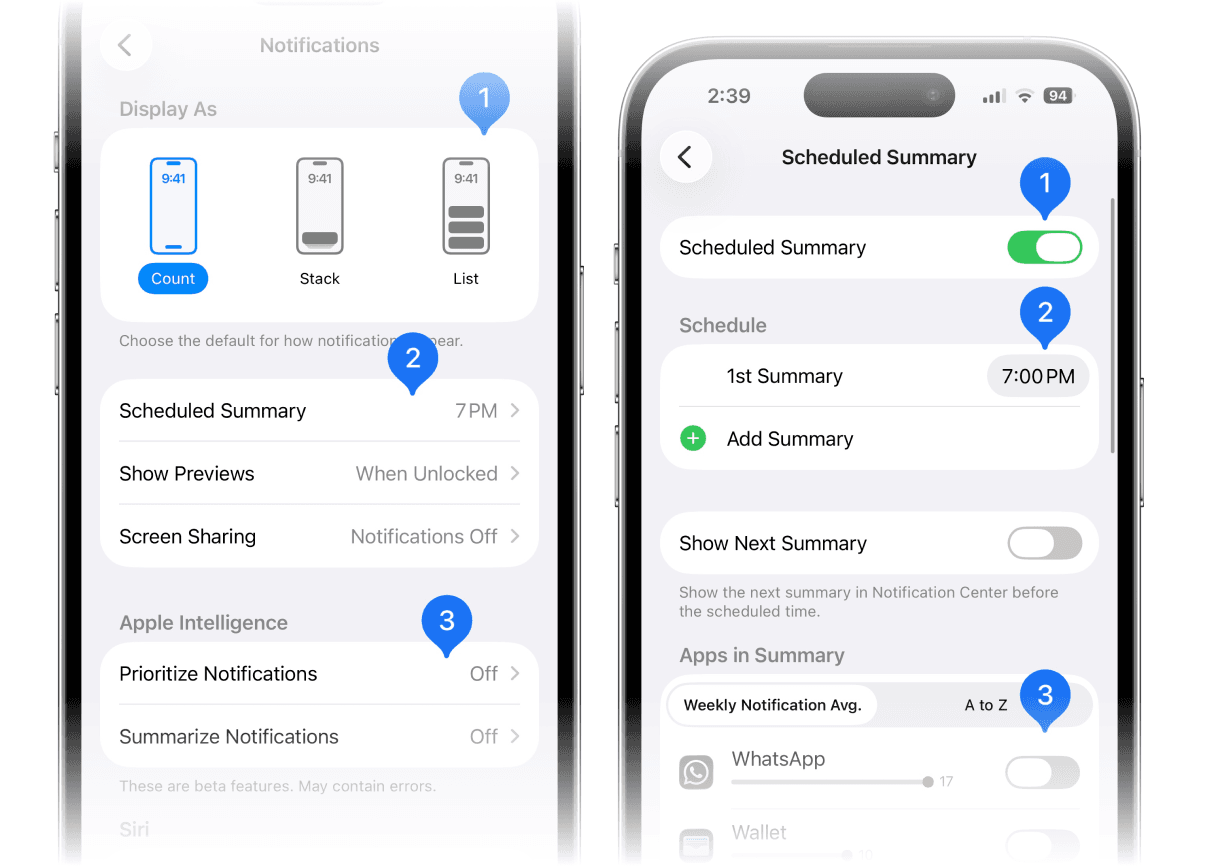
Turn off Apple Intelligence sorting (it decides to interrupt you even after you said NO):
Prioritize Notifications → set to Off.
Summarize Notifications → set to Off.
Set “Display As” (at the very top) to “Count” (so you’re not tempted to read).`
A life without notifications means: no anticipation, no dopamine spike, no sudden urge. You regain control over when you check your phone.
#2 – Add Friction Back (Delays, Limits…)
Your brain loves instant gratification. And in that sense, the phone is its best friend. You pick up your iPhone — no code needed (Face ID) — it’s unlocked, and boom, your favorite app (in a bright flashy color so you can’t miss it) is right there… one tap …
… And you’re off into a time vortex powered by cheap dopamine. Yuck.
So to avoid that, you want barriers at the entrance — to make cheap dopamine less accessible, and make beneficial actions just as accessible (or, in some cases, even easier). The idea: scrolling should be at least as hard as reading a book.
So you’ll add friction to opening apps — to accessing them at all. And to do that, you’ll use the app we’ve been building for 4 years: Jomo, available for free on the App Store.
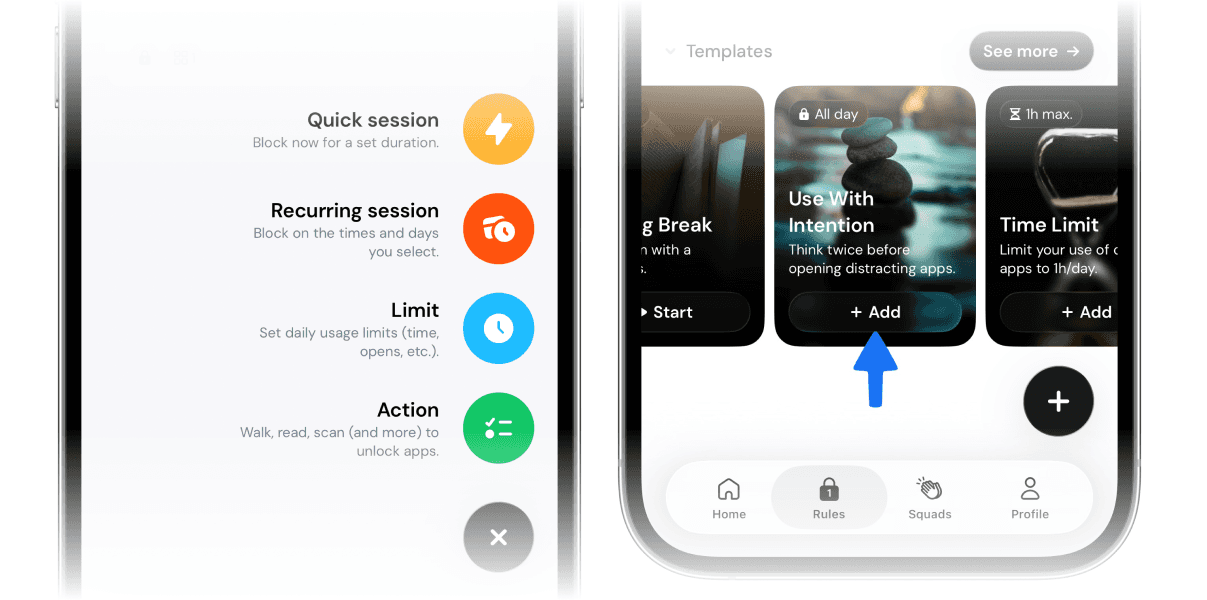
In Jomo, you’ll set up a rule called “Use With Intention.” It’s simple: by default, the selected apps are blocked. To access them, you have to complete an action. And of course, the time you spend on them will be limited. You can still consume — but in small, controlled doses.
Open Jomo, then go to Rules.
At the bottom, tap the “Use With Intention” template.
In Block → add your social apps to start.
In Active → set to Always-On.
In Breaks → enable only 4–5 breaks per day (that’s enough… even 5 breaks of 15 minutes is already 1h25 on those apps per day).

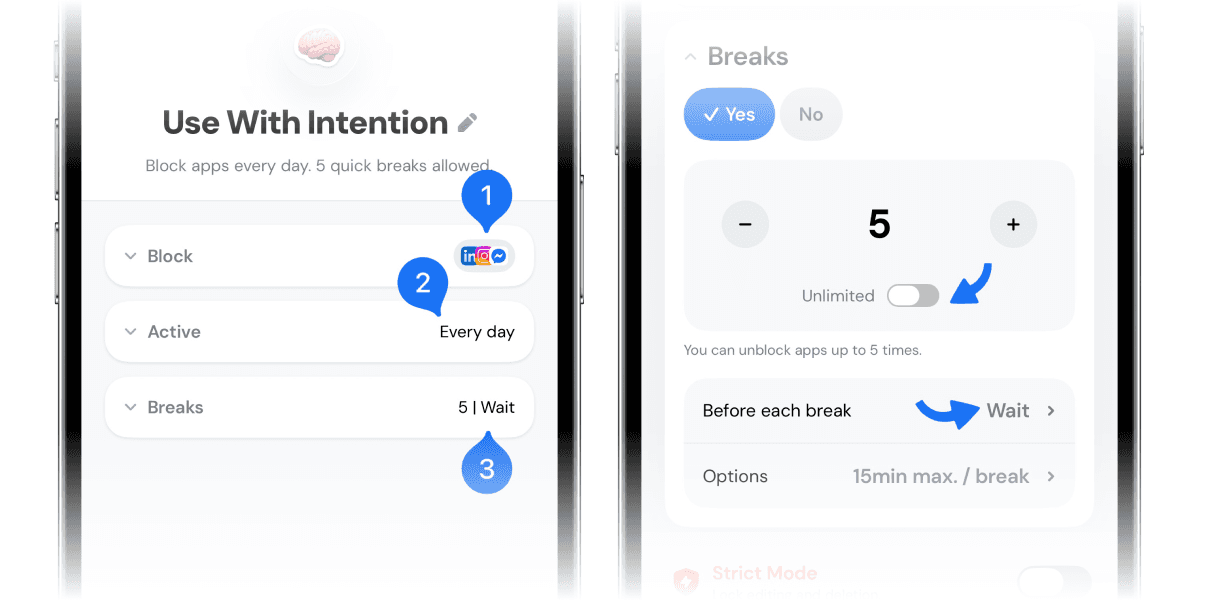
For the “action before your break,” the best options are:
Wait: you’ll have to wait before using it, and the delay increases.
Intention: you’ll have to say what you want to use your apps for.
Recopy: you’ll have to rewrite a long text that discourages you from using them.
Take a photo (AI): you’ll have to take a photo of a completed action to unlock (for example: dishes done, dishwasher emptied and put away, laundry hung up…)
Then all you have to do is tap “Schedule” to start.
If it feels frustrating at first, remember: the craving often fades before access arrives. Jomo isn’t your enemy — it’s your ally. It’s there to add back the friction that disappeared, and most importantly, to break the automatic reflex that’s controlling you.
#3 – Put Your Phone Physically Farther Away
If the source of all your problems stays right next to you, resisting the call of the scroll is way harder. So yes… you’ll need to create distance. And like the saying goes, “out of sight, close to the heart”… 😅 (personally, I prefer it being just far away, period).
A few good spots:
In the entryway
In a closet, or a kitchen drawer
In the living room (if you’re in the bedroom — or the opposite if you’re in the bedroom)
#4 – Create Screen-Free Moments (Morning & Evening)
In the morning and at night, your brain is very “plastic.” It doesn’t have much willpower yet. It takes whatever you give it. Starting with cheap dopamine sets the bar high. But ending your day with it isn’t great either.
If you start the day with scrolling: high stimulation all day.
If you end the day with scrolling: your brain stays in “seeking stimulation” mode.
So our recommendation is to keep social media out of those time slots and do something else instead. And at night, avoid binge-watching! I love reminding people: don’t worry, Netflix isn’t going anywhere tomorrow (especially the big franchises). So if you watch one episode per night, that’s fine. Plus, the pleasure becomes a ritual — and it lasts longer.
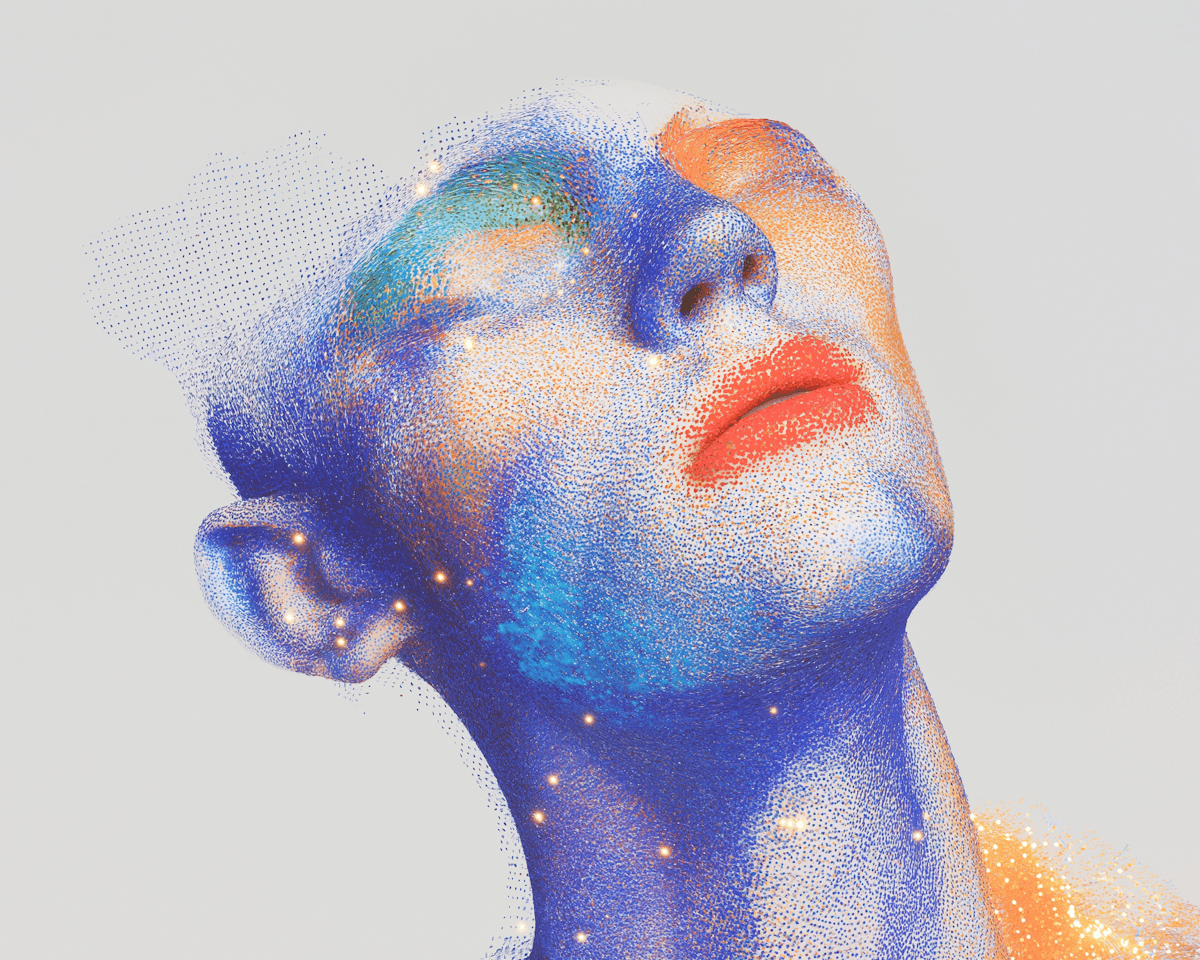
©️ Art by Dona Mara.
How Do You Increase Your “Good Dopamine”?
You guessed it: if your daily life is scroll, scroll, scroll… you’ll need a small initial effort. Not a huge change — just a little kick to get momentum. We know it can be really hard to change habits, so here’s a plan that’s genuinely sustainable.
#1 – Start Ridiculously Small
Good dopamine hates big beginnings (and so do we). So whatever you want to do more of, start small.
Reading? Don’t start with 1 hour a day. Start with 3 pages.
Walking? Don’t start with 4-hour hikes. Start with 5 minutes a day.
Writing? Don’t start a novel. Start with one sentence, one affirmation a day.
Drawing? Stop trying to be Picasso. Start with 10 minutes a day.
Running? Stop trying to be Eliud Kipchoge. Start with a 20-minute run.
The key is getting your brain to register: “This is doable” → so it wants to keep going.
#2 – Increase Time, Not Intensity
If you enjoy it, great. But don’t burn out. The method we recommend: increase duration, not intensity.
You started running and you like it? Don’t increase your speed — just extend your runs. Go from 3km to 7km, not from 7 min/km to 4 min/km.
You started reading and you like it? Don’t force yourself into “great literature.” Keep it accessible, but read more books / pages.
You started cooking and you like it? Don’t jump into gourmet meals — just cook more often (add desserts too — I’m definitely not saying that because I love desserts, nooooo).
The climb is slow, but it lasts.
#3 – Create More Silence Around You
Good dopamine needs spaaaaaaace. So give it some. Learn to focus on one thing at a time, to savor it, to let it be the main event — without another activity stealing the spotlight.
No podcasts while cooking.
No music while working.
No TV on while you’re doing DIY stuff.
Reduce background noise and distractions to increase sensitivity.
#4 – Build “Delayed Return” Activities
Again, ask yourself:
“Will this still feel good in 20 minutes?”
If yes, you’re probably doing something that generates good dopamine. Something that might not feel amazing immediately (especially at first), but will feel good later — and across your whole day. I swear, a great book does one thing: it makes you want to think about it nonstop.
If you’re out of ideas, here are a few:
Reading
Gentle movement (yoga, stretching, mobility, walking…)
Talking with friends or family
A personal project
Gardening, cooking, DIY
#5 – Accept the Boredom at the Start
If your brain is juiced up on cheap dopamine, stopping suddenly is like hitting a wall at 130 km/h. It’s going to hurt.
Yes, at first, activities will feel boring and bland. That’s normal. Your dopamine threshold needs to come back down to a healthy level. Right now, it’s probably way above baseline (we all know why). During that adjustment phase, things feel less fun, but it’s temporary. After that, life becomes interesting again.
Final Note
If it’s too easy to access, it’s probably cheap.
If it takes a bit of effort to start, it’s probably good.
It’s not a discipline problem — it’s an environment problem.
Good dopamine shows up when you slow down enough for your brain to become sensitive again.
Thanks for reading this far — it genuinely makes me happy. I wrote this article with my own brain and a little help from the internet. I add sources when I think of them and when I remember, so you can keep exploring. If you want to try the Jomo app, you can use my referral code FG2HA9 to get 14 free trial days on the paid version.
A Method To Get There (Without Too Much Effort)?
Yes!
We’ve got a few keys. They’re not the only ones, but for us they’re the simplest to implement — and they produce visible results. And again: if you’re starting from a really bad baseline with tons of cheap dopamine, you’re not going to change your life with a snap of the fingers and a magic tutorial.
#1 – Turn Off Notifications
You see this advice everywhere. If it keeps getting repeated, it’s because today, 81% of Android users say YES to notifications when asked (51% on iPhone).
Why? “Maybe something interesting will happen, you never know”… Rarely. And in any case, even if the content is useless, it still generates cheap dopamine.
Anticipation → Dopamine → Checking.
Step 1: remove notifications. And before you go scrolling to find the tutorial, here it is:
Go to iPhone Settings.
Tap “Notifications.”
Here’s what I recommend:
Either disable notifications app by app.
Or create a “Scheduled Summary.”
Personally, I use a summary + I disable certain apps.
Tap “Scheduled Summary” and turn it on.
Choose a time to receive all your selected notifications at once. Mine is 7:00 pm.
Select the apps to include in the summary.

Turn off Apple Intelligence sorting (it decides to interrupt you even after you said NO):
Prioritize Notifications → set to Off.
Summarize Notifications → set to Off.
Set “Display As” (at the very top) to “Count” (so you’re not tempted to read).`
A life without notifications means: no anticipation, no dopamine spike, no sudden urge. You regain control over when you check your phone.
#2 – Add Friction Back (Delays, Limits…)
Your brain loves instant gratification. And in that sense, the phone is its best friend. You pick up your iPhone — no code needed (Face ID) — it’s unlocked, and boom, your favorite app (in a bright flashy color so you can’t miss it) is right there… one tap …
… And you’re off into a time vortex powered by cheap dopamine. Yuck.
So to avoid that, you want barriers at the entrance — to make cheap dopamine less accessible, and make beneficial actions just as accessible (or, in some cases, even easier). The idea: scrolling should be at least as hard as reading a book.
So you’ll add friction to opening apps — to accessing them at all. And to do that, you’ll use the app we’ve been building for 4 years: Jomo, available for free on the App Store.
In Jomo, you’ll set up a rule called “Use With Intention.” It’s simple: by default, the selected apps are blocked. To access them, you have to complete an action. And of course, the time you spend on them will be limited. You can still consume — but in small, controlled doses.
Open Jomo, then go to Rules.
At the bottom, tap the “Use With Intention” template.
In Block → add your social apps to start.
In Active → set to Always-On.
In Breaks → enable only 4–5 breaks per day (that’s enough… even 5 breaks of 15 minutes is already 1h25 on those apps per day).


For the “action before your break,” the best options are:
Wait: you’ll have to wait before using it, and the delay increases.
Intention: you’ll have to say what you want to use your apps for.
Recopy: you’ll have to rewrite a long text that discourages you from using them.
Take a photo (AI): you’ll have to take a photo of a completed action to unlock (for example: dishes done, dishwasher emptied and put away, laundry hung up…)
Then all you have to do is tap “Schedule” to start.
If it feels frustrating at first, remember: the craving often fades before access arrives. Jomo isn’t your enemy — it’s your ally. It’s there to add back the friction that disappeared, and most importantly, to break the automatic reflex that’s controlling you.
#3 – Put Your Phone Physically Farther Away
If the source of all your problems stays right next to you, resisting the call of the scroll is way harder. So yes… you’ll need to create distance. And like the saying goes, “out of sight, close to the heart”… 😅 (personally, I prefer it being just far away, period).
A few good spots:
In the entryway
In a closet, or a kitchen drawer
In the living room (if you’re in the bedroom — or the opposite if you’re in the bedroom)
#4 – Create Screen-Free Moments (Morning & Evening)
In the morning and at night, your brain is very “plastic.” It doesn’t have much willpower yet. It takes whatever you give it. Starting with cheap dopamine sets the bar high. But ending your day with it isn’t great either.
If you start the day with scrolling: high stimulation all day.
If you end the day with scrolling: your brain stays in “seeking stimulation” mode.
So our recommendation is to keep social media out of those time slots and do something else instead. And at night, avoid binge-watching! I love reminding people: don’t worry, Netflix isn’t going anywhere tomorrow (especially the big franchises). So if you watch one episode per night, that’s fine. Plus, the pleasure becomes a ritual — and it lasts longer.

©️ Art by Dona Mara.
How Do You Increase Your “Good Dopamine”?
You guessed it: if your daily life is scroll, scroll, scroll… you’ll need a small initial effort. Not a huge change — just a little kick to get momentum. We know it can be really hard to change habits, so here’s a plan that’s genuinely sustainable.
#1 – Start Ridiculously Small
Good dopamine hates big beginnings (and so do we). So whatever you want to do more of, start small.
Reading? Don’t start with 1 hour a day. Start with 3 pages.
Walking? Don’t start with 4-hour hikes. Start with 5 minutes a day.
Writing? Don’t start a novel. Start with one sentence, one affirmation a day.
Drawing? Stop trying to be Picasso. Start with 10 minutes a day.
Running? Stop trying to be Eliud Kipchoge. Start with a 20-minute run.
The key is getting your brain to register: “This is doable” → so it wants to keep going.
#2 – Increase Time, Not Intensity
If you enjoy it, great. But don’t burn out. The method we recommend: increase duration, not intensity.
You started running and you like it? Don’t increase your speed — just extend your runs. Go from 3km to 7km, not from 7 min/km to 4 min/km.
You started reading and you like it? Don’t force yourself into “great literature.” Keep it accessible, but read more books / pages.
You started cooking and you like it? Don’t jump into gourmet meals — just cook more often (add desserts too — I’m definitely not saying that because I love desserts, nooooo).
The climb is slow, but it lasts.
#3 – Create More Silence Around You
Good dopamine needs spaaaaaaace. So give it some. Learn to focus on one thing at a time, to savor it, to let it be the main event — without another activity stealing the spotlight.
No podcasts while cooking.
No music while working.
No TV on while you’re doing DIY stuff.
Reduce background noise and distractions to increase sensitivity.
#4 – Build “Delayed Return” Activities
Again, ask yourself:
“Will this still feel good in 20 minutes?”
If yes, you’re probably doing something that generates good dopamine. Something that might not feel amazing immediately (especially at first), but will feel good later — and across your whole day. I swear, a great book does one thing: it makes you want to think about it nonstop.
If you’re out of ideas, here are a few:
Reading
Gentle movement (yoga, stretching, mobility, walking…)
Talking with friends or family
A personal project
Gardening, cooking, DIY
#5 – Accept the Boredom at the Start
If your brain is juiced up on cheap dopamine, stopping suddenly is like hitting a wall at 130 km/h. It’s going to hurt.
Yes, at first, activities will feel boring and bland. That’s normal. Your dopamine threshold needs to come back down to a healthy level. Right now, it’s probably way above baseline (we all know why). During that adjustment phase, things feel less fun, but it’s temporary. After that, life becomes interesting again.
Final Note
If it’s too easy to access, it’s probably cheap.
If it takes a bit of effort to start, it’s probably good.
It’s not a discipline problem — it’s an environment problem.
Good dopamine shows up when you slow down enough for your brain to become sensitive again.
Thanks for reading this far — it genuinely makes me happy. I wrote this article with my own brain and a little help from the internet. I add sources when I think of them and when I remember, so you can keep exploring. If you want to try the Jomo app, you can use my referral code FG2HA9 to get 14 free trial days on the paid version.
A Method To Get There (Without Too Much Effort)?
Yes!
We’ve got a few keys. They’re not the only ones, but for us they’re the simplest to implement — and they produce visible results. And again: if you’re starting from a really bad baseline with tons of cheap dopamine, you’re not going to change your life with a snap of the fingers and a magic tutorial.
#1 – Turn Off Notifications
You see this advice everywhere. If it keeps getting repeated, it’s because today, 81% of Android users say YES to notifications when asked (51% on iPhone).
Why? “Maybe something interesting will happen, you never know”… Rarely. And in any case, even if the content is useless, it still generates cheap dopamine.
Anticipation → Dopamine → Checking.
Step 1: remove notifications. And before you go scrolling to find the tutorial, here it is:
Go to iPhone Settings.
Tap “Notifications.”
Here’s what I recommend:
Either disable notifications app by app.
Or create a “Scheduled Summary.”
Personally, I use a summary + I disable certain apps.
Tap “Scheduled Summary” and turn it on.
Choose a time to receive all your selected notifications at once. Mine is 7:00 pm.
Select the apps to include in the summary.

Turn off Apple Intelligence sorting (it decides to interrupt you even after you said NO):
Prioritize Notifications → set to Off.
Summarize Notifications → set to Off.
Set “Display As” (at the very top) to “Count” (so you’re not tempted to read).`
A life without notifications means: no anticipation, no dopamine spike, no sudden urge. You regain control over when you check your phone.
#2 – Add Friction Back (Delays, Limits…)
Your brain loves instant gratification. And in that sense, the phone is its best friend. You pick up your iPhone — no code needed (Face ID) — it’s unlocked, and boom, your favorite app (in a bright flashy color so you can’t miss it) is right there… one tap …
… And you’re off into a time vortex powered by cheap dopamine. Yuck.
So to avoid that, you want barriers at the entrance — to make cheap dopamine less accessible, and make beneficial actions just as accessible (or, in some cases, even easier). The idea: scrolling should be at least as hard as reading a book.
So you’ll add friction to opening apps — to accessing them at all. And to do that, you’ll use the app we’ve been building for 4 years: Jomo, available for free on the App Store.
In Jomo, you’ll set up a rule called “Use With Intention.” It’s simple: by default, the selected apps are blocked. To access them, you have to complete an action. And of course, the time you spend on them will be limited. You can still consume — but in small, controlled doses.
Open Jomo, then go to Rules.
At the bottom, tap the “Use With Intention” template.
In Block → add your social apps to start.
In Active → set to Always-On.
In Breaks → enable only 4–5 breaks per day (that’s enough… even 5 breaks of 15 minutes is already 1h25 on those apps per day).


For the “action before your break,” the best options are:
Wait: you’ll have to wait before using it, and the delay increases.
Intention: you’ll have to say what you want to use your apps for.
Recopy: you’ll have to rewrite a long text that discourages you from using them.
Take a photo (AI): you’ll have to take a photo of a completed action to unlock (for example: dishes done, dishwasher emptied and put away, laundry hung up…)
Then all you have to do is tap “Schedule” to start.
If it feels frustrating at first, remember: the craving often fades before access arrives. Jomo isn’t your enemy — it’s your ally. It’s there to add back the friction that disappeared, and most importantly, to break the automatic reflex that’s controlling you.
#3 – Put Your Phone Physically Farther Away
If the source of all your problems stays right next to you, resisting the call of the scroll is way harder. So yes… you’ll need to create distance. And like the saying goes, “out of sight, close to the heart”… 😅 (personally, I prefer it being just far away, period).
A few good spots:
In the entryway
In a closet, or a kitchen drawer
In the living room (if you’re in the bedroom — or the opposite if you’re in the bedroom)
#4 – Create Screen-Free Moments (Morning & Evening)
In the morning and at night, your brain is very “plastic.” It doesn’t have much willpower yet. It takes whatever you give it. Starting with cheap dopamine sets the bar high. But ending your day with it isn’t great either.
If you start the day with scrolling: high stimulation all day.
If you end the day with scrolling: your brain stays in “seeking stimulation” mode.
So our recommendation is to keep social media out of those time slots and do something else instead. And at night, avoid binge-watching! I love reminding people: don’t worry, Netflix isn’t going anywhere tomorrow (especially the big franchises). So if you watch one episode per night, that’s fine. Plus, the pleasure becomes a ritual — and it lasts longer.

©️ Art by Dona Mara.
How Do You Increase Your “Good Dopamine”?
You guessed it: if your daily life is scroll, scroll, scroll… you’ll need a small initial effort. Not a huge change — just a little kick to get momentum. We know it can be really hard to change habits, so here’s a plan that’s genuinely sustainable.
#1 – Start Ridiculously Small
Good dopamine hates big beginnings (and so do we). So whatever you want to do more of, start small.
Reading? Don’t start with 1 hour a day. Start with 3 pages.
Walking? Don’t start with 4-hour hikes. Start with 5 minutes a day.
Writing? Don’t start a novel. Start with one sentence, one affirmation a day.
Drawing? Stop trying to be Picasso. Start with 10 minutes a day.
Running? Stop trying to be Eliud Kipchoge. Start with a 20-minute run.
The key is getting your brain to register: “This is doable” → so it wants to keep going.
#2 – Increase Time, Not Intensity
If you enjoy it, great. But don’t burn out. The method we recommend: increase duration, not intensity.
You started running and you like it? Don’t increase your speed — just extend your runs. Go from 3km to 7km, not from 7 min/km to 4 min/km.
You started reading and you like it? Don’t force yourself into “great literature.” Keep it accessible, but read more books / pages.
You started cooking and you like it? Don’t jump into gourmet meals — just cook more often (add desserts too — I’m definitely not saying that because I love desserts, nooooo).
The climb is slow, but it lasts.
#3 – Create More Silence Around You
Good dopamine needs spaaaaaaace. So give it some. Learn to focus on one thing at a time, to savor it, to let it be the main event — without another activity stealing the spotlight.
No podcasts while cooking.
No music while working.
No TV on while you’re doing DIY stuff.
Reduce background noise and distractions to increase sensitivity.
#4 – Build “Delayed Return” Activities
Again, ask yourself:
“Will this still feel good in 20 minutes?”
If yes, you’re probably doing something that generates good dopamine. Something that might not feel amazing immediately (especially at first), but will feel good later — and across your whole day. I swear, a great book does one thing: it makes you want to think about it nonstop.
If you’re out of ideas, here are a few:
Reading
Gentle movement (yoga, stretching, mobility, walking…)
Talking with friends or family
A personal project
Gardening, cooking, DIY
#5 – Accept the Boredom at the Start
If your brain is juiced up on cheap dopamine, stopping suddenly is like hitting a wall at 130 km/h. It’s going to hurt.
Yes, at first, activities will feel boring and bland. That’s normal. Your dopamine threshold needs to come back down to a healthy level. Right now, it’s probably way above baseline (we all know why). During that adjustment phase, things feel less fun, but it’s temporary. After that, life becomes interesting again.
Final Note
If it’s too easy to access, it’s probably cheap.
If it takes a bit of effort to start, it’s probably good.
It’s not a discipline problem — it’s an environment problem.
Good dopamine shows up when you slow down enough for your brain to become sensitive again.
Thanks for reading this far — it genuinely makes me happy. I wrote this article with my own brain and a little help from the internet. I add sources when I think of them and when I remember, so you can keep exploring. If you want to try the Jomo app, you can use my referral code FG2HA9 to get 14 free trial days on the paid version.
Credits
Illustrations & Photographies by Lummi and Unsplash.
[1] Cleveland Clinic — Dopamine, 2022.
[2] Wikipedia — Dopamine, 2026.
[3] Mitchell & Al. — Dopamine: What It Is & What It Does, WebMD, 2024.
[4] Olguin & Al. — The Role of Dopamine and Its Dysfunction as a Consequence of Oxidative Stress, 2015, PUbMed.
Continue reading
Continue reading
The Joy Of Missing Out

Crafted in Europe
All rights reserved to Jomo SAS, 2026
The Joy Of Missing Out

Crafted in Europe
All rights reserved to Jomo SAS, 2026
The Joy Of Missing Out

Crafted in Europe
All rights reserved to Jomo SAS, 2026