The Hidden Dangers of a Sedentary Lifestyle
Today, we’re digging into how our relationship with comfort has evolved—and one of its sharpest consequences: a sedentary lifestyle. It’s a phenomenon that’s quietly intensified in the 21st century, largely due to the explosive rise of screens in both our work and leisure time. As is often the case, the real explanation lies in our brains.

Understand
Feb 2, 2026
5 min


I loved diving into this topic—especially since I used to think that working out almost every day was enough to not be considered sedentary… Spoiler: it’s not.
Wired to Move
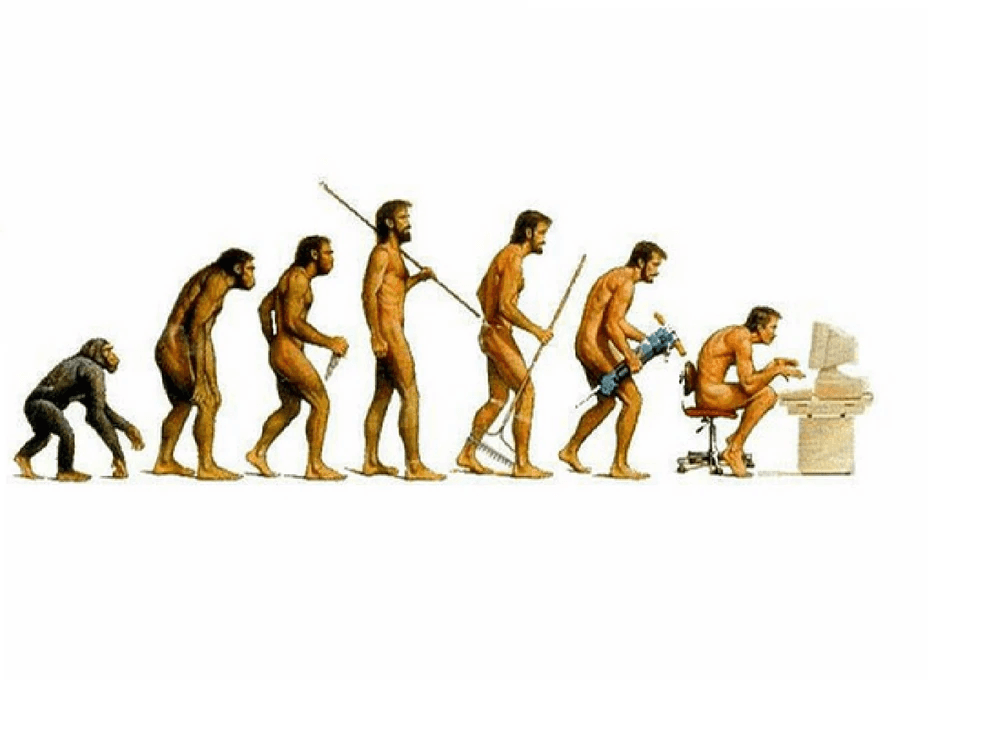
Since the emergence of Homo sapiens about 200,000 years ago, we’ve spent over 95% of our existence as nomadic hunter-gatherers. Then came agriculture, which changed everything. More recently, the industrial era—and then digital technology—completely reshaped how we eat, move, and work.

Here’s a diagram found online.
Our bodies and brains evolved to adapt to that ancestral way of life.
The first takeaway? Our ancestors were much more physically active than we are—because they had to be. It wasn’t for fun: moving around was essential for survival. Just a few hundred years ago, surviving required significant physical effort for the vast majority of people on Earth. Human physiology professor Dylan Thompson puts it like this:
“Biologically, our bodies have evolved to expect physical activity. It was mandatory throughout our evolution, mainly to get food. We had no choice—we had to be active.”
In The Comfort Crisis, Michael Easter unpacks recent research on modern-day hunter-gatherer populations. Here’s what he found about daily life back then:
We walked about 16 kilometers (10 miles) a day—roughly 20,000 steps.
While walking, we usually carried tools, food, children, etc.
We did what we now call “exercise” (of moderate to high intensity) for about 3 hours and 20 minutes daily.
We burned around 40% more calories per day than we do now.
We were active even at rest: when hunter-gatherers rested, they typically squatted—engaging muscles even while resting.
All this activity happened outdoors. Exposure to heat and cold made the body burn more calories to regulate temperature.
A completely different world from today. Evolution favored those who could travel long distances daily and endure extreme conditions. So when we spend long hours sitting or inactive, we’re not giving our bodies what they’ve evolved to expect over thousands of years. That’s the first problem.
But evolution also favored those who minimized unnecessary effort. Energy conservation was key to survival. So the instinct to do as little as possible when given the chance is deeply wired into us. That’s the second problem.
Our brains constantly seek the best effort-to-reward ratio. The issue today? Our modern environment offers abundant food and comfort for almost no effort. With no need to walk for food anymore, we’re left with pure laziness—and everything around us encourages it.

I loved diving into this topic—especially since I used to think that working out almost every day was enough to not be considered sedentary… Spoiler: it’s not.
Wired to Move
Since the emergence of Homo sapiens about 200,000 years ago, we’ve spent over 95% of our existence as nomadic hunter-gatherers. Then came agriculture, which changed everything. More recently, the industrial era—and then digital technology—completely reshaped how we eat, move, and work.

Here’s a diagram found online.
Our bodies and brains evolved to adapt to that ancestral way of life.
The first takeaway? Our ancestors were much more physically active than we are—because they had to be. It wasn’t for fun: moving around was essential for survival. Just a few hundred years ago, surviving required significant physical effort for the vast majority of people on Earth. Human physiology professor Dylan Thompson puts it like this:
“Biologically, our bodies have evolved to expect physical activity. It was mandatory throughout our evolution, mainly to get food. We had no choice—we had to be active.”
In The Comfort Crisis, Michael Easter unpacks recent research on modern-day hunter-gatherer populations. Here’s what he found about daily life back then:
We walked about 16 kilometers (10 miles) a day—roughly 20,000 steps.
While walking, we usually carried tools, food, children, etc.
We did what we now call “exercise” (of moderate to high intensity) for about 3 hours and 20 minutes daily.
We burned around 40% more calories per day than we do now.
We were active even at rest: when hunter-gatherers rested, they typically squatted—engaging muscles even while resting.
All this activity happened outdoors. Exposure to heat and cold made the body burn more calories to regulate temperature.
A completely different world from today. Evolution favored those who could travel long distances daily and endure extreme conditions. So when we spend long hours sitting or inactive, we’re not giving our bodies what they’ve evolved to expect over thousands of years. That’s the first problem.
But evolution also favored those who minimized unnecessary effort. Energy conservation was key to survival. So the instinct to do as little as possible when given the chance is deeply wired into us. That’s the second problem.
Our brains constantly seek the best effort-to-reward ratio. The issue today? Our modern environment offers abundant food and comfort for almost no effort. With no need to walk for food anymore, we’re left with pure laziness—and everything around us encourages it.

I loved diving into this topic—especially since I used to think that working out almost every day was enough to not be considered sedentary… Spoiler: it’s not.
Wired to Move
Since the emergence of Homo sapiens about 200,000 years ago, we’ve spent over 95% of our existence as nomadic hunter-gatherers. Then came agriculture, which changed everything. More recently, the industrial era—and then digital technology—completely reshaped how we eat, move, and work.

Here’s a diagram found online.
Our bodies and brains evolved to adapt to that ancestral way of life.
The first takeaway? Our ancestors were much more physically active than we are—because they had to be. It wasn’t for fun: moving around was essential for survival. Just a few hundred years ago, surviving required significant physical effort for the vast majority of people on Earth. Human physiology professor Dylan Thompson puts it like this:
“Biologically, our bodies have evolved to expect physical activity. It was mandatory throughout our evolution, mainly to get food. We had no choice—we had to be active.”
In The Comfort Crisis, Michael Easter unpacks recent research on modern-day hunter-gatherer populations. Here’s what he found about daily life back then:
We walked about 16 kilometers (10 miles) a day—roughly 20,000 steps.
While walking, we usually carried tools, food, children, etc.
We did what we now call “exercise” (of moderate to high intensity) for about 3 hours and 20 minutes daily.
We burned around 40% more calories per day than we do now.
We were active even at rest: when hunter-gatherers rested, they typically squatted—engaging muscles even while resting.
All this activity happened outdoors. Exposure to heat and cold made the body burn more calories to regulate temperature.
A completely different world from today. Evolution favored those who could travel long distances daily and endure extreme conditions. So when we spend long hours sitting or inactive, we’re not giving our bodies what they’ve evolved to expect over thousands of years. That’s the first problem.
But evolution also favored those who minimized unnecessary effort. Energy conservation was key to survival. So the instinct to do as little as possible when given the chance is deeply wired into us. That’s the second problem.
Our brains constantly seek the best effort-to-reward ratio. The issue today? Our modern environment offers abundant food and comfort for almost no effort. With no need to walk for food anymore, we’re left with pure laziness—and everything around us encourages it.


Your phone, your rules. Block on command and own your time.
For 30min
Everyday
On weekends
During workhours
From 10 pm to 8 am
For 7 days
All the time

Your phone, your rules. Block on command and own your time.
For 30min
Everyday
On weekends
During workhours
From 10 pm to 8 am
For 7 days
All the time

Your phone, your rules. Block on command and own your time.
For 30min
Everyday
On weekends
During workhours
From 10 pm to 8 am
For 7 days
All the time
The Comfort Crisis
Movement is no longer necessary for short-term survival. Innovations like agriculture, industrialization, and digital technology have made it increasingly obsolete. Back then, we navigated life in a world full of direct threats to our existence. That shaped our instincts—to seek comfort and safety, away from danger.
But those instincts were tailored for a world that could literally kill us at any moment. Not the world we live in today (at least in most Western countries). Now, everything is designed to make daily life more comfortable. But paradoxically, this environment can harm our health—and even our well-being.
The word “sedentary” comes from the Latin sedere, meaning “to sit.” Sedentary behavior is defined as time spent sitting or lying down: at the table, at your desk, in the bus, metro, car, on the couch, in front of a screen, or in bed.
Spending more than 7 hours a day sitting seriously impacts your health. We’ve never been this sedentary in history: in France in 2018, people sat for an average of 7 hours and 24 minutes per day. 🥉 Bronze medal in Europe—behind the UK (8h13) and Italy (7h32).
But where does this come from?
Thanks to rapid advances in transportation and tech, being sedentary has become the norm. Everything is designed to keep us in a state of passive inertia. We’re offered options that require minimal effort or movement—and our brains love that. What was once an advantage is now a weakness. And Big Tech exploits it brilliantly. Here’s the result:
We’d rather binge-watch Netflix on the couch than go out to the movies
We’d rather order from Uber Eats than go grocery shopping and cook
We spend our lunch breaks in front of a screen rather than walking outside
In our free time, the digital world enables us to binge like never before—there are no practical limits forcing us to wait or stop. And we get used to it fast: 60% of our free time is spent on screens. Even our leisure is now sedentary. Meanwhile, screen-based jobs have become the norm over the past 20 years. Let’s remember: sedentary jobs didn’t exist 10,000 years ago—and were extremely rare just 100 years ago.
This ecosystem is slowly eroding our mobility. At the same time, we now scroll the equivalent of 125 kilometers a year, according to a 2024 study. That’s three marathons a year. On particularly inactive days, we might cover more distance with our fingers than with our legs. There are hidden costs to this endless chase for comfort. New risks are creeping in—especially to our physical health.
A Silent Threat
Sedentary behavior is defined as a waking state with energy expenditure close to that of sleep. You’re awake, but your body isn’t doing more than it would if you were asleep.
Over time, this has serious consequences. We’ve previously touched on musculoskeletal disorders. But it goes further. A study of 9,000 schoolchildren in France compared the average running speed of 10- to 12-year-olds between 1987 and 2022. Result? A drop of 1.3 km/h in average speed.
The numbers are alarming. A 2023 study showed that fewer than 25% of 6- to 17-year-olds in France meet the WHO’s recommended physical activity levels. Among the most active teens, France ranked a dismal 119th out of 146 countries. According to Professor François Carré, cardiologist and sports physician:
“Three out of five kids starting middle school can’t do four hops on one foot.”
We don’t even play hopscotch anymore. Studies consistently show that a sedentary lifestyle increases the risk of many serious diseases, including:
Type 2 diabetes
Cardiovascular diseases (heart attacks, strokes, high blood pressure, etc.)
Obesity
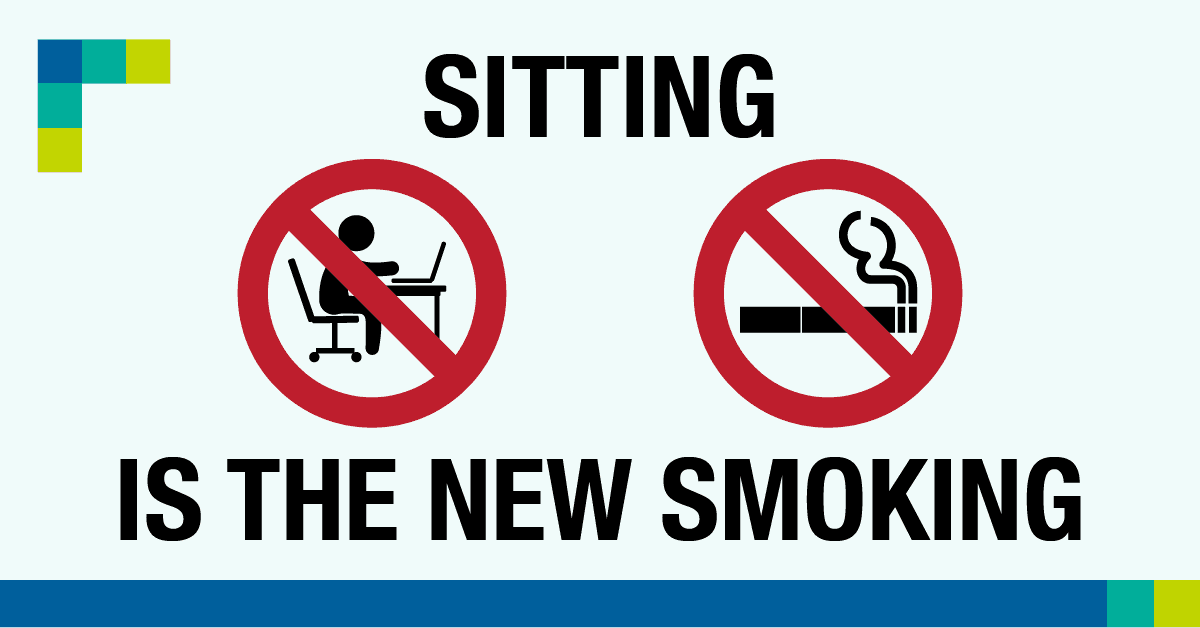
The viral slogan “Sitting is the new smoking” may be provocative, but it reflects a harsh reality.
Screens are a major catalyst here: they’re almost always the easiest, most tempting option—for instant gratification and minimal effort.
While exploring this topic, I learned something that really hit me: You can be very athletic and still be highly sedentary. I work out 5 to 6 times a week—so I thought I was safe from most of the risks of a sedentary lifestyle. But when I did the math, I realized I sit for well over 7 hours a day—the threshold the WHO uses to define someone as sedentary.
Yes, physical activity is incredibly beneficial. But it’s the long periods of inactivity that are the real issue.
Research in recent years is clear: exercise doesn’t fully cancel out the effects of being inactive the rest of the day. That’s why in 2024, promoting physical activity was named a National Cause in France in connection with the Paris 2024 Olympic and Paralympic Games. A hopeful sign.
Bringing Movement Back into Daily Life
I’m sitting at my computer as I write this. And truth be told, I still sit far too much during the workday. It’s frustrating. That said, I make it a point to take active breaks, especially by going for walks. I also try to take certain calls or meetings (when possible) while walking.
Walking used to be our only way of getting around—until very recently, when new, motorized systems took over and made sitting the default. In another edition, I talked about how walking boosts focus and creativity. Walking activates neural connections. In fact, physical movement prepares the brain to receive and retain more information.
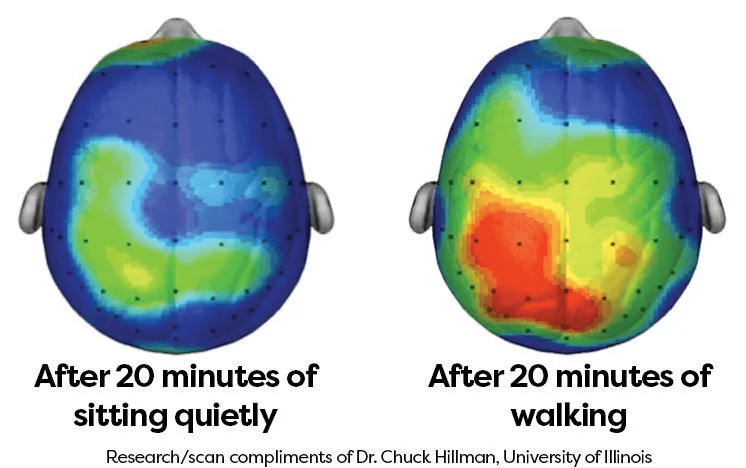
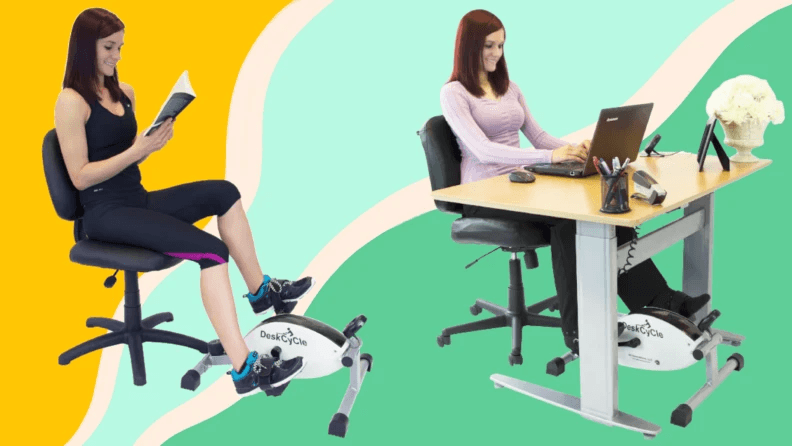
It’s a vigilance effect: walking keeps the body engaged—and the mind more alert too. This week I stumbled across a brilliant innovation called a "Desk Pedal". The idea? Stay active even while sitting. A great solution for open-space workers and people who work from home.
In my free time, especially in the evenings, I try to cut down on sedentary activities (like watching TV shows)—except for reading. When I have an appointment and the destination is less than 45 minutes away, I try to go early and walk there. Adding more movement into your days reduces sedentary risks—and helps recharge your batteries more effectively too.
Win-win.
Learn to move again with Jomo
If motivation alone isn’t enough to get you moving and away from your phone, we may have found the solution. Block your favorite apps behind physical exercise — yes, really.
With Jomo, available for free on the App Store, you can set a rule that keeps your apps blocked until you’ve done some physical activity. I can already hear you: “I don’t like running,” “I don’t like cycling”… Don’t worry — you have plenty of activities to choose from.
For example, start by simply reaching 10,000 steps. Studies show that walking 10,000 steps a day has real positive effects on your health. That’s enough to unlock Instagram, TikTok, or YouTube — apps that probably keep you sitting for hours, leaning forward, thumb working overtime.
And to avoid the classic “I don’t know how to do this, I give up,” here’s the magic tutorial:
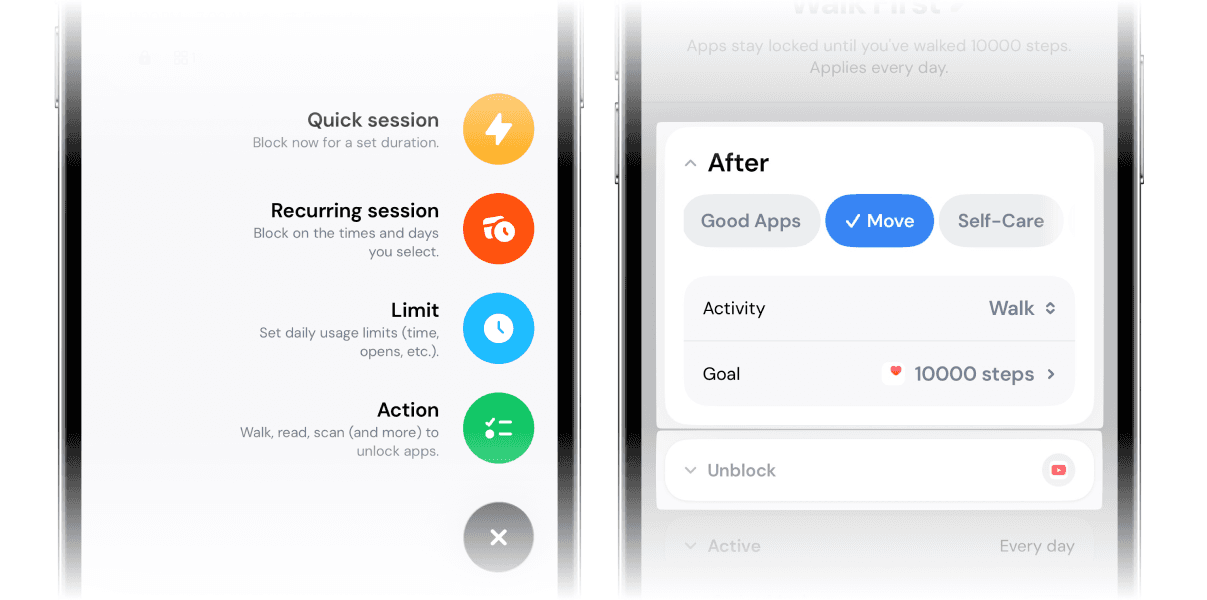
Open the app and go to Rules.
Tap + > Action.
Under After, select Move, then choose the physical activity you want (we’ll pick Walking and set it to 10,000 steps).
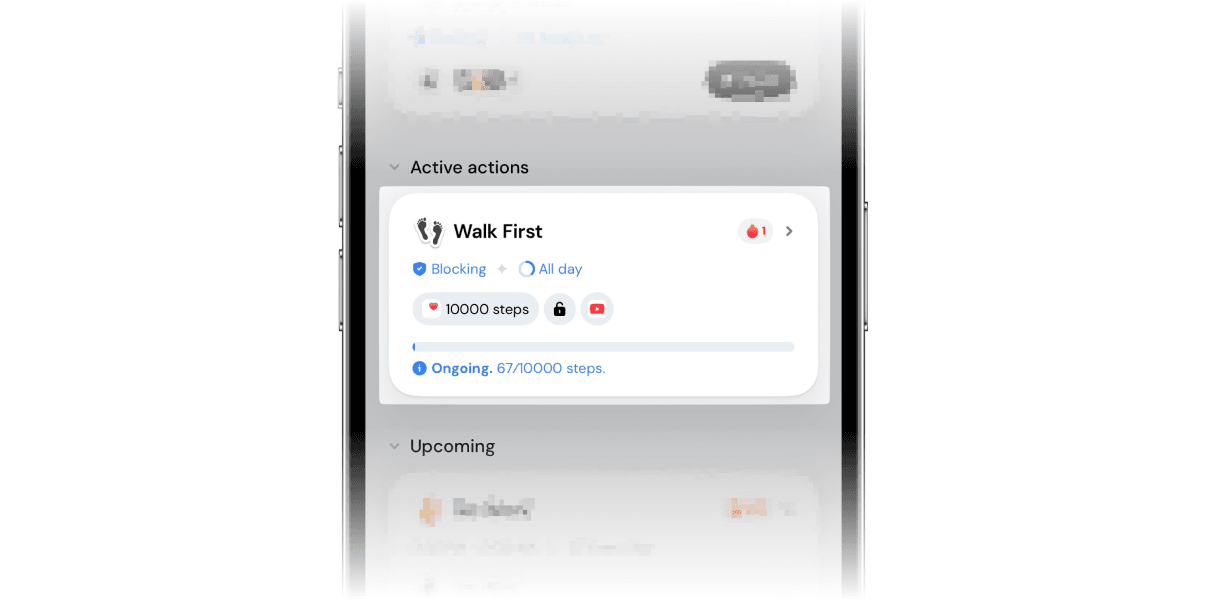
Under Unblock, choose the apps you want to unlock once you’ve completed the steps (we’ll pick YouTube).
Add the rule.
See? That wasn’t hard. Now all that’s left is to move if you want your favorite apps back.

Thanks for reading so far! If you want to give our app Jomo a try, you can download it from the App Store and use my code JZ5RP5 to get the Plus plan free for 14 days.
The Comfort Crisis
Movement is no longer necessary for short-term survival. Innovations like agriculture, industrialization, and digital technology have made it increasingly obsolete. Back then, we navigated life in a world full of direct threats to our existence. That shaped our instincts—to seek comfort and safety, away from danger.
But those instincts were tailored for a world that could literally kill us at any moment. Not the world we live in today (at least in most Western countries). Now, everything is designed to make daily life more comfortable. But paradoxically, this environment can harm our health—and even our well-being.
The word “sedentary” comes from the Latin sedere, meaning “to sit.” Sedentary behavior is defined as time spent sitting or lying down: at the table, at your desk, in the bus, metro, car, on the couch, in front of a screen, or in bed.
Spending more than 7 hours a day sitting seriously impacts your health. We’ve never been this sedentary in history: in France in 2018, people sat for an average of 7 hours and 24 minutes per day. 🥉 Bronze medal in Europe—behind the UK (8h13) and Italy (7h32).
But where does this come from?
Thanks to rapid advances in transportation and tech, being sedentary has become the norm. Everything is designed to keep us in a state of passive inertia. We’re offered options that require minimal effort or movement—and our brains love that. What was once an advantage is now a weakness. And Big Tech exploits it brilliantly. Here’s the result:
We’d rather binge-watch Netflix on the couch than go out to the movies
We’d rather order from Uber Eats than go grocery shopping and cook
We spend our lunch breaks in front of a screen rather than walking outside
In our free time, the digital world enables us to binge like never before—there are no practical limits forcing us to wait or stop. And we get used to it fast: 60% of our free time is spent on screens. Even our leisure is now sedentary. Meanwhile, screen-based jobs have become the norm over the past 20 years. Let’s remember: sedentary jobs didn’t exist 10,000 years ago—and were extremely rare just 100 years ago.
This ecosystem is slowly eroding our mobility. At the same time, we now scroll the equivalent of 125 kilometers a year, according to a 2024 study. That’s three marathons a year. On particularly inactive days, we might cover more distance with our fingers than with our legs. There are hidden costs to this endless chase for comfort. New risks are creeping in—especially to our physical health.
A Silent Threat
Sedentary behavior is defined as a waking state with energy expenditure close to that of sleep. You’re awake, but your body isn’t doing more than it would if you were asleep.
Over time, this has serious consequences. We’ve previously touched on musculoskeletal disorders. But it goes further. A study of 9,000 schoolchildren in France compared the average running speed of 10- to 12-year-olds between 1987 and 2022. Result? A drop of 1.3 km/h in average speed.
The numbers are alarming. A 2023 study showed that fewer than 25% of 6- to 17-year-olds in France meet the WHO’s recommended physical activity levels. Among the most active teens, France ranked a dismal 119th out of 146 countries. According to Professor François Carré, cardiologist and sports physician:
“Three out of five kids starting middle school can’t do four hops on one foot.”
We don’t even play hopscotch anymore. Studies consistently show that a sedentary lifestyle increases the risk of many serious diseases, including:
Type 2 diabetes
Cardiovascular diseases (heart attacks, strokes, high blood pressure, etc.)
Obesity
The viral slogan “Sitting is the new smoking” may be provocative, but it reflects a harsh reality.

Screens are a major catalyst here: they’re almost always the easiest, most tempting option—for instant gratification and minimal effort.
While exploring this topic, I learned something that really hit me: You can be very athletic and still be highly sedentary. I work out 5 to 6 times a week—so I thought I was safe from most of the risks of a sedentary lifestyle. But when I did the math, I realized I sit for well over 7 hours a day—the threshold the WHO uses to define someone as sedentary.
Yes, physical activity is incredibly beneficial. But it’s the long periods of inactivity that are the real issue.
Research in recent years is clear: exercise doesn’t fully cancel out the effects of being inactive the rest of the day. That’s why in 2024, promoting physical activity was named a National Cause in France in connection with the Paris 2024 Olympic and Paralympic Games. A hopeful sign.
Bringing Movement Back into Daily Life
I’m sitting at my computer as I write this. And truth be told, I still sit far too much during the workday. It’s frustrating. That said, I make it a point to take active breaks, especially by going for walks. I also try to take certain calls or meetings (when possible) while walking.
Walking used to be our only way of getting around—until very recently, when new, motorized systems took over and made sitting the default. In another edition, I talked about how walking boosts focus and creativity. Walking activates neural connections. In fact, physical movement prepares the brain to receive and retain more information.

It’s a vigilance effect: walking keeps the body engaged—and the mind more alert too. This week I stumbled across a brilliant innovation called a "Desk Pedal". The idea? Stay active even while sitting. A great solution for open-space workers and people who work from home.

In my free time, especially in the evenings, I try to cut down on sedentary activities (like watching TV shows)—except for reading. When I have an appointment and the destination is less than 45 minutes away, I try to go early and walk there. Adding more movement into your days reduces sedentary risks—and helps recharge your batteries more effectively too.
Win-win.
Learn to move again with Jomo
If motivation alone isn’t enough to get you moving and away from your phone, we may have found the solution. Block your favorite apps behind physical exercise — yes, really.
With Jomo, available for free on the App Store, you can set a rule that keeps your apps blocked until you’ve done some physical activity. I can already hear you: “I don’t like running,” “I don’t like cycling”… Don’t worry — you have plenty of activities to choose from.
For example, start by simply reaching 10,000 steps. Studies show that walking 10,000 steps a day has real positive effects on your health. That’s enough to unlock Instagram, TikTok, or YouTube — apps that probably keep you sitting for hours, leaning forward, thumb working overtime.
And to avoid the classic “I don’t know how to do this, I give up,” here’s the magic tutorial:
Open the app and go to Rules.
Tap + > Action.
Under After, select Move, then choose the physical activity you want (we’ll pick Walking and set it to 10,000 steps).
Under Unblock, choose the apps you want to unlock once you’ve completed the steps (we’ll pick YouTube).
Add the rule.
See? That wasn’t hard. Now all that’s left is to move if you want your favorite apps back.


Thanks for reading so far! If you want to give our app Jomo a try, you can download it from the App Store and use my code JZ5RP5 to get the Plus plan free for 14 days.
The Comfort Crisis
Movement is no longer necessary for short-term survival. Innovations like agriculture, industrialization, and digital technology have made it increasingly obsolete. Back then, we navigated life in a world full of direct threats to our existence. That shaped our instincts—to seek comfort and safety, away from danger.
But those instincts were tailored for a world that could literally kill us at any moment. Not the world we live in today (at least in most Western countries). Now, everything is designed to make daily life more comfortable. But paradoxically, this environment can harm our health—and even our well-being.
The word “sedentary” comes from the Latin sedere, meaning “to sit.” Sedentary behavior is defined as time spent sitting or lying down: at the table, at your desk, in the bus, metro, car, on the couch, in front of a screen, or in bed.
Spending more than 7 hours a day sitting seriously impacts your health. We’ve never been this sedentary in history: in France in 2018, people sat for an average of 7 hours and 24 minutes per day. 🥉 Bronze medal in Europe—behind the UK (8h13) and Italy (7h32).
But where does this come from?
Thanks to rapid advances in transportation and tech, being sedentary has become the norm. Everything is designed to keep us in a state of passive inertia. We’re offered options that require minimal effort or movement—and our brains love that. What was once an advantage is now a weakness. And Big Tech exploits it brilliantly. Here’s the result:
We’d rather binge-watch Netflix on the couch than go out to the movies
We’d rather order from Uber Eats than go grocery shopping and cook
We spend our lunch breaks in front of a screen rather than walking outside
In our free time, the digital world enables us to binge like never before—there are no practical limits forcing us to wait or stop. And we get used to it fast: 60% of our free time is spent on screens. Even our leisure is now sedentary. Meanwhile, screen-based jobs have become the norm over the past 20 years. Let’s remember: sedentary jobs didn’t exist 10,000 years ago—and were extremely rare just 100 years ago.
This ecosystem is slowly eroding our mobility. At the same time, we now scroll the equivalent of 125 kilometers a year, according to a 2024 study. That’s three marathons a year. On particularly inactive days, we might cover more distance with our fingers than with our legs. There are hidden costs to this endless chase for comfort. New risks are creeping in—especially to our physical health.
A Silent Threat
Sedentary behavior is defined as a waking state with energy expenditure close to that of sleep. You’re awake, but your body isn’t doing more than it would if you were asleep.
Over time, this has serious consequences. We’ve previously touched on musculoskeletal disorders. But it goes further. A study of 9,000 schoolchildren in France compared the average running speed of 10- to 12-year-olds between 1987 and 2022. Result? A drop of 1.3 km/h in average speed.
The numbers are alarming. A 2023 study showed that fewer than 25% of 6- to 17-year-olds in France meet the WHO’s recommended physical activity levels. Among the most active teens, France ranked a dismal 119th out of 146 countries. According to Professor François Carré, cardiologist and sports physician:
“Three out of five kids starting middle school can’t do four hops on one foot.”
We don’t even play hopscotch anymore. Studies consistently show that a sedentary lifestyle increases the risk of many serious diseases, including:
Type 2 diabetes
Cardiovascular diseases (heart attacks, strokes, high blood pressure, etc.)
Obesity
The viral slogan “Sitting is the new smoking” may be provocative, but it reflects a harsh reality.

Screens are a major catalyst here: they’re almost always the easiest, most tempting option—for instant gratification and minimal effort.
While exploring this topic, I learned something that really hit me: You can be very athletic and still be highly sedentary. I work out 5 to 6 times a week—so I thought I was safe from most of the risks of a sedentary lifestyle. But when I did the math, I realized I sit for well over 7 hours a day—the threshold the WHO uses to define someone as sedentary.
Yes, physical activity is incredibly beneficial. But it’s the long periods of inactivity that are the real issue.
Research in recent years is clear: exercise doesn’t fully cancel out the effects of being inactive the rest of the day. That’s why in 2024, promoting physical activity was named a National Cause in France in connection with the Paris 2024 Olympic and Paralympic Games. A hopeful sign.
Bringing Movement Back into Daily Life
I’m sitting at my computer as I write this. And truth be told, I still sit far too much during the workday. It’s frustrating. That said, I make it a point to take active breaks, especially by going for walks. I also try to take certain calls or meetings (when possible) while walking.
Walking used to be our only way of getting around—until very recently, when new, motorized systems took over and made sitting the default. In another edition, I talked about how walking boosts focus and creativity. Walking activates neural connections. In fact, physical movement prepares the brain to receive and retain more information.

It’s a vigilance effect: walking keeps the body engaged—and the mind more alert too. This week I stumbled across a brilliant innovation called a "Desk Pedal". The idea? Stay active even while sitting. A great solution for open-space workers and people who work from home.

In my free time, especially in the evenings, I try to cut down on sedentary activities (like watching TV shows)—except for reading. When I have an appointment and the destination is less than 45 minutes away, I try to go early and walk there. Adding more movement into your days reduces sedentary risks—and helps recharge your batteries more effectively too.
Win-win.
Learn to move again with Jomo
If motivation alone isn’t enough to get you moving and away from your phone, we may have found the solution. Block your favorite apps behind physical exercise — yes, really.
With Jomo, available for free on the App Store, you can set a rule that keeps your apps blocked until you’ve done some physical activity. I can already hear you: “I don’t like running,” “I don’t like cycling”… Don’t worry — you have plenty of activities to choose from.
For example, start by simply reaching 10,000 steps. Studies show that walking 10,000 steps a day has real positive effects on your health. That’s enough to unlock Instagram, TikTok, or YouTube — apps that probably keep you sitting for hours, leaning forward, thumb working overtime.
And to avoid the classic “I don’t know how to do this, I give up,” here’s the magic tutorial:
Open the app and go to Rules.
Tap + > Action.
Under After, select Move, then choose the physical activity you want (we’ll pick Walking and set it to 10,000 steps).
Under Unblock, choose the apps you want to unlock once you’ve completed the steps (we’ll pick YouTube).
Add the rule.
See? That wasn’t hard. Now all that’s left is to move if you want your favorite apps back.


Thanks for reading so far! If you want to give our app Jomo a try, you can download it from the App Store and use my code JZ5RP5 to get the Plus plan free for 14 days.
Credits
This article is a revised version of Edition #38 of the Screenbreak newsletter created by Julien Rousset. With his permission, we're sharing this high-quality content with you today! So many thanks to Julien. 😌
Photographies by Unsplash, Dall-e, ScreenBreak and the Internet.
[1] Easter - The Comfort Crisis
[2] Joulin - Pourquoi rester assis trop longtemps tue, National Geographic, 2024.
[3] La sédentarité un fléau silencieux lié aux activités sur écran, Axa Prévention.
[4] Tribe Support - Move More... Like Our Early Ancestors Did!, Supplements, 2022.
[5] Albini - Born to be walkers? How to stay healthy in a sedentary world, Cancer World, 2022.
[6] Wandermileage - “The Comfort Crisis” by Michael Easter: Embracing Discomfort for a Healthier, Happier Life, Medium, 2023.
[7] Étude Européenne Sur la Sédentarité – Attitude Prévention, Harris Interactive, 2018.
[8] Le pouvoir de l'inconfort : pourquoi relever des défis peut mener à une vie meilleure, Field Made.
[9] Shetty - Why We Need Exercise: An Evolutionary Perspective, Stanford, 2022.
Continue reading
Continue reading
The Joy Of Missing Out

Crafted in Europe
All rights reserved to Jomo SAS, 2026
The Joy Of Missing Out

Crafted in Europe
All rights reserved to Jomo SAS, 2026
The Joy Of Missing Out

Crafted in Europe
All rights reserved to Jomo SAS, 2026