Unplug
4 min
What Did People Do Before the Internet?
Do you think this question is stupid? We did too at first. But then we realized it might actually be one of the deepest questions we’ve ever been asked.
Recently, we talked with kids who were born into the internet and smartphones. They had an iPhone in their hands before they were even 3 years old, while we were still playing on a Game Boy Color at 10.
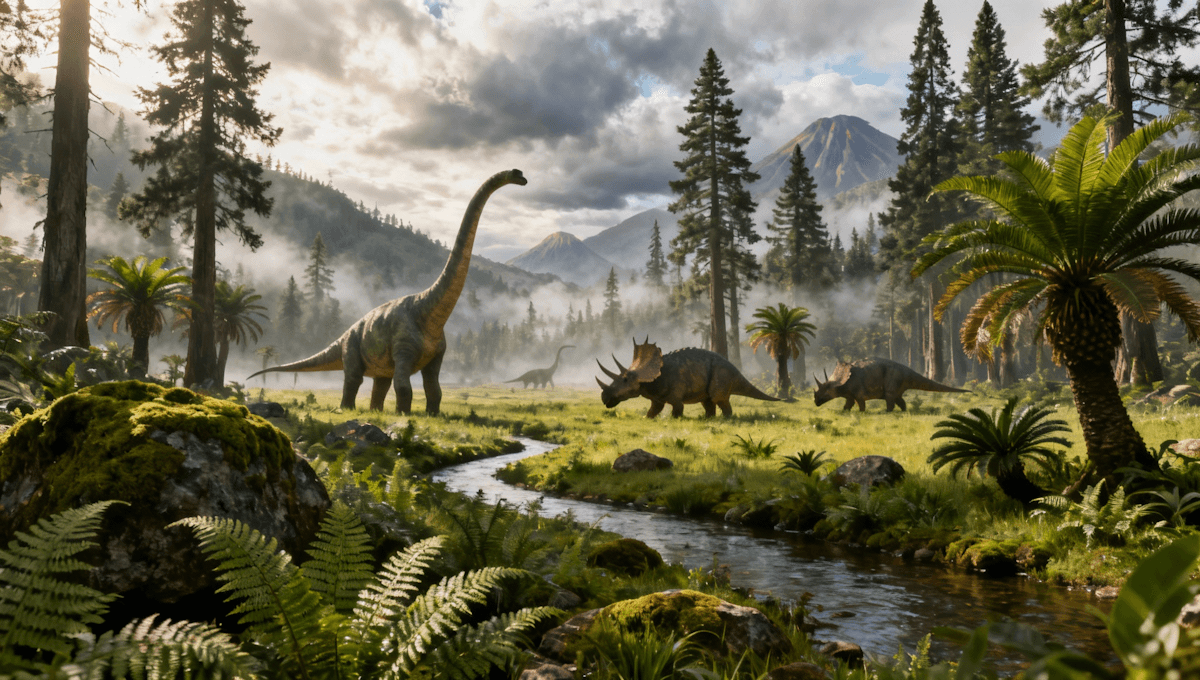
That’s when it hit us: to them, we’re basically dinosaurs. The Stone Age. The pre-iPhone era, when the internet meant a modem plugged into the family desktop running Windows 98. Yeah… beyond the sudden feeling of getting old, it raised two big questions for us:
What were we doing before the latest iPhone, TikTok, and Instagram?
How did we even get to a point where we have to ask ourselves that, when it should feel natural?
And you know what? We thought it would be a shame not to share this reflection with you, so we turned it into a blog post.
But before we begin, let me introduce myself. The voice you’re reading is Laureline. I’m the designer and co-founder of the Jomo app. I’ve been working in ergonomics and interface design for over 10 years. In 2022, we launched Jomo to finally bring a long-standing idea to life: a powerful app to help you stop mindless scrolling and take back control of your life. I wrote this article myself, so if you found it helpful or enjoyed it, feel free to share it and send us your feedback!
How Do You Even End up Asking That Question?
At first, you might dismiss it as a stupid question. Case closed. Or you might stop and ask yourself what drives people to ask it—or why younger generations are asking you.
What you need to understand is this: as people in our thirties (yes, that’s the generation we belong to at Jomo), we’re among the last to have experienced a world without the internet—and to have gone through that massive shift right in the middle of our identity-building years (aka adolescence). Like it or not, we’ve become a kind of reference point in history (let’s not get carried away). We’re the ones who witnessed technology take off and are still learning how to live with it. And that makes our generation a pretty important one in the broader story of humanity.
“But Laureline, aren’t we drifting off topic here?” Not really.
Because this question is actually a deep reflection on the world we live in today. It’s about how we’ve gradually normalized the internet—taken it for granted, almost as something “natural.” It’s become part of the background: omnipresent, automatic, invisible. So predictable that many of our interactions no longer happen consciously—they’ve turned into automatic behaviors we call habits.
And it’s precisely because your brain is so starved of friction that it starts asking questions. “I’m constantly busy… but am I actually living?” People aren’t nostalgic (a child born in 2015 couldn’t be—they never knew that earlier world), but they do feel the need to compare. Because their generation is more affected, more anxious, more burdened—and naturally, they want to understand what your “secret recipe” is.
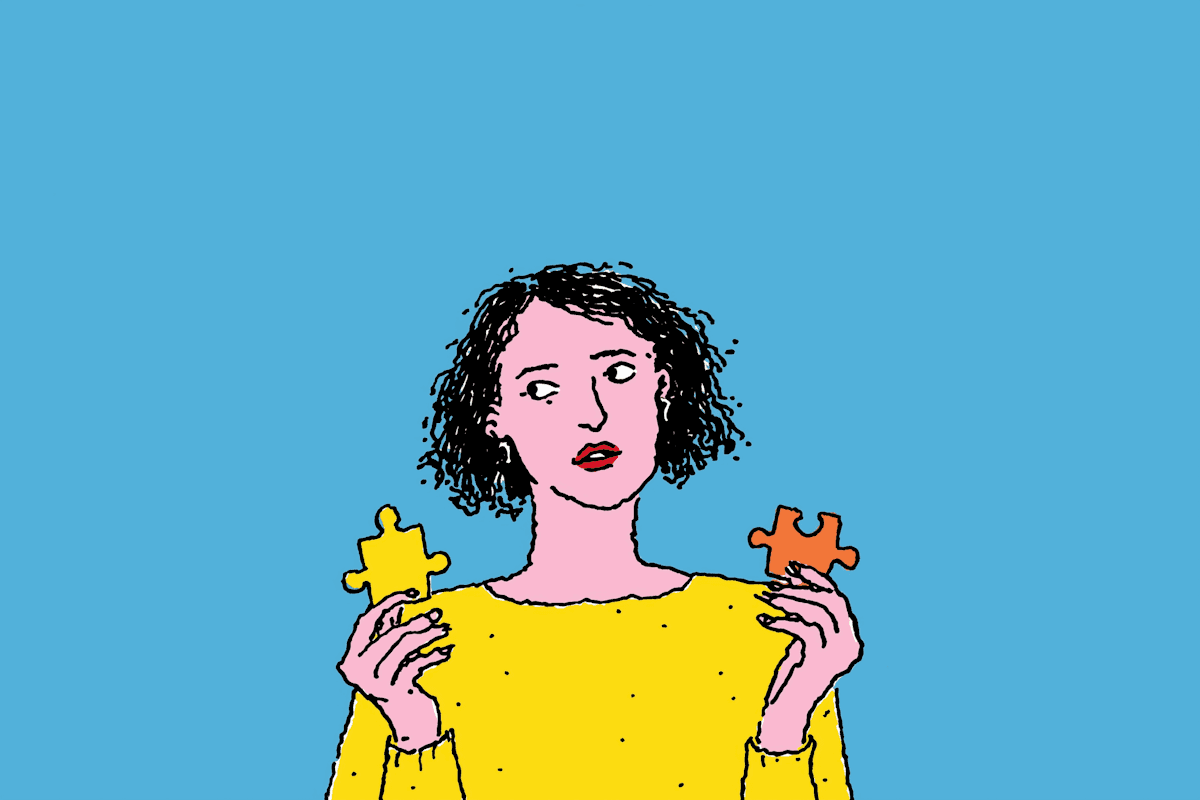
Art by Steph Meade
So What Happened?
Instant Gratification vs. Value
Everything changed incredibly fast. From the internet in your pocket (thanks to smartphones), to the “Uberization” of services, and now the “TikTok-ization” of everything (not to mention the boom of generative AI)… everything is evolving at a dizzying pace.
When everything is unlimited and accessible without friction, perceived value naturally drops. So the logical response is to compensate by accumulating more. When everything is accessible, nothing really feels special anymore.
Boredom Disappeared
Let’s ask ourselves honestly: when was the last time you were truly bored? For you and me, it’s probably been a while. And for good reason—everything today is designed to capture every second of your attention. Being bored has become nearly impossible. Worse, it’s almost turned into an abstract concept.

From Active to Passive
Your role as an individual has also taken a hit. Overall, you’ve shifted from being active (where you created your own entertainment—reading, DIY projects, going out) to being passive (where content comes to you through notifications, recommendation algorithms, and so on). The result? Much less deep engagement, because it requires much less effort.
Fragmented Attention
Before, you were clearly able to engage in long activities, even ones that weren’t highly stimulating. Today, not so much. It’s a constant stream of micro-sessions and short (or even ultra-short) content, designed to be so dynamic that there’s never a moment of downtime in your day.
And it’s the accumulation of all this that makes you wonder: without all of it, what did you actually enjoy? How did you manage to appreciate a slower, flatter, calmer world? For some, it might seem unbearable—but for others, it’s a true haven of peace (think of JOMO, the joy of missing out!).
Why This Question Really Matters
It’s actually simple, and it comes down to one sentence: you’ve optimized access, but not usage. Everything is designed to make consumption effortless, but the core question has never been solved: what should you consume?
The result? You’re now surrounded by an overwhelming amount of content, but you don’t know what to do with it. You have everything—yet, in the end, nothing.
So Here We Are: What Did You Dinosaurs Do Before the Internet?
It’s a bit biased, because personally I’ve pretty much always had internet at home. We just didn’t really know what to do with it, so we didn’t use it that much… So we honestly asked ourselves: what positive things can we take from our childhood—and maybe bring some of those old activities back in 2026? Things we used to do, forgot about, and are now starting to do again.
1 – Listening to Music on a Portable Player
If you’ve never experienced portable CD players, you truly missed one of the best inventions ever. For those who’ve never heard of them, it was simple: you opened the case, put in a CD, and pressed play. The catch? Most of the time, you couldn’t easily skip tracks. You had to listen to everything.
Sure, in the age of Spotify, that sounds pretty annoying. But actually, it’s not. What you need to understand is that an artist isn’t just a hit-making machine pumping out random songs. Sometimes, albums tell a story. Each track is placed in a specific order, connected to the others. And with streaming apps, we tend to sabotage that creative intention.
“We don’t create albums with so much care and thought into our track listing for no reason, […] Our art tells a story and our stories should be listened to as we intended.” — Adele
That’s what Adele said in a tweet when her album 30 was released. The album is part of her story—and like any story, each piece follows another in a specific order.
By going back to a 2000s-style portable player mindset, you learn to experience music differently. You also end up listening to tracks you might never have discovered otherwise.
Art by Mariana Pedrosa
2 – Write by Hand
Personally, I still love writing by hand. I even use a fountain pen to jot down all my thoughts and ideas. I never leave without a notebook! Sure, it’s not modern, and it’s not always practical. But the ideas in there are so much more meaningful than the ones in my iPhone.
When you do this, you’re not distracted—you’re fully immersed. It gives your brain a break. No distractions, no dopamine spikes: just you and your thoughts. And if writing isn’t your thing, drawing works just as well.
3 – Read a Physical Book
As a kid, I used to read in phases. I had to find the right book to enjoy it enough for it to become a priority. But I devoured all kinds of magazines, manga, and comics. In the end, I was reading quite a lot of different things.
As an adult, that habit faded a bit. But since 2025, I’ve set myself a challenge: read at least one novel per month. It might not sound like much, but for me, it’s already a solid goal. I mostly read in the evening, at the end of the day, during commutes, or on weekends when the weather is nice. I always tell myself it’s better to have a realistic, achievable goal than to aim for the moon and never get there.
4 – Play an Offline Game
To me, there are screens… and “screens.” Spending four hours on TikTok passively consuming mediocre content is not the same as spending four hours on a simulation game where you actually have to think and manage things. I’m thinking of classics like RollerCoaster Tycoon, SimCity, or Anno. These games involve real strategic thinking. They’re entertaining, but they also help you build skills (financial management, risk analysis, decision-making…). I genuinely think they can have a positive impact on your daily life.
5 – Cook (Baking)
I really like this one because it’s all about delayed gratification. The effort comes first, and the reward comes later, with every bite. If you’re not too greedy, baking cookies can give you something to enjoy over several days. It releases dopamine little by little, which lets you savor the experience much longer.
6 – Create DETOX Moments
Let’s be honest: sometimes your smartphone is just too much. Do a quick calculation—on average, you’re awake for 16 hours a day. And when some people spend 8+ hours on their phone, that’s literally HALF of your day.
At some point, you have to say STOP. And if that’s you but you’re struggling, we’ve got a great solution for you. You’ll see—it’s simple, free, and super effective.
Download the Jomo app, available for free on iPhone, iPad, and Mac.
Go to “Rules.”
Tap the pre-made template “Me time.”
Select the apps you want to block.
And for one hour, just breathe.

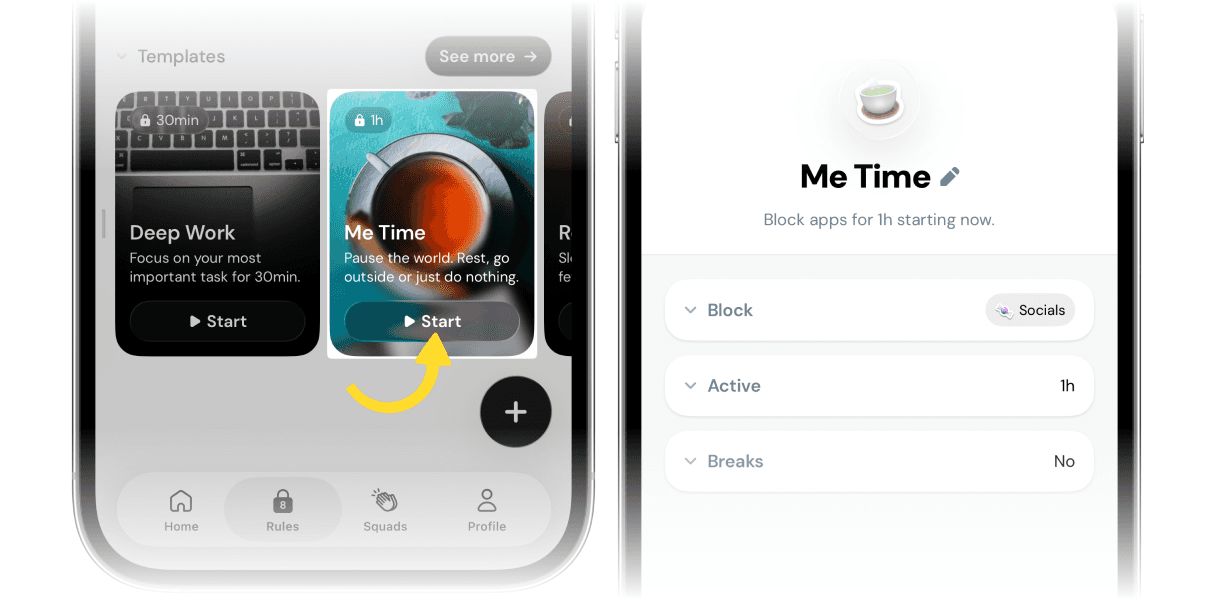
At first, it might feel annoying or frustrating. But honestly, it feels amazing. And if you do it from time to time, you’ll see—you’ll get hooked, and it’ll naturally become part of your routine. We personally go fully offline every Sunday, and every night from 10 p.m. to 8 a.m.—and we wouldn’t give that up for anything. 💙
The Takeaway 🍔
As always, we’re not trying to push an anti-technology message. The goal isn’t to “go back in time,” but to reintroduce experiences that the internet has erased. We like our era—we’re not stuck longing for the past. The idea is simply to bring back what was great before, combined with what’s great today.
Thanks for reading this far—it really means a lot. I wrote this article using my own brain, with a little help from the internet. I include sources when I think of it and remember, so you can keep exploring on your own. If you want to try the Jomo app, you can use my referral code FG2HA9 to get 14 days of free access to the paid version.