Productivity

5 min

How Do You Seriously Reduce Your Screen Time in 2026?

Maybe you’ve just realized that you spend more than 5 hours a day on your phone—almost a third of your waking hours

…And suddenly it feels a bit alarming, because if you keep going like this, you could end up losing 20 years of your life justscrolling.

So you decided it’s time to reduce your screen time and take your life back, right? Well, you’re in the right place. In this article, we’ve put together a real battle plan—simple and extremely easy to put into action.

We know that starting with a high amount of screen time and trying to reduce it can be really difficult, so we came up with plenty of original methods (not the usual recycled tips) to help you cut your screen time by at least half.

And before we begin, a quick introduction. I’m Laureline. I’m an interface designer, and for nearly 10 years I’ve been working on problematic smartphone use (since the concept of addiction still isn’t officially recognized by the WHO). For the past 4 years, I’ve been working on the Jomo app, which I co-created with Thomas, the developer. We’ve written quite a few articles on the topic, and we’ll keep doing so as long as it remains relevant. So if this interests you as much as it does us, feel free to check out our blog. Otherwise, enjoy the read!

Quick Introduction: What’s the Real Problem?

The real issue goes beyond simply how much time you spend on a screen. What truly matters is the way you use your smartphone. Is your usage intentional and deliberate, or is it compulsive, automatic, almost reflexive?

This subtle difference is what actually causes the problem (and often explains high screen time). In today’s world, most people tend to use their smartphones in a way that could be described as “addictive.” There’s a clear difference between:

  • Watching a movie you consciously chose

  • Opening Instagram and scrolling without really knowing why

The key difference is that opening Instagram and scrolling activates something called intermittent variable reinforcement. Developed by B.F. Skinner in 1957, this technique is often used to influence behavior because it creates a form of emotional dependency.

It pushes people to constantly seek a reward that appears at random. This uncertainty keeps you hooked. It makes it harder to step away and weakens your judgment. When you’re focused on chasing an unpredictable reward, you’re less likely to notice how unhealthy the relationship actually is. — (Translated from French) Virginie Roquelaure

Hard to picture what that means? Think of social media like a slot machine in a casino:

  • Unpredictable rewards (“Will this content be good, or will I scroll past it immediately?”)

  • Random timing (“Will I spend 10 minutes, 30 minutes, or 4 hours here?”)

  • Social feedback (likes, shares, comments…)

And your brain loves it. Uncertainty actually triggers more dopamine than a predictable reward—something your brain already knows and has grown used to.

In short, when you use social media, you’re not really looking for new content. What you’re chasing is the possibility of a reward. And that’s exactly what makes it so hard to stop through willpower alone. That’s the real problem.

Why Is It So Hard To Cut Down?

It’s hard because the “fight” simply isn’t fair. It’s you and your willpower versus thousands of engineers, designers, and product managers whose mission is extremely simple: make you addi… stay. Your phone is far from a neutral tool. It’s designed using the principles of captology (persuasive technology):

  • Notifications = external triggers

  • Infinite scroll = no exit points

  • Autoplay = less friction

On top of that, for many of us the phone has become a portable emotional regulator: Bored? Scroll. Stressed? Scroll. Lonely? Scroll. Slightly tired? Scroll. And all of this creates a vicious loop:

Discomfort → Phone → Micro-relief → Reinforcement of the behavior.

This is classic operant conditioning. So don’t worry: you’re not weak. And it’s not really your fault. Never forget that on the other side, these tools are built by some of the best engineering minds, backed by researchers and enormous budgets to achieve their goal. You, on the other hand… probably don’t have quite the same resources. Which is perfectly normal.

It’s David vs. Goliath.

Art by Riswan Ratta

Why Do I Always Give Up?

We give up because we try to change our behavior—who we are—without ever really changing our environment. Yet in behavioral psychology, the environment almost always wins over willpower.

Think about it: how many times have you tried to set limits or restrictions? Tried not keeping your phone in your pocket, turning off notifications, or leaving it away from your bed?

The problem is that we tend to focus on miracle “hacks” instead of actually transforming our environment. And statistically, that means we lose more often than we win. There’s also something worse: when we “fail,” we often end up consuming twice as much afterward. Why? Because the brain compensates. This is known as the ironic rebound effect.

…And suddenly it feels a bit alarming, because if you keep going like this, you could end up losing 20 years of your life justscrolling.

So you decided it’s time to reduce your screen time and take your life back, right? Well, you’re in the right place. In this article, we’ve put together a real battle plan—simple and extremely easy to put into action.

We know that starting with a high amount of screen time and trying to reduce it can be really difficult, so we came up with plenty of original methods (not the usual recycled tips) to help you cut your screen time by at least half.

And before we begin, a quick introduction. I’m Laureline. I’m an interface designer, and for nearly 10 years I’ve been working on problematic smartphone use (since the concept of addiction still isn’t officially recognized by the WHO). For the past 4 years, I’ve been working on the Jomo app, which I co-created with Thomas, the developer. We’ve written quite a few articles on the topic, and we’ll keep doing so as long as it remains relevant. So if this interests you as much as it does us, feel free to check out our blog. Otherwise, enjoy the read!

Quick Introduction: What’s the Real Problem?

The real issue goes beyond simply how much time you spend on a screen. What truly matters is the way you use your smartphone. Is your usage intentional and deliberate, or is it compulsive, automatic, almost reflexive?

This subtle difference is what actually causes the problem (and often explains high screen time). In today’s world, most people tend to use their smartphones in a way that could be described as “addictive.” There’s a clear difference between:

  • Watching a movie you consciously chose

  • Opening Instagram and scrolling without really knowing why

The key difference is that opening Instagram and scrolling activates something called intermittent variable reinforcement. Developed by B.F. Skinner in 1957, this technique is often used to influence behavior because it creates a form of emotional dependency.

It pushes people to constantly seek a reward that appears at random. This uncertainty keeps you hooked. It makes it harder to step away and weakens your judgment. When you’re focused on chasing an unpredictable reward, you’re less likely to notice how unhealthy the relationship actually is. — (Translated from French) Virginie Roquelaure

Hard to picture what that means? Think of social media like a slot machine in a casino:

  • Unpredictable rewards (“Will this content be good, or will I scroll past it immediately?”)

  • Random timing (“Will I spend 10 minutes, 30 minutes, or 4 hours here?”)

  • Social feedback (likes, shares, comments…)

And your brain loves it. Uncertainty actually triggers more dopamine than a predictable reward—something your brain already knows and has grown used to.

In short, when you use social media, you’re not really looking for new content. What you’re chasing is the possibility of a reward. And that’s exactly what makes it so hard to stop through willpower alone. That’s the real problem.

Why Is It So Hard To Cut Down?

It’s hard because the “fight” simply isn’t fair. It’s you and your willpower versus thousands of engineers, designers, and product managers whose mission is extremely simple: make you addi… stay. Your phone is far from a neutral tool. It’s designed using the principles of captology (persuasive technology):

  • Notifications = external triggers

  • Infinite scroll = no exit points

  • Autoplay = less friction

On top of that, for many of us the phone has become a portable emotional regulator: Bored? Scroll. Stressed? Scroll. Lonely? Scroll. Slightly tired? Scroll. And all of this creates a vicious loop:

Discomfort → Phone → Micro-relief → Reinforcement of the behavior.

This is classic operant conditioning. So don’t worry: you’re not weak. And it’s not really your fault. Never forget that on the other side, these tools are built by some of the best engineering minds, backed by researchers and enormous budgets to achieve their goal. You, on the other hand… probably don’t have quite the same resources. Which is perfectly normal.

It’s David vs. Goliath.

Art by Riswan Ratta

Why Do I Always Give Up?

We give up because we try to change our behavior—who we are—without ever really changing our environment. Yet in behavioral psychology, the environment almost always wins over willpower.

Think about it: how many times have you tried to set limits or restrictions? Tried not keeping your phone in your pocket, turning off notifications, or leaving it away from your bed?

The problem is that we tend to focus on miracle “hacks” instead of actually transforming our environment. And statistically, that means we lose more often than we win. There’s also something worse: when we “fail,” we often end up consuming twice as much afterward. Why? Because the brain compensates. This is known as the ironic rebound effect.

Your phone, your rules. Block on command and own your time.

Your phone, your rules. Block on command and own your time.

Let’s Get Practical: Solutions That Actually Work

For us, it’s important to understand the root of a problem before jumping to solutions. You can’t treat something if you don’t understand what it really is, right?

We were honestly a bit tired of the same old tips you see everywhere online. The same recycled hacks you’ve already seen a hundred times, probably tried before, and that often don’t lead to meaningful results. In this article, we tried to find methods that are genuinely original. Simple things you can put into practice without feeling frustrated.

We’re going to share a small list of exercises. You can try all of them, or just pick the ones that resonate with you. The goal is to reduce your screen time intelligently and offer realistic strategies that actually fit into your life. Enjoy exploring them!

Exercise #1: The “Standing Rule”

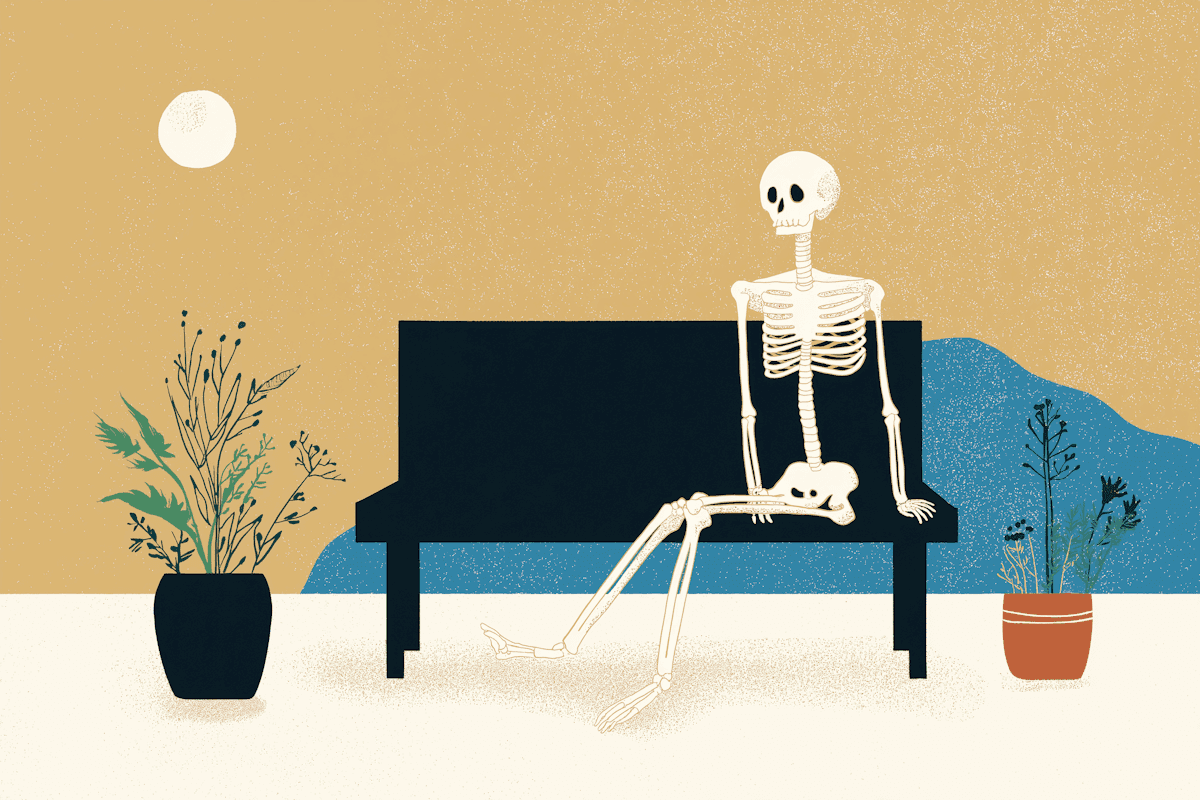
The idea is simple: you only allow yourself to use your phone while standing. No using it on the couch, in bed, or at your desk. If you want to use your phone, you have to stand up.

Why does it work? Because it adds physical friction. Your brain loves comfort and laziness. If scrolling is allowed on the couch, your brain interprets it as full relaxation mode. And that habit becomes extremely hard to break.

Scrolling while standing creates a small dissonance. It interrupts automatic scrolling and encourages more intentional use. It’s incredibly simple to implement and not that frustrating, because technically you can still scroll… just while standing. You’ll notice very quickly that you spend much less time on your phone.
Art by Steph Meade

Exercise #2: Zero Non-Essential Notifications

Every notification is a dopamine trigger.

Why? Because you never know what it’s going to be. Since the brain can’t predict it, it suddenly becomes excited. It registers this stimulus and starts anticipating the next notification, which could arrive at any moment. It’s the anticipation that becomes addictive.

So for this exercise, remove all unnecessary social notifications:

  • Social media

  • Shopping apps

  • Games

  • Secondary productivity apps

You’ll realize most of them are honestly useless. Their main purpose is to optimize retention—getting you to come back to the service as often as possible—while providing very little real value to you.

Why does it work? Very quickly, it removes dozens (sometimes hundreds!) of triggers per day, reduces your cognitive load, and lowers the anxiety of constantly checking your phone. Extremely effective.

Exercise #3: Get Someone Else To Approve Your Usage

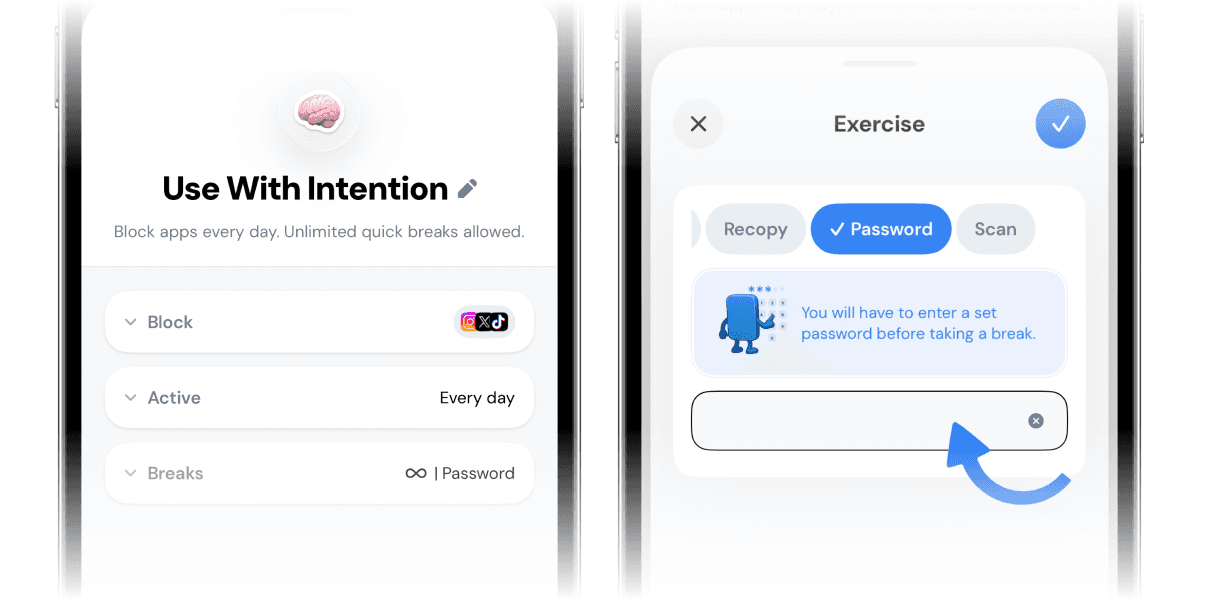
Self-regulation can be really hard. It’s often easier when you challenge yourself together with someone else. So the idea here is to block your apps with Jomo, available for free on iPhone. Each time you want to use them, you’ll need a friend or family member to enter a password on your iPhone so you can access your apps for a limited time. Here’s how to set it up:

  • Install Jomo for free from the App Store

  • In the Rules section, choose the “Use With Intention” template

  • In the Block section, select the distracting apps

  • In the Breaks section, choose the “Password” exercise and let your friend set the password

  • Add the rule


From now on, you’ll need that person to enter the password in Jomo before you can use your apps.

Why does this work? Because you replace unstable self-control with a social constraint — something much harder to break unconsciously. You’re no longer relying only on yourself; you’re also relying on someone else. And very quickly, you’ll realize just how often you reach for your phone when you keep asking them to unlock it!

Exercise #4: Steps in Exchange for Time

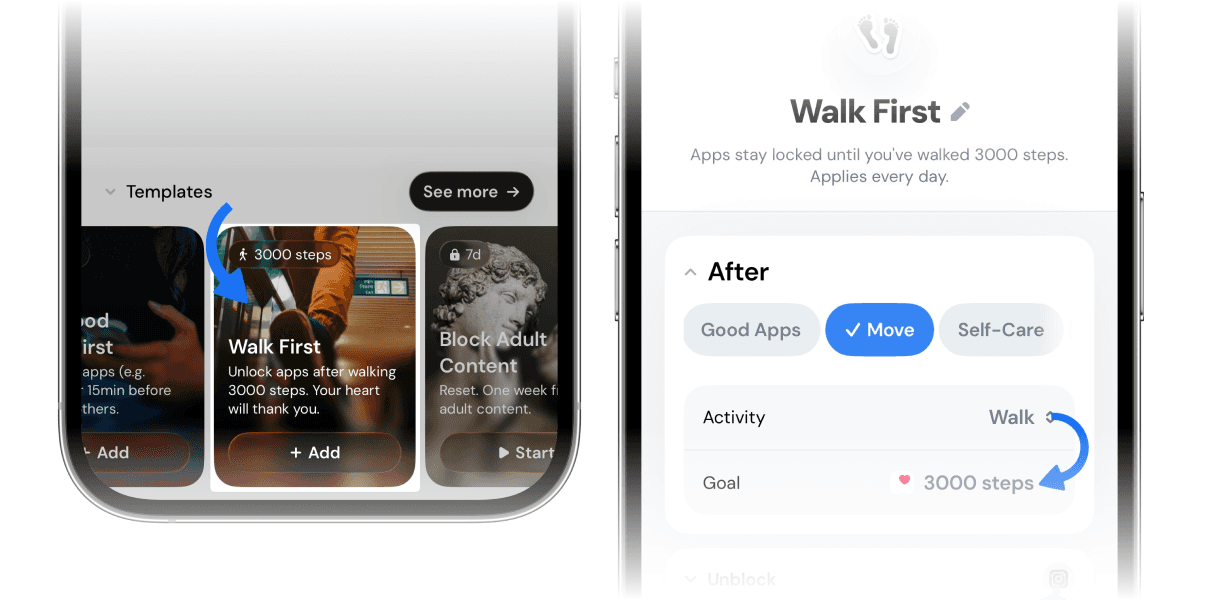
The thing about scrolling is that it’s rarely “earned.” Most of the time it replaces other activities you don’t feel like doing or keep postponing… and you end up slouched on the couch for hours. So the idea here is simple: trade steps (walking) for screen time. To do this, we’ll use the Jomo app (honestly, it’s a great app).

  • Install Jomo for free from the App Store

  • In the Rules section, choose the “Walk First” template

  • In the After section, set a realistic goal (3,000 steps is a great start)

  • In the Block section, choose the distracting apps

  • Add the rule

Now you’ll need to walk 3,000 steps before your apps unlock. Nothing comes for free!
Exercise #5: The Emergency Kit

How are you supposed to disconnect from your phone if you use it for absolutely everything? That just doesn’t work. So for this exercise, you’ll create an “anti-screen emergency kit.” We’re going back to the basics — analog tools, no screens. And you’ll see: your phone isn’t necessarily better than the objects we used before. Your kit could include:

  • A notebook and a pen: perfect for writing things down. You can also doodle when boredom strikes.

  • Crossword puzzles: bored? Fill in a grid. It keeps your brain busy and even improves your vocabulary. Sudoku works too.

  • A good paperback book: long trip or waiting somewhere? Don’t scroll — open your book and continue the story. There are plenty of easy, enjoyable novels out there, so no excuses.

  • A small knitting kit: keep your hands busy while doing something useful. In many cases, we feel a kind of “restlessness” in our hands, so giving them something to do really helps.

  • A digital or disposable camera: forget taking photos with your iPhone. We tend to take too many pictures of everything and nothing. Having a camera in your pocket means choosing quality over quantity. You’ll remember each photo because it captures a specific moment.

Of course, you can add anything you want! This is just a starter list we’re offering you.

What Few People Understand…

Spending too much time on your phone isn’t “normal.” Just because “everyone” seems to spend five hours a day on it doesn’t mean you have to accept that. Choosing not to give your time (aka your most valuable resource) to apps and services designed mainly to sell you ads doesn’t make you an outsider or a “weird” person.

Let’s be honest: at the beginning, it can feel a little difficult. That’s normal. Your brain will look for a substitute. These activities might seem a bit boring at first, but you’ll get used to them quickly. And always remember one thing: reducing your screen time isn’t a punishment. It’s a liberation.

You’re choosing an alternative source of dopamine — slower, but far more meaningful.

Thanks for reading this far, it really means a lot. I wrote this article with my own brain and the help of the internet. Whenever I remember, I add sources so you can keep exploring the topic. If you’d like to try the Jomo app, you can use my referral code FG2HA9 to get 14 days of free access to the paid version.

Sources
[1] RoquelaureForbes - Le piège invisible de la manipulation au travail : le renforcement intermittent, 2025, Université Lyon 3.
[2] WikipediaCaptology, 2025.
[3] WikipediaIronic Rebound, 2025.
[4] Staddon & Al.Operant Conditioning, PubMed Central, 2006.

The Joy Of Missing Out

Crafted in Europe

All rights reserved to Jomo SAS, 2026

The Joy Of Missing Out

Crafted in Europe

All rights reserved to Jomo SAS, 2026