Top 5 Habits To Reduce Screen Time In 2026

You probably do not need another reminder that you spend too much time on your phone. You already feel it. And yet, despite this, changing your screen time habits can feel weirdly hard.
Unplug

Dec 22, 2025

5 min

This article is not about quitting your phone, becoming a digital monk, or relying on sheer willpower. It is about understanding why your phone (and screens in general) are so hard to resist, why many common solutions fail, and what actually works in real life when you want to reduce screen time in a sustainable way.

We will explore 5 simple habits that can drastically reduce screen time without frustration or guilt. Each habit is grounded in psychology, behavioral science, and sleep research, but explained in a way that is easy to apply whether you are a student, a young professional, or simply someone trying to feel more present in daily life.

Before we continue, it might be time for me to introduce myself! I’m Thomas, co-founder of Jomo. Over the last 4 years, I’ve spent most of my time thinking about screen time habits and building an app that’s used by more than 250,000 people.

The most recent 100,000 Jomo users reduced their daily screen time by about 1 hour and 39 minutes in average. Not because they suddenly gain more willpower, but because they change a few small habits that make mindless scrolling harder and intentional phone use easier.

Why You Should Really Keep Your Screen Time in Check in 2026

One of the biggest misconceptions about reducing screen time is that it is mainly a self-control problem. Most people assume that if they were more disciplined, the habit would disappear.

But your screen time habits are not the result of a personal flaw. They are the predictable outcome of systems designed to be effortless, rewarding, and always within reach.

Over the last 15 years, smartphones and apps have systematically removed friction from almost every interaction. Your phone is always nearby. It unlocks instantly. Apps remember your logins, load immediately, and feed you content without requiring any clear goal. Notifications act as constant prompts, pulling your attention even when you were not planning to use your phone in the first place…

The result? The average American now spends about 7 hours a day in front of a screen and this isn’t going to decrease anytime soon.

Why? Because time is money in the attention economy. If an app can keep you engaged longer, it can sell more ads. That’s why the incentives are so one-sided: many platforms are built to maximize time on app.

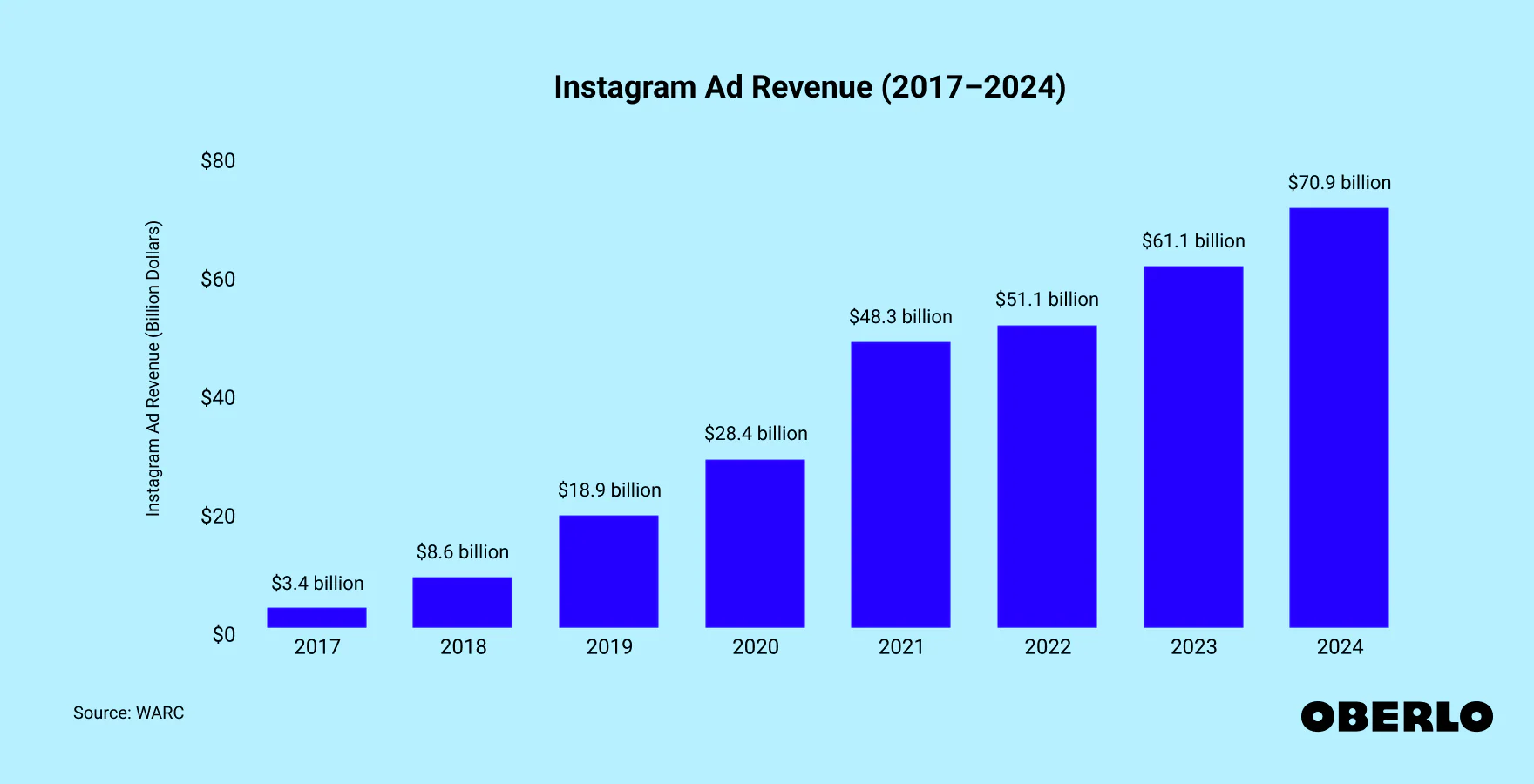
Let’s take Instagram: they generated $70 billion in ad revenue in 2024, a 16% year-over-year increase. As a publicly traded company, their goal is to grow that revenue year after year after year. In short, they’ll keep optimizing their systems to get better at capturing your time and attention. And as you can see from the chart below, they’re pretty good at it.
Your job is to say “stop”, reclaim your time, and start using it on your own terms. Because nobody lies on their deathbed wishing they’d spent more time on Instagram.

2026 is a great time to start with a clean slate and rethink your screen time habits with a more realistic strategy. One where it’s not you “winning” against your phone through sheer willpower. Instead, let’s reshape your environment so better habits become easier and mindless habits become slightly harder.

Why Most Screen Time Solutions Fail

Knowing all this, most people try to fix their screen habits in a very logical way: they set time limits: “30 minutes a day on Instagram” or “1 hour on TikTok”.

On paper, it makes sense. In practice, it often fails. For many people, time limits quickly become frustrating or ineffective. The main reason is timing.

Time limits usually intervene after the habit has already taken over. You open an app casually. You get pulled in by content designed to hold your attention. Your brain is engaged, your focus is captured, and you are emotionally invested. Then… the limit hits, and you get abruptly kicked out.
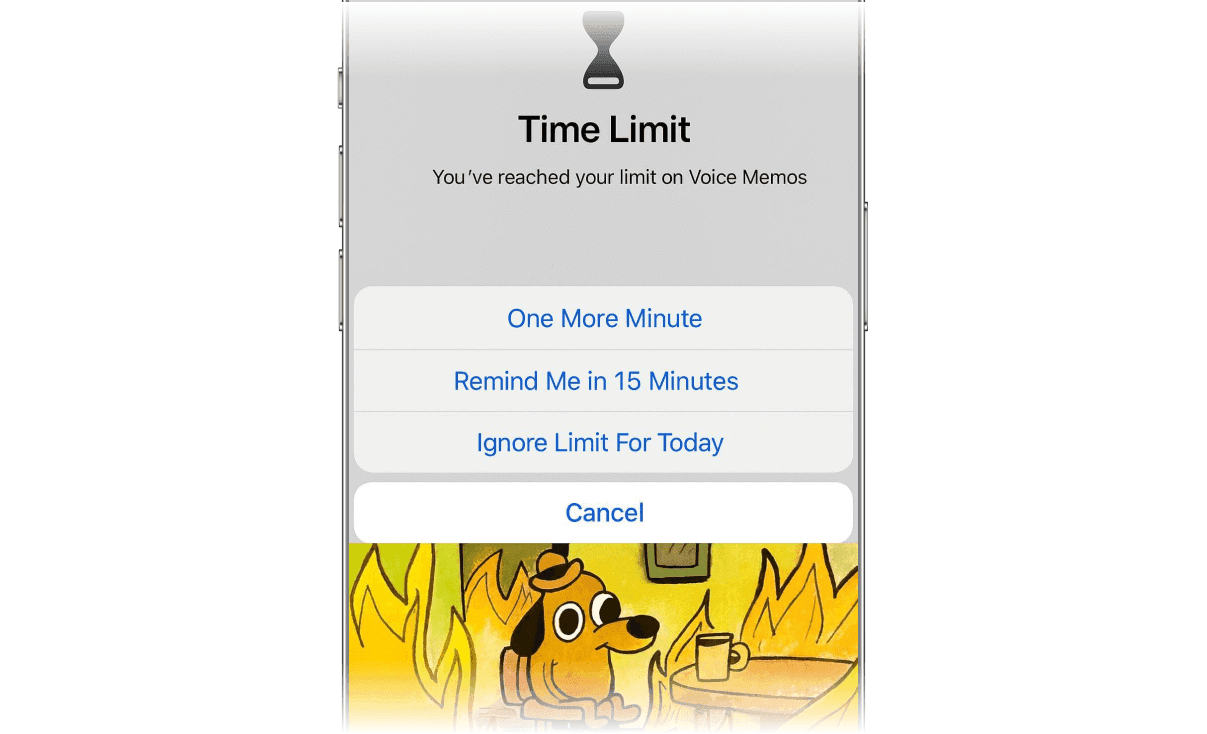
You when your time limit hits.

At that point, the brain experiences the interruption not as help, but as loss. This often leads to overriding limits, disabling blockers, and feeling guilty afterward. None of these outcomes support long-term habit change.

Behavioral research, including the well-known Self-Determination Theory by Ryan and Deci, suggests habits stick better when people feel autonomous and intentional, not controlled. When a system feels punitive, resistance is a natural response, even if the goal is positive.

This article is not about quitting your phone, becoming a digital monk, or relying on sheer willpower. It is about understanding why your phone (and screens in general) are so hard to resist, why many common solutions fail, and what actually works in real life when you want to reduce screen time in a sustainable way.

We will explore 5 simple habits that can drastically reduce screen time without frustration or guilt. Each habit is grounded in psychology, behavioral science, and sleep research, but explained in a way that is easy to apply whether you are a student, a young professional, or simply someone trying to feel more present in daily life.

Before we continue, it might be time for me to introduce myself! I’m Thomas, co-founder of Jomo. Over the last 4 years, I’ve spent most of my time thinking about screen time habits and building an app that’s used by more than 250,000 people.

The most recent 100,000 Jomo users reduced their daily screen time by about 1 hour and 39 minutes in average. Not because they suddenly gain more willpower, but because they change a few small habits that make mindless scrolling harder and intentional phone use easier.

Why You Should Really Keep Your Screen Time in Check in 2026

One of the biggest misconceptions about reducing screen time is that it is mainly a self-control problem. Most people assume that if they were more disciplined, the habit would disappear.

But your screen time habits are not the result of a personal flaw. They are the predictable outcome of systems designed to be effortless, rewarding, and always within reach.

Over the last 15 years, smartphones and apps have systematically removed friction from almost every interaction. Your phone is always nearby. It unlocks instantly. Apps remember your logins, load immediately, and feed you content without requiring any clear goal. Notifications act as constant prompts, pulling your attention even when you were not planning to use your phone in the first place…

The result? The average American now spends about 7 hours a day in front of a screen and this isn’t going to decrease anytime soon.

Why? Because time is money in the attention economy. If an app can keep you engaged longer, it can sell more ads. That’s why the incentives are so one-sided: many platforms are built to maximize time on app.

Let’s take Instagram: they generated $70 billion in ad revenue in 2024, a 16% year-over-year increase. As a publicly traded company, their goal is to grow that revenue year after year after year. In short, they’ll keep optimizing their systems to get better at capturing your time and attention. And as you can see from the chart below, they’re pretty good at it.

Your job is to say “stop”, reclaim your time, and start using it on your own terms. Because nobody lies on their deathbed wishing they’d spent more time on Instagram.

2026 is a great time to start with a clean slate and rethink your screen time habits with a more realistic strategy. One where it’s not you “winning” against your phone through sheer willpower. Instead, let’s reshape your environment so better habits become easier and mindless habits become slightly harder.

Why Most Screen Time Solutions Fail

Knowing all this, most people try to fix their screen habits in a very logical way: they set time limits: “30 minutes a day on Instagram” or “1 hour on TikTok”.

On paper, it makes sense. In practice, it often fails. For many people, time limits quickly become frustrating or ineffective. The main reason is timing.

Time limits usually intervene after the habit has already taken over. You open an app casually. You get pulled in by content designed to hold your attention. Your brain is engaged, your focus is captured, and you are emotionally invested. Then… the limit hits, and you get abruptly kicked out.

You when your time limit hits.

At that point, the brain experiences the interruption not as help, but as loss. This often leads to overriding limits, disabling blockers, and feeling guilty afterward. None of these outcomes support long-term habit change.

Behavioral research, including the well-known Self-Determination Theory by Ryan and Deci, suggests habits stick better when people feel autonomous and intentional, not controlled. When a system feels punitive, resistance is a natural response, even if the goal is positive.

This article is not about quitting your phone, becoming a digital monk, or relying on sheer willpower. It is about understanding why your phone (and screens in general) are so hard to resist, why many common solutions fail, and what actually works in real life when you want to reduce screen time in a sustainable way.

We will explore 5 simple habits that can drastically reduce screen time without frustration or guilt. Each habit is grounded in psychology, behavioral science, and sleep research, but explained in a way that is easy to apply whether you are a student, a young professional, or simply someone trying to feel more present in daily life.

Before we continue, it might be time for me to introduce myself! I’m Thomas, co-founder of Jomo. Over the last 4 years, I’ve spent most of my time thinking about screen time habits and building an app that’s used by more than 250,000 people.

The most recent 100,000 Jomo users reduced their daily screen time by about 1 hour and 39 minutes in average. Not because they suddenly gain more willpower, but because they change a few small habits that make mindless scrolling harder and intentional phone use easier.

Why You Should Really Keep Your Screen Time in Check in 2026

One of the biggest misconceptions about reducing screen time is that it is mainly a self-control problem. Most people assume that if they were more disciplined, the habit would disappear.

But your screen time habits are not the result of a personal flaw. They are the predictable outcome of systems designed to be effortless, rewarding, and always within reach.

Over the last 15 years, smartphones and apps have systematically removed friction from almost every interaction. Your phone is always nearby. It unlocks instantly. Apps remember your logins, load immediately, and feed you content without requiring any clear goal. Notifications act as constant prompts, pulling your attention even when you were not planning to use your phone in the first place…

The result? The average American now spends about 7 hours a day in front of a screen and this isn’t going to decrease anytime soon.

Why? Because time is money in the attention economy. If an app can keep you engaged longer, it can sell more ads. That’s why the incentives are so one-sided: many platforms are built to maximize time on app.

Let’s take Instagram: they generated $70 billion in ad revenue in 2024, a 16% year-over-year increase. As a publicly traded company, their goal is to grow that revenue year after year after year. In short, they’ll keep optimizing their systems to get better at capturing your time and attention. And as you can see from the chart below, they’re pretty good at it.

Your job is to say “stop”, reclaim your time, and start using it on your own terms. Because nobody lies on their deathbed wishing they’d spent more time on Instagram.

2026 is a great time to start with a clean slate and rethink your screen time habits with a more realistic strategy. One where it’s not you “winning” against your phone through sheer willpower. Instead, let’s reshape your environment so better habits become easier and mindless habits become slightly harder.

Why Most Screen Time Solutions Fail

Knowing all this, most people try to fix their screen habits in a very logical way: they set time limits: “30 minutes a day on Instagram” or “1 hour on TikTok”.

On paper, it makes sense. In practice, it often fails. For many people, time limits quickly become frustrating or ineffective. The main reason is timing.

Time limits usually intervene after the habit has already taken over. You open an app casually. You get pulled in by content designed to hold your attention. Your brain is engaged, your focus is captured, and you are emotionally invested. Then… the limit hits, and you get abruptly kicked out.

You when your time limit hits.

At that point, the brain experiences the interruption not as help, but as loss. This often leads to overriding limits, disabling blockers, and feeling guilty afterward. None of these outcomes support long-term habit change.

Behavioral research, including the well-known Self-Determination Theory by Ryan and Deci, suggests habits stick better when people feel autonomous and intentional, not controlled. When a system feels punitive, resistance is a natural response, even if the goal is positive.

Your phone, your rules. Block on command and own your time.

Your phone, your rules. Block on command and own your time.

Your phone, your rules. Block on command and own your time.

5 Habits That Actually Reduce Screen Time

1. Add Friction Instead of Relying on Time Limits

Distracting apps (social media, streaming, etc.) are designed to minimize friction at every step. That is precisely why adding friction back in is one of the most effective ways to change a habit.

Friction does not mean punishment. It means creating a small pause between impulse and action. That pause is often enough to reintroduce awareness.

In everyday life, friction shapes behavior constantly. If unhealthy food is the easiest option at home, you will eat it more often. If exercise requires a long commute, you will do it less. Changing the path is often more powerful than trying to change motivation.

Applied to your screen time habit, this means shifting away from “I will limit my use of Instagram to 30 minutes a day” and toward:

  • Limiting the number of opens

  • Adding a tiny speed bump before each opening

  • Deciding how long you want to stay before entering

For example:

  • 3 openings per day of Instagram

  • 10 minutes each

  • with a small action before opening (waiting, breathing, writing your reason for using the app)

This changes the entire feel of the habit. You are not getting cut off mid-scroll. You are choosing sessions on purpose. You are more likely to stop naturally because you went in with a plan.

If you are using an iPhone or iPad, you can start adding friction in the next 2 minutes:

  • Download Jomo on the App Store

  • Open the app and go to the Rules tab

  • Tap “+” then “Recurring session”

  • Choose the apps you want to block

  • In the Breaks section, choose how many breaks (or opens) you want to allow per day

  • Tap “Schedule”

  • Done! These apps will now be blocked by default on your phone or tablet. You’ll need to manually request access and specify how many minutes you want to spend on them.
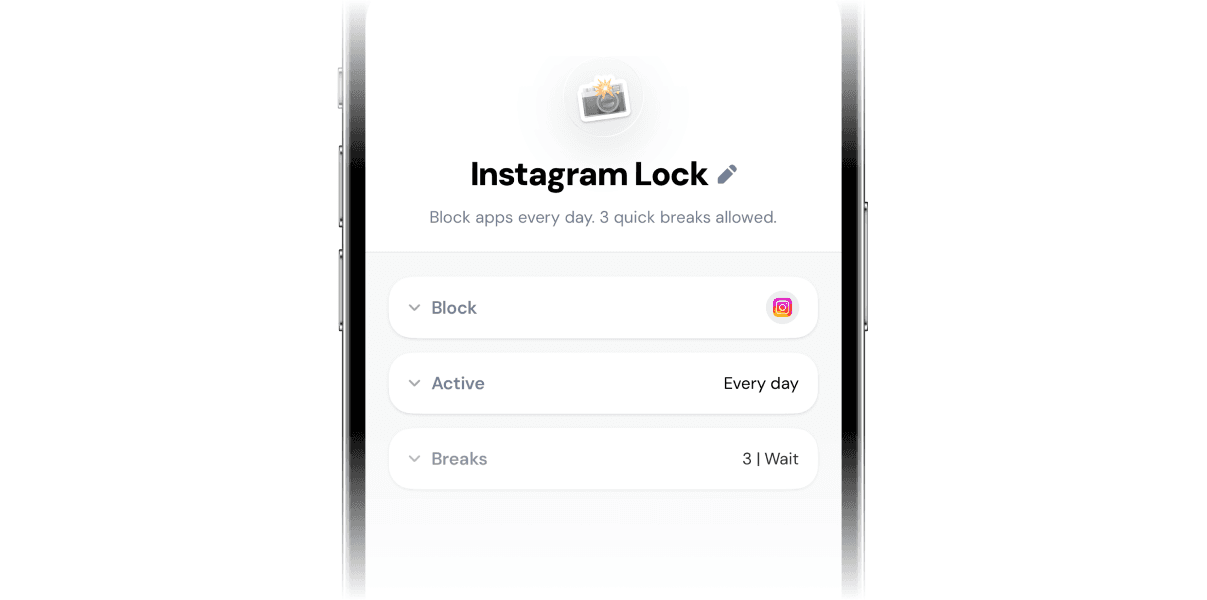
Instagram is blocked by default. 3 opens allowed per day.

If you have to try only one thing from this article, try this one. Friction is underrated, and it compounds quickly!

  1. Remove Notifications To Reclaim Your Attention

Notifications are one of the most underestimated drivers of screen time. They are external triggers, and triggers feed habits.

Even when you do not open a notification, it can still fragment attention and increase mental load. There is research showing that notifications and phone-related interruptions can impair attention and cognitive control.  And beyond notifications, studies also show that the mere presence of a smartphone can lower cognitive performance, which hints at how sensitive attention is to these cues.

A simple way to think about notifications is this: you have invited dozens of apps to tap you on the shoulder all day long, and most of them are not saying anything urgent.

A strong habit here is to turn off almost everything. Not “reduce”. Not “only banners off but keep badges”. Actually remove notifications for social media, news, shopping, and all non-essential apps.

In practice, follow this simple guide:

  • Set aside 10 to 15 minutes

  • Open the Settings app on your phone then go the notifications section

  • Do a clean sweep. Keep only a few essentials, usually calls and messages, and maybe one or two more depending on your needs. A useful rule of thumb: no more than three to five apps should be able to reach you.
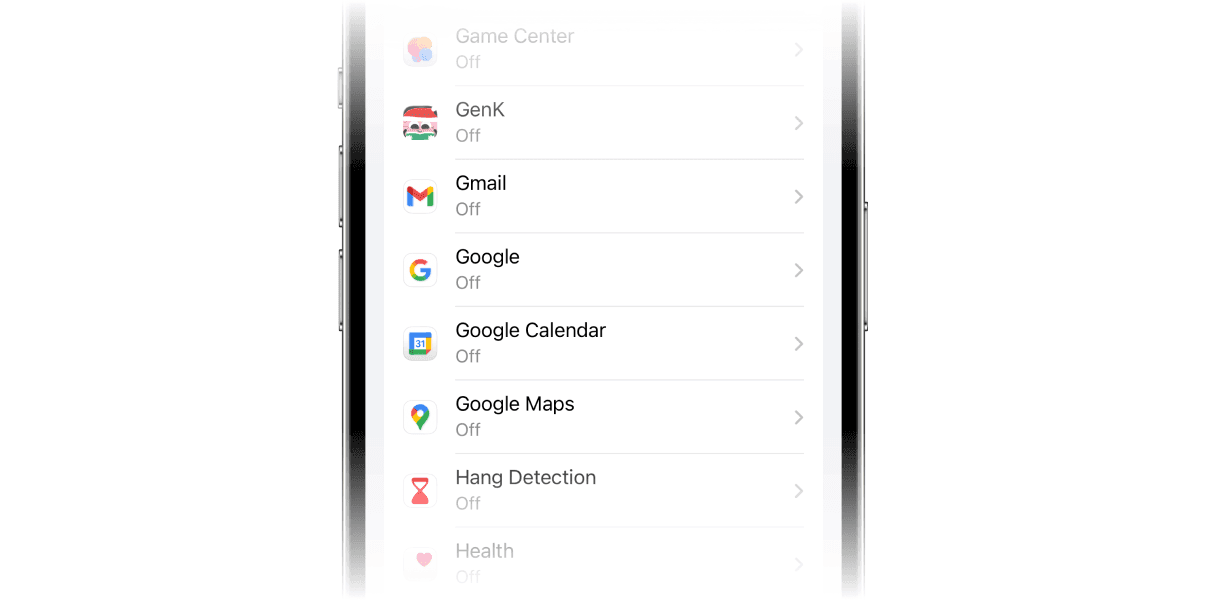
What if you just turned them all off?

If you really want to stay informed without being interrupted, use scheduled summaries (available on recent versions of iOS or Android) when available. That keeps the information, but breaks the habit loop of constant checking.

This single habit often reduces screen time without you “trying” to reduce it, because it removes the trigger that starts the habit in the first place.

3. Avoid Screens for 2 Hours Before Sleep (Or at Least Make a Real Wind-Down)

Sleep and screen time feed each other. When you are tired, your self-control drops and your scrolling habit gets stronger. Then the scrolling habit pushes your bedtime later, stimulates your brain, and can make sleep worse. It is a loop.

There are two main issues here: light and stimulation.

On the light side, exposure to bright light in the evening can suppress melatonin, and blue light seems especially potent. This does not mean screens are the only reason people sleep badly, and not every study finds the same effect size in real life, especially in adults. But as a habit strategy, reducing bright, stimulating screen use close to bedtime is still a solid lever because it tackles both light and mental arousal.

On the stimulation side, the bigger problem is often content. A calm video can be fine, but doomscrolling, heated threads, or short-form content designed to keep you hooked can wind up your brain right when you want it to slow down.

At bedtime, opt for reading a book or watching a calm movie or series.

This is why a practical habit I recommend is to block all apps on your phone except a few essentials before bedtime and until next morning.

However, start realistically and schedule this “phone curfew” only two days per week. Then ramp up gradually if you’re comfortable with it. Remember: one is better than zero.

Modern app blockers like Jomo help here because they let you create a flexible evening habit. You can schedule a block from 10PM to 6AM, but only on certain days at first. That is one reason tools like Jomo can feel more sustainable than rigid downtime settings that apply every night with no nuance.

Also, try one small environmental habit that supports sleep: charge your phone outside the bedroom. Even if you still watch something on a laptop sometimes, removing the “phone in bed” habit can make a significant difference.

4. Protect the First Hour After Waking Up

The first moments of the day matter more than we realize. After sleep, your attention is more flexible, and your brain is more sensitive to stimulation. What you consume in that first window tends to shape your mood and stress level for the rest of the day.

When you check social media, email, or news immediately, you expose your nervous system to demands, comparisons, and potential negativity before you have had a chance to ground yourself. Then your day starts in reaction mode, and the scrolling habit tends to follow you.

The habit here is simple: no phone for the first hour after waking up. Not forever. Not every morning perfectly. Just as a default.

To make it easier, first change the environment. Do not use your phone as an alarm clock. Use a dedicated alarm (I'm a big believer in going back to single-purpose objects), and keep your phone out of arm’s reach, ideally in another room. That one change removes a huge amount of friction in the right direction.
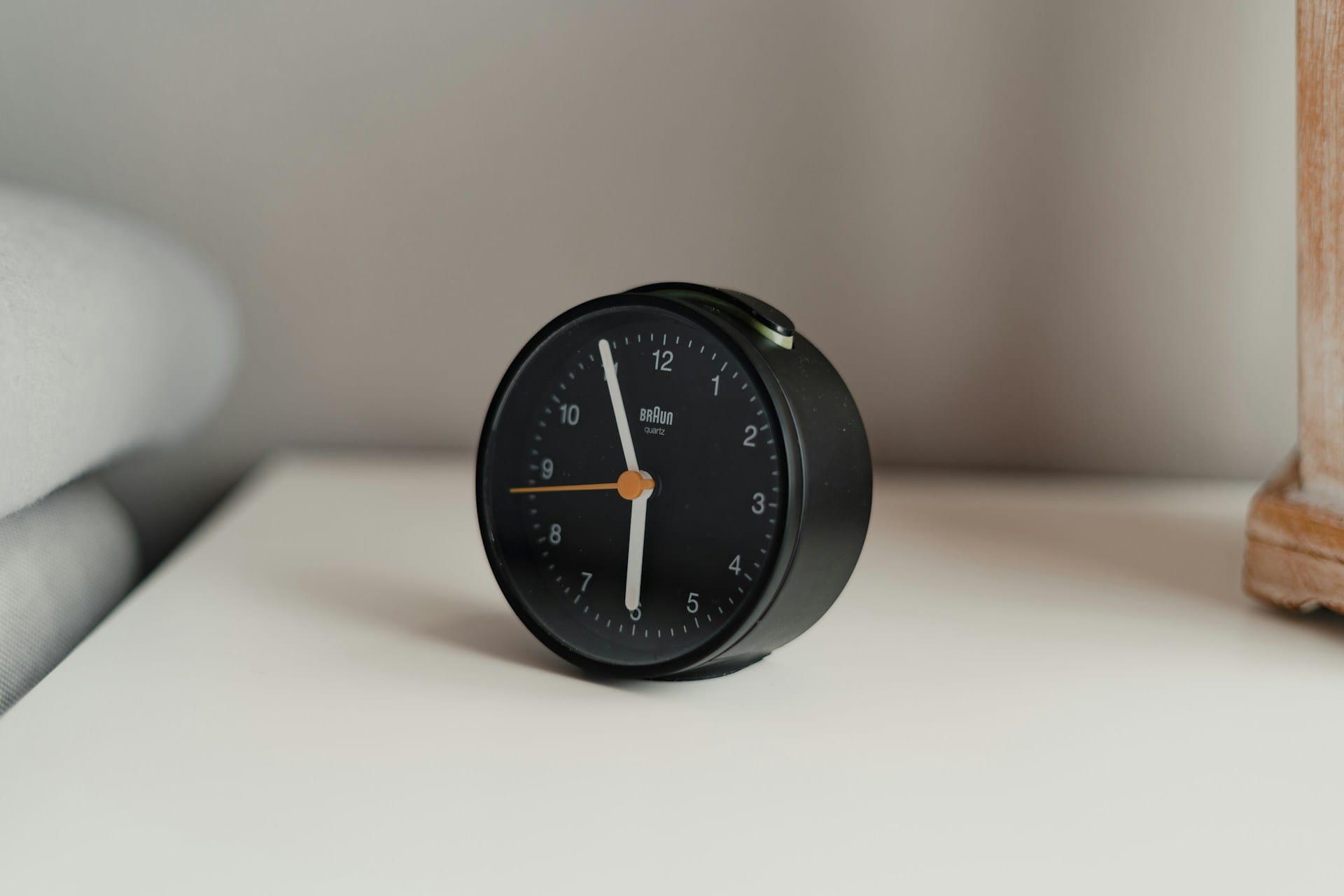
The more you bring back single-purpose objects, the less the phone becomes the center of your universe.

You can also use an app blocker like Jomo to support the habit, especially in the beginning. For example, you can schedule a morning block (say 6AM to 9AM) that blocks all apps while leaving essentials available. In Jomo, this is the kind of schedule that turns a “good intention” into a repeatable habit.

This goal here is not to have a perfect morning routine but simply to delay consumption so your brain starts the day on your terms.

5. Do Not Use Your Phone When You Are With Other People

This habit sounds obvious, but it is one of the most powerful.

Phones do not just take time, they dilute moments. Even a phone on the table can reduce the quality of a conversation and the sense of connection people feel. Attention does not split cleanly. It thins.

The habit here is not never use your phone on social situations. It is do not mix incompatible types of time.

If you are with friends, be with friends. If you are scrolling, scroll on purpose. Mixing the two usually degrades both experiences.

A realistic version of this habit is to choose specific social contexts where the phone stays away: meals, walks, cafés, or any time you are catching up with someone you care about. Put it in your bag, switch it off, or keep it out of sight. Just be present.

Over time, this habit does something unexpected. It makes you realize how often your phone use is not even enjoyable. It is just a reflex. And when you break the reflex, you get your moments back.

Bonus Habit: A Phone-Free Day Each Week

Some people struggle with daily rules but thrive with rituals. A “Phone-Free Sunday” (or any day you choose) can act as a reset.

This does not mean abandoning essential tools. It means blocking distractions while keeping what you actually need, like calls, messages, maps, or music.

You could also allow yourself a few intentional unlocks. For example: three unlocks for the day. That way, you are not trapped, but you are still in log off mode for most of the day.

In Jomo, you can set a schedule on Sundays that blocks distracting apps, keeps essentials, and allows a limited number of unlocks. The point is not perfection. The point is to create one day where your brain experiences a different default: slower, quieter, more grounded. That experience tends to spill into the rest of the week (especially if you do this before a new week starts!).


Reducing screen time is not about becoming stricter with yourself. It is about designing an environment where better habits are easier, and mindless habits face gentle resistance.

You do not need to adopt every habit at once. Start with one. Remove notifications. Add friction. Protect your mornings. Build an evening wind-down twice a week. Put your phone away at dinner.

Small habits compound. And over time, many people discover something important: they do not miss their phone as much as they thought. What they missed was their attention, their presence, and the feeling that their time belongs to them.

Thanks for reading so far! If you want to give my app Jomo a try, download it from the App Store and use my code JZ5RP5 to get the Plus plan for 14 days.

5 Habits That Actually Reduce Screen Time

1. Add Friction Instead of Relying on Time Limits

Distracting apps (social media, streaming, etc.) are designed to minimize friction at every step. That is precisely why adding friction back in is one of the most effective ways to change a habit.

Friction does not mean punishment. It means creating a small pause between impulse and action. That pause is often enough to reintroduce awareness.

In everyday life, friction shapes behavior constantly. If unhealthy food is the easiest option at home, you will eat it more often. If exercise requires a long commute, you will do it less. Changing the path is often more powerful than trying to change motivation.

Applied to your screen time habit, this means shifting away from “I will limit my use of Instagram to 30 minutes a day” and toward:

  • Limiting the number of opens

  • Adding a tiny speed bump before each opening

  • Deciding how long you want to stay before entering

For example:

  • 3 openings per day of Instagram

  • 10 minutes each

  • with a small action before opening (waiting, breathing, writing your reason for using the app)

This changes the entire feel of the habit. You are not getting cut off mid-scroll. You are choosing sessions on purpose. You are more likely to stop naturally because you went in with a plan.

If you are using an iPhone or iPad, you can start adding friction in the next 2 minutes:

  • Download Jomo on the App Store

  • Open the app and go to the Rules tab

  • Tap “+” then “Recurring session”

  • Choose the apps you want to block

  • In the Breaks section, choose how many breaks (or opens) you want to allow per day

  • Tap “Schedule”

  • Done! These apps will now be blocked by default on your phone or tablet. You’ll need to manually request access and specify how many minutes you want to spend on them.

Instagram is blocked by default. 3 opens allowed per day.

If you have to try only one thing from this article, try this one. Friction is underrated, and it compounds quickly!

  1. Remove Notifications To Reclaim Your Attention

Notifications are one of the most underestimated drivers of screen time. They are external triggers, and triggers feed habits.

Even when you do not open a notification, it can still fragment attention and increase mental load. There is research showing that notifications and phone-related interruptions can impair attention and cognitive control.  And beyond notifications, studies also show that the mere presence of a smartphone can lower cognitive performance, which hints at how sensitive attention is to these cues.

A simple way to think about notifications is this: you have invited dozens of apps to tap you on the shoulder all day long, and most of them are not saying anything urgent.

A strong habit here is to turn off almost everything. Not “reduce”. Not “only banners off but keep badges”. Actually remove notifications for social media, news, shopping, and all non-essential apps.

In practice, follow this simple guide:

  • Set aside 10 to 15 minutes

  • Open the Settings app on your phone then go the notifications section

  • Do a clean sweep. Keep only a few essentials, usually calls and messages, and maybe one or two more depending on your needs. A useful rule of thumb: no more than three to five apps should be able to reach you.

What if you just turned them all off?

If you really want to stay informed without being interrupted, use scheduled summaries (available on recent versions of iOS or Android) when available. That keeps the information, but breaks the habit loop of constant checking.

This single habit often reduces screen time without you “trying” to reduce it, because it removes the trigger that starts the habit in the first place.

3. Avoid Screens for 2 Hours Before Sleep (Or at Least Make a Real Wind-Down)

Sleep and screen time feed each other. When you are tired, your self-control drops and your scrolling habit gets stronger. Then the scrolling habit pushes your bedtime later, stimulates your brain, and can make sleep worse. It is a loop.

There are two main issues here: light and stimulation.

On the light side, exposure to bright light in the evening can suppress melatonin, and blue light seems especially potent. This does not mean screens are the only reason people sleep badly, and not every study finds the same effect size in real life, especially in adults. But as a habit strategy, reducing bright, stimulating screen use close to bedtime is still a solid lever because it tackles both light and mental arousal.

On the stimulation side, the bigger problem is often content. A calm video can be fine, but doomscrolling, heated threads, or short-form content designed to keep you hooked can wind up your brain right when you want it to slow down.

At bedtime, opt for reading a book or watching a calm movie or series.

This is why a practical habit I recommend is to block all apps on your phone except a few essentials before bedtime and until next morning.

However, start realistically and schedule this “phone curfew” only two days per week. Then ramp up gradually if you’re comfortable with it. Remember: one is better than zero.

Modern app blockers like Jomo help here because they let you create a flexible evening habit. You can schedule a block from 10PM to 6AM, but only on certain days at first. That is one reason tools like Jomo can feel more sustainable than rigid downtime settings that apply every night with no nuance.

Also, try one small environmental habit that supports sleep: charge your phone outside the bedroom. Even if you still watch something on a laptop sometimes, removing the “phone in bed” habit can make a significant difference.

4. Protect the First Hour After Waking Up

The first moments of the day matter more than we realize. After sleep, your attention is more flexible, and your brain is more sensitive to stimulation. What you consume in that first window tends to shape your mood and stress level for the rest of the day.

When you check social media, email, or news immediately, you expose your nervous system to demands, comparisons, and potential negativity before you have had a chance to ground yourself. Then your day starts in reaction mode, and the scrolling habit tends to follow you.

The habit here is simple: no phone for the first hour after waking up. Not forever. Not every morning perfectly. Just as a default.

To make it easier, first change the environment. Do not use your phone as an alarm clock. Use a dedicated alarm (I'm a big believer in going back to single-purpose objects), and keep your phone out of arm’s reach, ideally in another room. That one change removes a huge amount of friction in the right direction.

The more you bring back single-purpose objects, the less the phone becomes the center of your universe.

You can also use an app blocker like Jomo to support the habit, especially in the beginning. For example, you can schedule a morning block (say 6AM to 9AM) that blocks all apps while leaving essentials available. In Jomo, this is the kind of schedule that turns a “good intention” into a repeatable habit.

This goal here is not to have a perfect morning routine but simply to delay consumption so your brain starts the day on your terms.

5. Do Not Use Your Phone When You Are With Other People

This habit sounds obvious, but it is one of the most powerful.

Phones do not just take time, they dilute moments. Even a phone on the table can reduce the quality of a conversation and the sense of connection people feel. Attention does not split cleanly. It thins.

The habit here is not never use your phone on social situations. It is do not mix incompatible types of time.

If you are with friends, be with friends. If you are scrolling, scroll on purpose. Mixing the two usually degrades both experiences.

A realistic version of this habit is to choose specific social contexts where the phone stays away: meals, walks, cafés, or any time you are catching up with someone you care about. Put it in your bag, switch it off, or keep it out of sight. Just be present.

Over time, this habit does something unexpected. It makes you realize how often your phone use is not even enjoyable. It is just a reflex. And when you break the reflex, you get your moments back.

Bonus Habit: A Phone-Free Day Each Week

Some people struggle with daily rules but thrive with rituals. A “Phone-Free Sunday” (or any day you choose) can act as a reset.

This does not mean abandoning essential tools. It means blocking distractions while keeping what you actually need, like calls, messages, maps, or music.

You could also allow yourself a few intentional unlocks. For example: three unlocks for the day. That way, you are not trapped, but you are still in log off mode for most of the day.

In Jomo, you can set a schedule on Sundays that blocks distracting apps, keeps essentials, and allows a limited number of unlocks. The point is not perfection. The point is to create one day where your brain experiences a different default: slower, quieter, more grounded. That experience tends to spill into the rest of the week (especially if you do this before a new week starts!).


Reducing screen time is not about becoming stricter with yourself. It is about designing an environment where better habits are easier, and mindless habits face gentle resistance.

You do not need to adopt every habit at once. Start with one. Remove notifications. Add friction. Protect your mornings. Build an evening wind-down twice a week. Put your phone away at dinner.

Small habits compound. And over time, many people discover something important: they do not miss their phone as much as they thought. What they missed was their attention, their presence, and the feeling that their time belongs to them.

Thanks for reading so far! If you want to give my app Jomo a try, download it from the App Store and use my code JZ5RP5 to get the Plus plan for 14 days.

5 Habits That Actually Reduce Screen Time

1. Add Friction Instead of Relying on Time Limits

Distracting apps (social media, streaming, etc.) are designed to minimize friction at every step. That is precisely why adding friction back in is one of the most effective ways to change a habit.

Friction does not mean punishment. It means creating a small pause between impulse and action. That pause is often enough to reintroduce awareness.

In everyday life, friction shapes behavior constantly. If unhealthy food is the easiest option at home, you will eat it more often. If exercise requires a long commute, you will do it less. Changing the path is often more powerful than trying to change motivation.

Applied to your screen time habit, this means shifting away from “I will limit my use of Instagram to 30 minutes a day” and toward:

  • Limiting the number of opens

  • Adding a tiny speed bump before each opening

  • Deciding how long you want to stay before entering

For example:

  • 3 openings per day of Instagram

  • 10 minutes each

  • with a small action before opening (waiting, breathing, writing your reason for using the app)

This changes the entire feel of the habit. You are not getting cut off mid-scroll. You are choosing sessions on purpose. You are more likely to stop naturally because you went in with a plan.

If you are using an iPhone or iPad, you can start adding friction in the next 2 minutes:

  • Download Jomo on the App Store

  • Open the app and go to the Rules tab

  • Tap “+” then “Recurring session”

  • Choose the apps you want to block

  • In the Breaks section, choose how many breaks (or opens) you want to allow per day

  • Tap “Schedule”

  • Done! These apps will now be blocked by default on your phone or tablet. You’ll need to manually request access and specify how many minutes you want to spend on them.

Instagram is blocked by default. 3 opens allowed per day.

If you have to try only one thing from this article, try this one. Friction is underrated, and it compounds quickly!

  1. Remove Notifications To Reclaim Your Attention

Notifications are one of the most underestimated drivers of screen time. They are external triggers, and triggers feed habits.

Even when you do not open a notification, it can still fragment attention and increase mental load. There is research showing that notifications and phone-related interruptions can impair attention and cognitive control.  And beyond notifications, studies also show that the mere presence of a smartphone can lower cognitive performance, which hints at how sensitive attention is to these cues.

A simple way to think about notifications is this: you have invited dozens of apps to tap you on the shoulder all day long, and most of them are not saying anything urgent.

A strong habit here is to turn off almost everything. Not “reduce”. Not “only banners off but keep badges”. Actually remove notifications for social media, news, shopping, and all non-essential apps.

In practice, follow this simple guide:

  • Set aside 10 to 15 minutes

  • Open the Settings app on your phone then go the notifications section

  • Do a clean sweep. Keep only a few essentials, usually calls and messages, and maybe one or two more depending on your needs. A useful rule of thumb: no more than three to five apps should be able to reach you.

What if you just turned them all off?

If you really want to stay informed without being interrupted, use scheduled summaries (available on recent versions of iOS or Android) when available. That keeps the information, but breaks the habit loop of constant checking.

This single habit often reduces screen time without you “trying” to reduce it, because it removes the trigger that starts the habit in the first place.

3. Avoid Screens for 2 Hours Before Sleep (Or at Least Make a Real Wind-Down)

Sleep and screen time feed each other. When you are tired, your self-control drops and your scrolling habit gets stronger. Then the scrolling habit pushes your bedtime later, stimulates your brain, and can make sleep worse. It is a loop.

There are two main issues here: light and stimulation.

On the light side, exposure to bright light in the evening can suppress melatonin, and blue light seems especially potent. This does not mean screens are the only reason people sleep badly, and not every study finds the same effect size in real life, especially in adults. But as a habit strategy, reducing bright, stimulating screen use close to bedtime is still a solid lever because it tackles both light and mental arousal.

On the stimulation side, the bigger problem is often content. A calm video can be fine, but doomscrolling, heated threads, or short-form content designed to keep you hooked can wind up your brain right when you want it to slow down.

At bedtime, opt for reading a book or watching a calm movie or series.

This is why a practical habit I recommend is to block all apps on your phone except a few essentials before bedtime and until next morning.

However, start realistically and schedule this “phone curfew” only two days per week. Then ramp up gradually if you’re comfortable with it. Remember: one is better than zero.

Modern app blockers like Jomo help here because they let you create a flexible evening habit. You can schedule a block from 10PM to 6AM, but only on certain days at first. That is one reason tools like Jomo can feel more sustainable than rigid downtime settings that apply every night with no nuance.

Also, try one small environmental habit that supports sleep: charge your phone outside the bedroom. Even if you still watch something on a laptop sometimes, removing the “phone in bed” habit can make a significant difference.

4. Protect the First Hour After Waking Up

The first moments of the day matter more than we realize. After sleep, your attention is more flexible, and your brain is more sensitive to stimulation. What you consume in that first window tends to shape your mood and stress level for the rest of the day.

When you check social media, email, or news immediately, you expose your nervous system to demands, comparisons, and potential negativity before you have had a chance to ground yourself. Then your day starts in reaction mode, and the scrolling habit tends to follow you.

The habit here is simple: no phone for the first hour after waking up. Not forever. Not every morning perfectly. Just as a default.

To make it easier, first change the environment. Do not use your phone as an alarm clock. Use a dedicated alarm (I'm a big believer in going back to single-purpose objects), and keep your phone out of arm’s reach, ideally in another room. That one change removes a huge amount of friction in the right direction.

The more you bring back single-purpose objects, the less the phone becomes the center of your universe.

You can also use an app blocker like Jomo to support the habit, especially in the beginning. For example, you can schedule a morning block (say 6AM to 9AM) that blocks all apps while leaving essentials available. In Jomo, this is the kind of schedule that turns a “good intention” into a repeatable habit.

This goal here is not to have a perfect morning routine but simply to delay consumption so your brain starts the day on your terms.

5. Do Not Use Your Phone When You Are With Other People

This habit sounds obvious, but it is one of the most powerful.

Phones do not just take time, they dilute moments. Even a phone on the table can reduce the quality of a conversation and the sense of connection people feel. Attention does not split cleanly. It thins.

The habit here is not never use your phone on social situations. It is do not mix incompatible types of time.

If you are with friends, be with friends. If you are scrolling, scroll on purpose. Mixing the two usually degrades both experiences.

A realistic version of this habit is to choose specific social contexts where the phone stays away: meals, walks, cafés, or any time you are catching up with someone you care about. Put it in your bag, switch it off, or keep it out of sight. Just be present.

Over time, this habit does something unexpected. It makes you realize how often your phone use is not even enjoyable. It is just a reflex. And when you break the reflex, you get your moments back.

Bonus Habit: A Phone-Free Day Each Week

Some people struggle with daily rules but thrive with rituals. A “Phone-Free Sunday” (or any day you choose) can act as a reset.

This does not mean abandoning essential tools. It means blocking distractions while keeping what you actually need, like calls, messages, maps, or music.

You could also allow yourself a few intentional unlocks. For example: three unlocks for the day. That way, you are not trapped, but you are still in log off mode for most of the day.

In Jomo, you can set a schedule on Sundays that blocks distracting apps, keeps essentials, and allows a limited number of unlocks. The point is not perfection. The point is to create one day where your brain experiences a different default: slower, quieter, more grounded. That experience tends to spill into the rest of the week (especially if you do this before a new week starts!).


Reducing screen time is not about becoming stricter with yourself. It is about designing an environment where better habits are easier, and mindless habits face gentle resistance.

You do not need to adopt every habit at once. Start with one. Remove notifications. Add friction. Protect your mornings. Build an evening wind-down twice a week. Put your phone away at dinner.

Small habits compound. And over time, many people discover something important: they do not miss their phone as much as they thought. What they missed was their attention, their presence, and the feeling that their time belongs to them.

Thanks for reading so far! If you want to give my app Jomo a try, download it from the App Store and use my code JZ5RP5 to get the Plus plan for 14 days.

Credits
Photographies and illustrations by Unsplash. Screenshots by Jomo.
[1] Duarte F. (2025). Alarming average screen time statistics. Exploding Topics.  
[2] Oberlo. (2024). Instagram ad revenue (2017–2024). Oberlo.
[3] Ryan, R. M., & Deci, E. L. (2000). Self-determination theory and the facilitation of intrinsic motivation, social development, and well-being. American Psychologist.
[4] Upshaw, J. D., Stevens, C. E., Jr., Ganis, G., & Zabelina, D. L. (2022). The hidden cost of a smartphone: The effects of smartphone notifications on cognitive control from a behavioral and electrophysiological perspective. PLoS ONE, 17(11).
[5] A. Ward, K. Duke, A. Gneezy, and M. Bos. (2017). Brain Drain: The Mere Presence of One’s Own Smartphone Reduces Available Cognitive Capacity. Journal of the Association for Consumer Research.
[6] Linares, C., & Sellier, A.-L. (2021). How bad is the mere presence of a phone? A replication of Przybylski and Weinstein (2013) and an extension to creativity. PLoS ONE, 16(6).

The Joy Of Missing Out

Crafted in Europe

All rights reserved to Jomo SAS, 2025

The Joy Of Missing Out

Crafted in Europe

All rights reserved to Jomo SAS, 2025

The Joy Of Missing Out

Crafted in Europe

All rights reserved to Jomo SAS, 2025