5 Tips To Stop Brain Rot in 2026

If you’ve been feeling more distracted than usual lately, you’re not imagining it. You open your phone for a second and somehow lose ten minutes. You sit down to work, but your brain keeps reaching for something new. Even reading a long page can feel strangely hard.
Ideas & Tips

Jan 5, 2026

5 min

If that felt uncomfortably accurate, you are not alone. In 2026, brain rot is no longer just a meme or a joke on TikTok. It is a real, lived experience for students, young professionals, parents, and anyone trying to think clearly when everything is designed to constantly interrupt them.

In this article, we’ll break down what the term “brain rot” really means in 2026, and why so many of us feel stuck in a mental fog that’s hard to escape. Then, we’ll share 5 practical tips you can start using right away to change things and feed your brain with more positive inputs for the new year.

By the way, I’m Thomas, co-founder of Jomo. Over the last 4 years, I’ve spent most of my time thinking about screen time habits and building an app used by more than 250,000 people. Everything you’ll read here is directly inspired by what we’ve learned from helping people overcome brain rot in real life, not in theory.

What “Brain Rot” Actually Means in 2026

Brain rot is not a medical diagnosis. It is a cultural shorthand for something very real: a gradual decline in our ability to focus, think deeply, and stay mentally engaged without constant stimulation.

In 2026, brain rot usually shows up like this:

  • You struggle to concentrate on tasks that require sustained effort.

  • You feel mentally exhausted after short periods of thinking.

  • You forget things more often than you used to.

  • You constantly check your phone without knowing why.

  • You scroll, and scroll, and scroll, even when it is not enjoyable anymore.

  • Your attention span feels closer to a goldfish than a human.

Many people describe it as mental fog, mental fatigue, or feeling “fried” after a day that did not even feel productive.

This is not happening because you are lazy or undisciplined. It is happening because the environments we live in are optimized to fragment attention.
The Vicious Algorithmic Cycle

Brain rot is not just about screen time quantity. It is about feedback loops.

You watch a short, loud, attention-grabbing video. The algorithm notices. It shows you another one. And another. Soon, your feed is full of content designed to hijack your attention. At that point, even when you want something better, your feed does not offer it. The algorithm has learned that you “like” brain rot content.

This creates a vicious cycle:

  1. Cheap stimulation trains your brain to expect novelty every few seconds.

  2. The algorithm reinforces that expectation.

  3. Longer, richer content starts to feel boring or difficult.

  4. You default back to scrolling.

The more this loop repeats, the harder it becomes to focus, reflect, or just sit with boredom. Research on attention shows that frequent task switching and rapid content consumption are associated with reduced attentional control and increased distractibility over time.

Why this matters more than ever

This is not just about productivity.

Attention is the foundation of learning, relationships, creativity, and mental health. When attention degrades, everything else follows.

Students struggle to study without checking their phones every few minutes. Young adults feel anxious and scattered. Adults feel busy but unfulfilled. Conversations become shallower. Even rest becomes another form of consumption.

A growing body of research suggests that constant digital stimulation can overload working memory and impair executive functions like planning and focus. Over time, this makes deep work and creative thinking harder to access.

If nothing changes, brain rot compounds. The habits you repeat today shape how your brain functions tomorrow.

The good news is that attention is trainable. Brain rot is reversible. But it requires acting intentionally, not passively hoping your habits will fix themselves.

If that felt uncomfortably accurate, you are not alone. In 2026, brain rot is no longer just a meme or a joke on TikTok. It is a real, lived experience for students, young professionals, parents, and anyone trying to think clearly when everything is designed to constantly interrupt them.

In this article, we’ll break down what the term “brain rot” really means in 2026, and why so many of us feel stuck in a mental fog that’s hard to escape. Then, we’ll share 5 practical tips you can start using right away to change things and feed your brain with more positive inputs for the new year.

By the way, I’m Thomas, co-founder of Jomo. Over the last 4 years, I’ve spent most of my time thinking about screen time habits and building an app used by more than 250,000 people. Everything you’ll read here is directly inspired by what we’ve learned from helping people overcome brain rot in real life, not in theory.

What “Brain Rot” Actually Means in 2026

Brain rot is not a medical diagnosis. It is a cultural shorthand for something very real: a gradual decline in our ability to focus, think deeply, and stay mentally engaged without constant stimulation.

In 2026, brain rot usually shows up like this:

  • You struggle to concentrate on tasks that require sustained effort.

  • You feel mentally exhausted after short periods of thinking.

  • You forget things more often than you used to.

  • You constantly check your phone without knowing why.

  • You scroll, and scroll, and scroll, even when it is not enjoyable anymore.

  • Your attention span feels closer to a goldfish than a human.

Many people describe it as mental fog, mental fatigue, or feeling “fried” after a day that did not even feel productive.

This is not happening because you are lazy or undisciplined. It is happening because the environments we live in are optimized to fragment attention.

The Vicious Algorithmic Cycle

Brain rot is not just about screen time quantity. It is about feedback loops.

You watch a short, loud, attention-grabbing video. The algorithm notices. It shows you another one. And another. Soon, your feed is full of content designed to hijack your attention. At that point, even when you want something better, your feed does not offer it. The algorithm has learned that you “like” brain rot content.

This creates a vicious cycle:

  1. Cheap stimulation trains your brain to expect novelty every few seconds.

  2. The algorithm reinforces that expectation.

  3. Longer, richer content starts to feel boring or difficult.

  4. You default back to scrolling.

The more this loop repeats, the harder it becomes to focus, reflect, or just sit with boredom. Research on attention shows that frequent task switching and rapid content consumption are associated with reduced attentional control and increased distractibility over time.

Why this matters more than ever

This is not just about productivity.

Attention is the foundation of learning, relationships, creativity, and mental health. When attention degrades, everything else follows.

Students struggle to study without checking their phones every few minutes. Young adults feel anxious and scattered. Adults feel busy but unfulfilled. Conversations become shallower. Even rest becomes another form of consumption.

A growing body of research suggests that constant digital stimulation can overload working memory and impair executive functions like planning and focus. Over time, this makes deep work and creative thinking harder to access.

If nothing changes, brain rot compounds. The habits you repeat today shape how your brain functions tomorrow.

The good news is that attention is trainable. Brain rot is reversible. But it requires acting intentionally, not passively hoping your habits will fix themselves.

If that felt uncomfortably accurate, you are not alone. In 2026, brain rot is no longer just a meme or a joke on TikTok. It is a real, lived experience for students, young professionals, parents, and anyone trying to think clearly when everything is designed to constantly interrupt them.

In this article, we’ll break down what the term “brain rot” really means in 2026, and why so many of us feel stuck in a mental fog that’s hard to escape. Then, we’ll share 5 practical tips you can start using right away to change things and feed your brain with more positive inputs for the new year.

By the way, I’m Thomas, co-founder of Jomo. Over the last 4 years, I’ve spent most of my time thinking about screen time habits and building an app used by more than 250,000 people. Everything you’ll read here is directly inspired by what we’ve learned from helping people overcome brain rot in real life, not in theory.

What “Brain Rot” Actually Means in 2026

Brain rot is not a medical diagnosis. It is a cultural shorthand for something very real: a gradual decline in our ability to focus, think deeply, and stay mentally engaged without constant stimulation.

In 2026, brain rot usually shows up like this:

  • You struggle to concentrate on tasks that require sustained effort.

  • You feel mentally exhausted after short periods of thinking.

  • You forget things more often than you used to.

  • You constantly check your phone without knowing why.

  • You scroll, and scroll, and scroll, even when it is not enjoyable anymore.

  • Your attention span feels closer to a goldfish than a human.

Many people describe it as mental fog, mental fatigue, or feeling “fried” after a day that did not even feel productive.

This is not happening because you are lazy or undisciplined. It is happening because the environments we live in are optimized to fragment attention.

The Vicious Algorithmic Cycle

Brain rot is not just about screen time quantity. It is about feedback loops.

You watch a short, loud, attention-grabbing video. The algorithm notices. It shows you another one. And another. Soon, your feed is full of content designed to hijack your attention. At that point, even when you want something better, your feed does not offer it. The algorithm has learned that you “like” brain rot content.

This creates a vicious cycle:

  1. Cheap stimulation trains your brain to expect novelty every few seconds.

  2. The algorithm reinforces that expectation.

  3. Longer, richer content starts to feel boring or difficult.

  4. You default back to scrolling.

The more this loop repeats, the harder it becomes to focus, reflect, or just sit with boredom. Research on attention shows that frequent task switching and rapid content consumption are associated with reduced attentional control and increased distractibility over time.

Why this matters more than ever

This is not just about productivity.

Attention is the foundation of learning, relationships, creativity, and mental health. When attention degrades, everything else follows.

Students struggle to study without checking their phones every few minutes. Young adults feel anxious and scattered. Adults feel busy but unfulfilled. Conversations become shallower. Even rest becomes another form of consumption.

A growing body of research suggests that constant digital stimulation can overload working memory and impair executive functions like planning and focus. Over time, this makes deep work and creative thinking harder to access.

If nothing changes, brain rot compounds. The habits you repeat today shape how your brain functions tomorrow.

The good news is that attention is trainable. Brain rot is reversible. But it requires acting intentionally, not passively hoping your habits will fix themselves.

Your phone, your rules. Block on command and own your time.

Your phone, your rules. Block on command and own your time.

Your phone, your rules. Block on command and own your time.

5 Tips To Stop Brain Rot

1. Detox Your Algorithm (For Real)

What it is

An algorithm detox is the process of deliberately retraining your feeds to show you richer, more meaningful content. This is not about deleting all social media. It is about changing what your digital environment feeds your brain.

Why it works

Algorithms learn from your behavior. Every pause, like, comment, or follow sends a signal. When you stop engaging with low-quality content and actively reward high-quality content, the system adapts.

From a cognitive perspective, consuming longer and richer content helps rebuild attention stamina. Studies on attention restoration suggest that sustained engagement with meaningful material supports cognitive recovery, compared to fragmented stimulation.

How to do it

  • When you see cheap or mindless content, press “Not interested” or scroll past immediately.

  • Do not hate-watch. Engagement is still engagement.

  • When you see content that teaches, inspires, or challenges you, engage with it. Like, comment, subscribe.

  • Actively follow creators who produce long-form or thoughtful content.

  • Experiment with documentaries, long podcasts, or in-depth YouTube videos.

  • Ask yourself before following someone: Why am I consuming this? What does this add to my life? Will I remember this tomorrow?

  • Unfollow ruthlessly. Curating your feed is an uncomfortable but powerful form of self-reflection. It forces you to confront what you value and what you want more of.

  • Finally, stay conscious. Your algorithm will drift if you stop paying attention. Detoxing is not a one-time event. It is a habit.
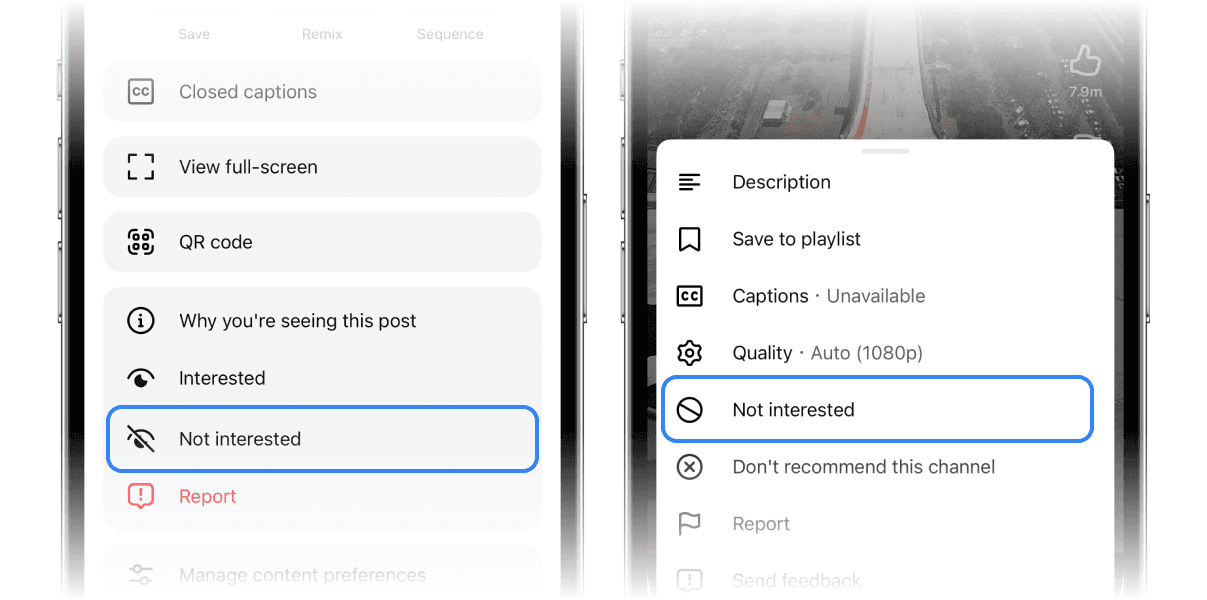
On Instagram or YouTube, tap "More" then "Not interested" more often to fine-tune the algorithm.

2. Set Clear Boundaries With Your Phone

What it is

Boundaries are rules you set to define when and how technology belongs in your life. People who beat brain rot are not anti-tech. They are intentional consumers.

Why it works

Without boundaries, your phone constantly competes for your attention. Every notification pulls you out of the present moment. Over time, this trains your brain to expect interruption.

Research on attention control shows that even the presence of a phone can reduce cognitive performance, a phenomenon sometimes called the “brain drain” effect.

Boundaries reduce decision fatigue. When rules are clear, you do not have to negotiate with yourself every time you feel an urge to check your phone.

How to do it

Start with physical boundaries:

  • Keep your phone out of reach while studying or working.

  • Put your phone in your backpack during class.

  • Leave it in another room during meals or conversations.

Then add time-based boundaries:

  • No social media during homework.

  • No phone during the first hour of the morning.

  • No scrolling after a certain hour at night.

You can use an app blocker like Jomo to easily schedule times where most of your apps (except essentials) are blocked. It literally takes two minutes to set up:

  1. Download Jomo on the App Store

  2. In the app, go to Rules > + > Recurring session

  3. Choose the apps you want to block and the days and hours the schedule should apply
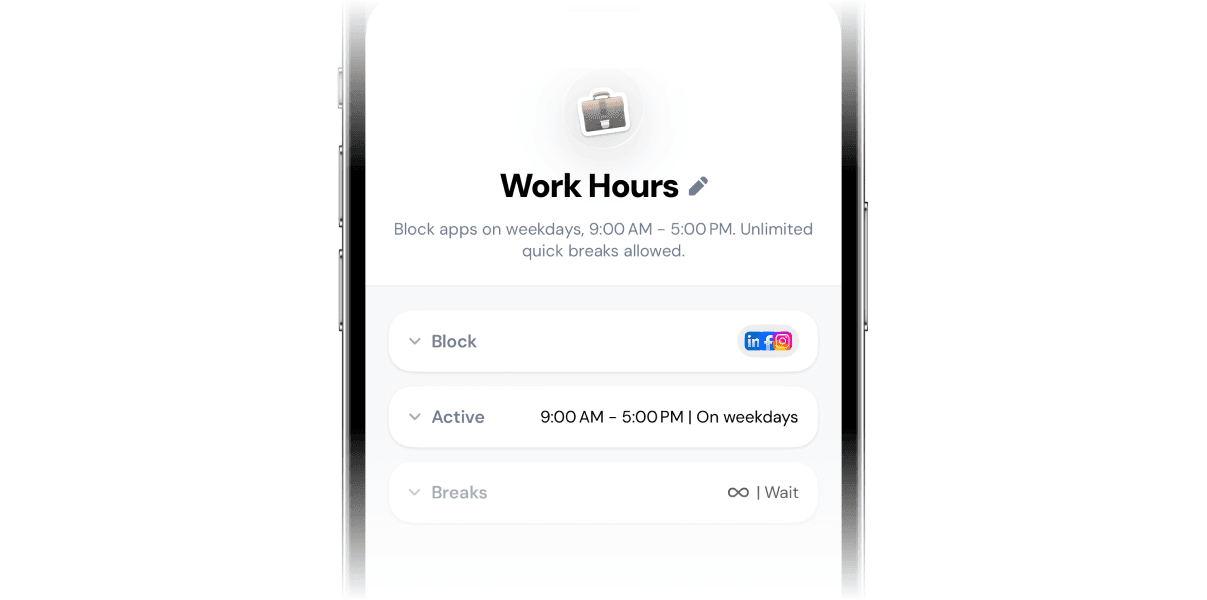
My "Work Hours" schedule on Jomo blocking distractions during the workday.

The most important part is consistency. Setting boundaries means respecting them. Every time you keep a promise to yourself, you rebuild trust and self-control. This spills over into every area of life!

3. Get Curious And Train Your Brain

What it is

Brain rot thrives on boredom avoidance. Brain health thrives on challenge. Training your brain means intentionally engaging in activities that require effort, learning, and focus.

Why it works

Your brain is plastic. It changes based on how you use it.

A famous 2004 study by Professor Bogdan Draganski showed that learning to juggle increased gray matter in brain regions associated with visual motion processing. When participants stopped practicing, those changes partially reversed. The message is clear: the more you use your brain and challenge it with certain tasks, the more neural circuits are strengthened in your brain.

How to do it

Choose activities that stretch you:

  • Learn a new language.

  • Play a musical instrument.

  • Program, write, or build something.

  • Garden, cook, or fix things by hand.

Over-relying on technology for basic thinking tasks can weaken mental muscles. While AI tools are helpful, outsourcing all thinking comes at a cost. So, reduce unnecessary cognitive outsourcing:

  • Do mental math sometimes.

  • Proofread your own writing.

  • Think through problems before asking ChatGPT for answers.

4. Embrace Idleness Again

What it is

Idleness is the ability to exist without stimulation. In 2026, most idle moments are filled with scrolling. Waiting in line, between classes, during short breaks. These moments are small, but they add up.

Why it works

Boredom is not the enemy. It is a gateway to creativity, reflection, and emotional regulation. Studies on mind-wandering suggest that unstructured mental time supports problem-solving and memory consolidation. Constant stimulation blocks these processes.

How to do it

Treat idle moments as recovery, not gaps to fill:

  • Do not use your phone during short breaks

  • When you have two free minutes, breathe deeply

  • Stretch

  • Drink water

  • Look around

If you struggle, install an app blocker like Jomo and set an opens limit on your most distracting apps. You’ll have to make a conscious choice each time you start a scrolling session in an app, which forces you to be intentional and helps you avoid compulsive use in short free moments.

You can set an opens limit like this in the next two minutes:

  1. Download Jomo from the App Store

  2. Once in the app, go to Rules > + > Recurring session

  3. Choose the distracting apps you want to add friction to

  4. The interesting part happens in the “Breaks” section

  5. Choose how many breaks (or opens) you want per day. A good rule of thumb is to keep each open to 5–10 minutes max. So if you want to spend a maximum of 30 minutes on Instagram per day, set 3 opens of 10 minutes or 6 opens of 5 minutes

  6. Choose a quick exercise to complete before each open (the friction): waiting, breathing, writing your reason for using the app… This is where Jomo shines. Use friction that’s gentle but consistent.
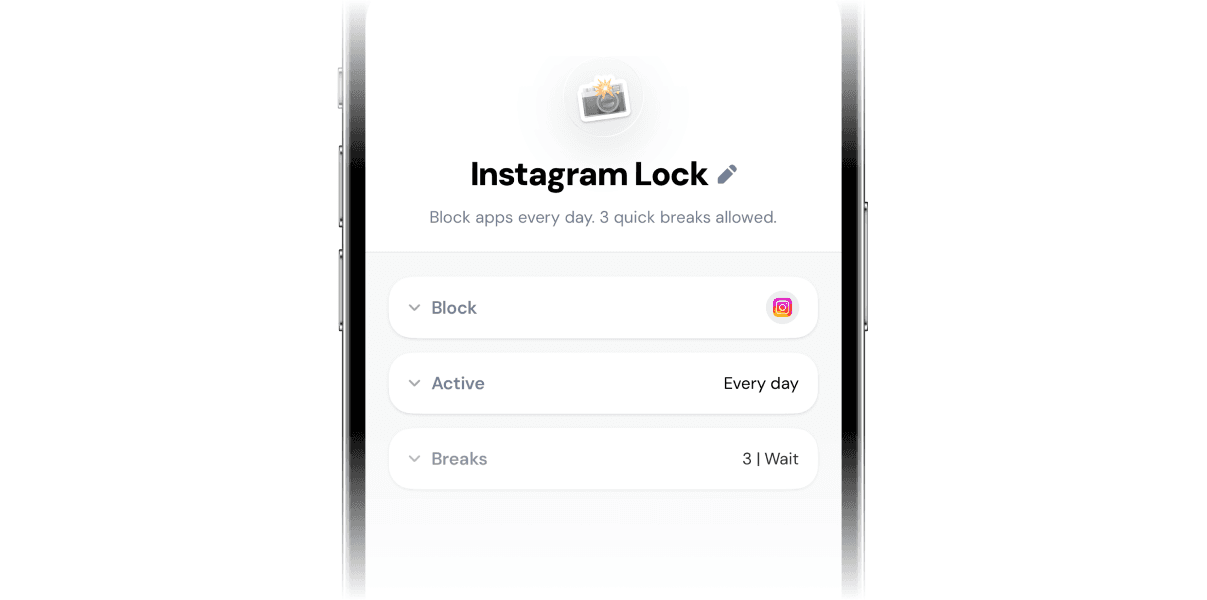
Lock Instagram by default to prevent compulsive use.

5. Take care of your body to protect your mind

What it is

Brain health is inseparable from physical health. Sleep, movement, nutrition, and stress management directly affect cognitive function.

Why it works

Research consistently shows that lifestyle factors shape brain health:

How to do it

Focus on the basics:

  • Move your body daily, even lightly

  • Eat real, minimally processed foods. To improve your brain health, consume food that is rich in Omega-3 fatty acids (fish, nuts, chia seeds, edamame, etc.), antioxidants (berries) and vitamins (especially B).

  • Get consistent, guilt-free sleep

  • Practice mindfulness or meditation, even 5 minutes a day

  • Reduce late-night scrolling


Curing brain rot is not about using your phone less for the sake of it.

It is about nourishing your brain, exercising your attention, and taking care of your body. It is not instant, and it is not effortless. But it works.

You do not need to fix everything at once. Start with one change. Then another. Attention grows the same way it erodes: gradually.

Thanks for reading so far! If you want to give my app Jomo a try, download it from the App Store and use my code JZ5RP5 to try the Plus plan for 14 days.

5 Tips To Stop Brain Rot

1. Detox Your Algorithm (For Real)

What it is

An algorithm detox is the process of deliberately retraining your feeds to show you richer, more meaningful content. This is not about deleting all social media. It is about changing what your digital environment feeds your brain.

Why it works

Algorithms learn from your behavior. Every pause, like, comment, or follow sends a signal. When you stop engaging with low-quality content and actively reward high-quality content, the system adapts.

From a cognitive perspective, consuming longer and richer content helps rebuild attention stamina. Studies on attention restoration suggest that sustained engagement with meaningful material supports cognitive recovery, compared to fragmented stimulation.

How to do it

  • When you see cheap or mindless content, press “Not interested” or scroll past immediately.

  • Do not hate-watch. Engagement is still engagement.

  • When you see content that teaches, inspires, or challenges you, engage with it. Like, comment, subscribe.

  • Actively follow creators who produce long-form or thoughtful content.

  • Experiment with documentaries, long podcasts, or in-depth YouTube videos.

  • Ask yourself before following someone: Why am I consuming this? What does this add to my life? Will I remember this tomorrow?

  • Unfollow ruthlessly. Curating your feed is an uncomfortable but powerful form of self-reflection. It forces you to confront what you value and what you want more of.

  • Finally, stay conscious. Your algorithm will drift if you stop paying attention. Detoxing is not a one-time event. It is a habit.

On Instagram or YouTube, tap "More" then "Not interested" more often to fine-tune the algorithm.

2. Set Clear Boundaries With Your Phone

What it is

Boundaries are rules you set to define when and how technology belongs in your life. People who beat brain rot are not anti-tech. They are intentional consumers.

Why it works

Without boundaries, your phone constantly competes for your attention. Every notification pulls you out of the present moment. Over time, this trains your brain to expect interruption.

Research on attention control shows that even the presence of a phone can reduce cognitive performance, a phenomenon sometimes called the “brain drain” effect.

Boundaries reduce decision fatigue. When rules are clear, you do not have to negotiate with yourself every time you feel an urge to check your phone.

How to do it

Start with physical boundaries:

  • Keep your phone out of reach while studying or working.

  • Put your phone in your backpack during class.

  • Leave it in another room during meals or conversations.

Then add time-based boundaries:

  • No social media during homework.

  • No phone during the first hour of the morning.

  • No scrolling after a certain hour at night.

You can use an app blocker like Jomo to easily schedule times where most of your apps (except essentials) are blocked. It literally takes two minutes to set up:

  1. Download Jomo on the App Store

  2. In the app, go to Rules > + > Recurring session

  3. Choose the apps you want to block and the days and hours the schedule should apply

My "Work Hours" schedule on Jomo blocking distractions during the workday.

The most important part is consistency. Setting boundaries means respecting them. Every time you keep a promise to yourself, you rebuild trust and self-control. This spills over into every area of life!

3. Get Curious And Train Your Brain

What it is

Brain rot thrives on boredom avoidance. Brain health thrives on challenge. Training your brain means intentionally engaging in activities that require effort, learning, and focus.

Why it works

Your brain is plastic. It changes based on how you use it.

A famous 2004 study by Professor Bogdan Draganski showed that learning to juggle increased gray matter in brain regions associated with visual motion processing. When participants stopped practicing, those changes partially reversed. The message is clear: the more you use your brain and challenge it with certain tasks, the more neural circuits are strengthened in your brain.

How to do it

Choose activities that stretch you:

  • Learn a new language.

  • Play a musical instrument.

  • Program, write, or build something.

  • Garden, cook, or fix things by hand.

Over-relying on technology for basic thinking tasks can weaken mental muscles. While AI tools are helpful, outsourcing all thinking comes at a cost. So, reduce unnecessary cognitive outsourcing:

  • Do mental math sometimes.

  • Proofread your own writing.

  • Think through problems before asking ChatGPT for answers.

4. Embrace Idleness Again

What it is

Idleness is the ability to exist without stimulation. In 2026, most idle moments are filled with scrolling. Waiting in line, between classes, during short breaks. These moments are small, but they add up.

Why it works

Boredom is not the enemy. It is a gateway to creativity, reflection, and emotional regulation. Studies on mind-wandering suggest that unstructured mental time supports problem-solving and memory consolidation. Constant stimulation blocks these processes.

How to do it

Treat idle moments as recovery, not gaps to fill:

  • Do not use your phone during short breaks

  • When you have two free minutes, breathe deeply

  • Stretch

  • Drink water

  • Look around

If you struggle, install an app blocker like Jomo and set an opens limit on your most distracting apps. You’ll have to make a conscious choice each time you start a scrolling session in an app, which forces you to be intentional and helps you avoid compulsive use in short free moments.

You can set an opens limit like this in the next two minutes:

  1. Download Jomo from the App Store

  2. Once in the app, go to Rules > + > Recurring session

  3. Choose the distracting apps you want to add friction to

  4. The interesting part happens in the “Breaks” section

  5. Choose how many breaks (or opens) you want per day. A good rule of thumb is to keep each open to 5–10 minutes max. So if you want to spend a maximum of 30 minutes on Instagram per day, set 3 opens of 10 minutes or 6 opens of 5 minutes

  6. Choose a quick exercise to complete before each open (the friction): waiting, breathing, writing your reason for using the app… This is where Jomo shines. Use friction that’s gentle but consistent.

Lock Instagram by default to prevent compulsive use.

5. Take care of your body to protect your mind

What it is

Brain health is inseparable from physical health. Sleep, movement, nutrition, and stress management directly affect cognitive function.

Why it works

Research consistently shows that lifestyle factors shape brain health:

How to do it

Focus on the basics:

  • Move your body daily, even lightly

  • Eat real, minimally processed foods. To improve your brain health, consume food that is rich in Omega-3 fatty acids (fish, nuts, chia seeds, edamame, etc.), antioxidants (berries) and vitamins (especially B).

  • Get consistent, guilt-free sleep

  • Practice mindfulness or meditation, even 5 minutes a day

  • Reduce late-night scrolling


Curing brain rot is not about using your phone less for the sake of it.

It is about nourishing your brain, exercising your attention, and taking care of your body. It is not instant, and it is not effortless. But it works.

You do not need to fix everything at once. Start with one change. Then another. Attention grows the same way it erodes: gradually.

Thanks for reading so far! If you want to give my app Jomo a try, download it from the App Store and use my code JZ5RP5 to try the Plus plan for 14 days.

5 Tips To Stop Brain Rot

1. Detox Your Algorithm (For Real)

What it is

An algorithm detox is the process of deliberately retraining your feeds to show you richer, more meaningful content. This is not about deleting all social media. It is about changing what your digital environment feeds your brain.

Why it works

Algorithms learn from your behavior. Every pause, like, comment, or follow sends a signal. When you stop engaging with low-quality content and actively reward high-quality content, the system adapts.

From a cognitive perspective, consuming longer and richer content helps rebuild attention stamina. Studies on attention restoration suggest that sustained engagement with meaningful material supports cognitive recovery, compared to fragmented stimulation.

How to do it

  • When you see cheap or mindless content, press “Not interested” or scroll past immediately.

  • Do not hate-watch. Engagement is still engagement.

  • When you see content that teaches, inspires, or challenges you, engage with it. Like, comment, subscribe.

  • Actively follow creators who produce long-form or thoughtful content.

  • Experiment with documentaries, long podcasts, or in-depth YouTube videos.

  • Ask yourself before following someone: Why am I consuming this? What does this add to my life? Will I remember this tomorrow?

  • Unfollow ruthlessly. Curating your feed is an uncomfortable but powerful form of self-reflection. It forces you to confront what you value and what you want more of.

  • Finally, stay conscious. Your algorithm will drift if you stop paying attention. Detoxing is not a one-time event. It is a habit.

On Instagram or YouTube, tap "More" then "Not interested" more often to fine-tune the algorithm.

2. Set Clear Boundaries With Your Phone

What it is

Boundaries are rules you set to define when and how technology belongs in your life. People who beat brain rot are not anti-tech. They are intentional consumers.

Why it works

Without boundaries, your phone constantly competes for your attention. Every notification pulls you out of the present moment. Over time, this trains your brain to expect interruption.

Research on attention control shows that even the presence of a phone can reduce cognitive performance, a phenomenon sometimes called the “brain drain” effect.

Boundaries reduce decision fatigue. When rules are clear, you do not have to negotiate with yourself every time you feel an urge to check your phone.

How to do it

Start with physical boundaries:

  • Keep your phone out of reach while studying or working.

  • Put your phone in your backpack during class.

  • Leave it in another room during meals or conversations.

Then add time-based boundaries:

  • No social media during homework.

  • No phone during the first hour of the morning.

  • No scrolling after a certain hour at night.

You can use an app blocker like Jomo to easily schedule times where most of your apps (except essentials) are blocked. It literally takes two minutes to set up:

  1. Download Jomo on the App Store

  2. In the app, go to Rules > + > Recurring session

  3. Choose the apps you want to block and the days and hours the schedule should apply

My "Work Hours" schedule on Jomo blocking distractions during the workday.

The most important part is consistency. Setting boundaries means respecting them. Every time you keep a promise to yourself, you rebuild trust and self-control. This spills over into every area of life!

3. Get Curious And Train Your Brain

What it is

Brain rot thrives on boredom avoidance. Brain health thrives on challenge. Training your brain means intentionally engaging in activities that require effort, learning, and focus.

Why it works

Your brain is plastic. It changes based on how you use it.

A famous 2004 study by Professor Bogdan Draganski showed that learning to juggle increased gray matter in brain regions associated with visual motion processing. When participants stopped practicing, those changes partially reversed. The message is clear: the more you use your brain and challenge it with certain tasks, the more neural circuits are strengthened in your brain.

How to do it

Choose activities that stretch you:

  • Learn a new language.

  • Play a musical instrument.

  • Program, write, or build something.

  • Garden, cook, or fix things by hand.

Over-relying on technology for basic thinking tasks can weaken mental muscles. While AI tools are helpful, outsourcing all thinking comes at a cost. So, reduce unnecessary cognitive outsourcing:

  • Do mental math sometimes.

  • Proofread your own writing.

  • Think through problems before asking ChatGPT for answers.

4. Embrace Idleness Again

What it is

Idleness is the ability to exist without stimulation. In 2026, most idle moments are filled with scrolling. Waiting in line, between classes, during short breaks. These moments are small, but they add up.

Why it works

Boredom is not the enemy. It is a gateway to creativity, reflection, and emotional regulation. Studies on mind-wandering suggest that unstructured mental time supports problem-solving and memory consolidation. Constant stimulation blocks these processes.

How to do it

Treat idle moments as recovery, not gaps to fill:

  • Do not use your phone during short breaks

  • When you have two free minutes, breathe deeply

  • Stretch

  • Drink water

  • Look around

If you struggle, install an app blocker like Jomo and set an opens limit on your most distracting apps. You’ll have to make a conscious choice each time you start a scrolling session in an app, which forces you to be intentional and helps you avoid compulsive use in short free moments.

You can set an opens limit like this in the next two minutes:

  1. Download Jomo from the App Store

  2. Once in the app, go to Rules > + > Recurring session

  3. Choose the distracting apps you want to add friction to

  4. The interesting part happens in the “Breaks” section

  5. Choose how many breaks (or opens) you want per day. A good rule of thumb is to keep each open to 5–10 minutes max. So if you want to spend a maximum of 30 minutes on Instagram per day, set 3 opens of 10 minutes or 6 opens of 5 minutes

  6. Choose a quick exercise to complete before each open (the friction): waiting, breathing, writing your reason for using the app… This is where Jomo shines. Use friction that’s gentle but consistent.

Lock Instagram by default to prevent compulsive use.

5. Take care of your body to protect your mind

What it is

Brain health is inseparable from physical health. Sleep, movement, nutrition, and stress management directly affect cognitive function.

Why it works

Research consistently shows that lifestyle factors shape brain health:

How to do it

Focus on the basics:

  • Move your body daily, even lightly

  • Eat real, minimally processed foods. To improve your brain health, consume food that is rich in Omega-3 fatty acids (fish, nuts, chia seeds, edamame, etc.), antioxidants (berries) and vitamins (especially B).

  • Get consistent, guilt-free sleep

  • Practice mindfulness or meditation, even 5 minutes a day

  • Reduce late-night scrolling


Curing brain rot is not about using your phone less for the sake of it.

It is about nourishing your brain, exercising your attention, and taking care of your body. It is not instant, and it is not effortless. But it works.

You do not need to fix everything at once. Start with one change. Then another. Attention grows the same way it erodes: gradually.

Thanks for reading so far! If you want to give my app Jomo a try, download it from the App Store and use my code JZ5RP5 to try the Plus plan for 14 days.

Credits
Photographies and illustrations by Unsplash. Screenshots by Jomo.
[1] Ophir, E., Nass, C., & Wagner, A. D. (2009). Cognitive control in media multitaskers. PNAS Proceedings of the National Academy of Sciences of the United States of America, 106(37).
[2] S. E. Baumgartner, D. A. Parry, I. Beyens, W. Wiradhany, M. Uncapher, A. D. Wagner, D. Bavelier. (2024). The Short and Long-Term Effects of Digital Media Use on Attention. Handbook of Children and Screens.
[3] A. Ward, K. Duke, A. Gneezy, and M. Bos. (2017). Brain Drain: The Mere Presence of One’s Own Smartphone Reduces Available Cognitive Capacity. Journal of the Association for Consumer Research.
[4] Draganski B, Gaser C, Busch V, Schuierer G, Bogdahn U, May A. (2004). Neuroplasticity: changes in grey matter induced by training. Nature.
[5] ten Brinke LF, Bolandzadeh N, Nagamatsu LS, Hsu CL, Davis JC, Miran-Khan K, Liu-Ambrose T. (2015). Aerobic exercise increases hippocampal volume in older women with probable mild cognitive impairment: a 6-month randomised controlled trial. Br J Sports Med.
[6] Gomes Gonçalves N, Vidal Ferreira N, Khandpur N, et al. (2022). Association Between Consumption of Ultraprocessed Foods and Cognitive Decline. JAMA Neurol.

The Joy Of Missing Out

Crafted in Europe

All rights reserved to Jomo SAS, 2025

The Joy Of Missing Out

Crafted in Europe

All rights reserved to Jomo SAS, 2025

The Joy Of Missing Out

Crafted in Europe

All rights reserved to Jomo SAS, 2025