Wellbeing
4 min
What Is TikTok Brain?
At Jomo, we’re big fans of new trends around screen time—especially when they come from… social media.
This week, we looked into yet another one: “TikTok brain.” At first, it raised questions. Then we got curious. And before we knew it… we had to turn it into a blog post.
But before we dive in, let me introduce myself. The voice you’re reading is Laureline. I’m the designer and co-founder of the Jomo app. I’ve been working in ergonomics and interface design for 10 years. In 2022, we launched Jomo to finally bring a long-standing idea to life: a powerful app to help people stop mindless scrolling and take back control of their lives. I wrote this article myself, with my own two hands and my little brain. So if you enjoy it or find it helpful, feel free to share it and send us your feedback!
TikTok Brain: What Are We Talking About?
First thing to understand about your brain: it adapts very quickly and easily to what you do. It’s an extremely energy-hungry organ. Even the smallest action costs more energy than most other organs in your body (after all, it’s the one running the whole system). So it won’t waste energy maintaining things that aren’t immediately useful—it focuses on what serves it right now.
This phenomenon is called neuroplasticity. Simply put, the neural connections you use often get stronger, while those you use less start to weaken. That’s how your brain organizes itself to manage energy efficiently. If you want a mental image, think of a path in a forest: the less you use it, the more it fades over time—until it disappears completely.
And when you consume a lot of short-form content, especially on apps like TikTok, you train your brain to:
Switch contexts constantly
Struggle to focus for long periods
Expect every swipe to bring a surprise
Avoid boredom at all costs
Think more superficially
So “TikTok brain” is what happens when your brain becomes lazy—hooked on short content and constant dopamine hits. It stops wanting to make any effort. It craves instant gratification. It loses depth and becomes harder and harder to satisfy. Like a spoiled child trapped inside your skull.
If I Use TikTok, Do I Have “TikTok Brain”?
Yes and no. It really depends on how you use it. That’s where everything starts. Using TikTok occasionally isn’t a problem. But spending several hours a day on it can have significant effects that are worth paying attention to.
The best thing you can do is observe yourself and reflect on your habits. Here are some signs to watch for to see if the platform might be affecting your brain:
You develop an “automatic” usage pattern (e.g., you open your phone for no real reason, switch between apps within seconds, scroll without knowing why)
You struggle to stay focused (e.g., you find it hard to read for long, can’t concentrate for more than 20 minutes straight, need constant stimulation)
You start to feel unwell (e.g., mental fatigue, the feeling of consuming too much information, the sense that you don’t retain anything)
You often feel dissatisfied (e.g., you spend a lot of time on the platform but feel like it was wasted, you don’t take anything away from it)
If you recognize yourself in some of these “symptoms,” what comes next will interest you.
What Are the Long-Term Risks for You?
Well, as you can guess, if we’re writing about it today, it’s because it’s far from harmless. Like many modern issues, the effects aren’t immediate—they show up later (you end up paying for today’s habits down the line). And that’s exactly the problem.
The signs are already starting to show.
Weakened Attention
Little by little, you lose the ability to read for long periods, work deeply, and stay fully focused. This can have significant impacts on learning (whether you’re a child, teenager, or student), your work, and even your creativity (and we’re not talking about whether you can draw or not).
More Superficial Thinking
Just because you consume a lot of content filled with different ideas, or seem interested in many hobbies, doesn’t mean you’re actually building skills or developing real thinking around those topics. Quite the opposite: you consume without connecting anything, without structuring it. It’s just a pile of information you take in without understanding its deeper meaning.
Behavioral Dependence
Beyond just damaging your abilities, you also start developing problematic behaviors and reflexes. For example, the habit of picking up your phone for no real reason, difficulty stopping, and losing control (especially over time spent). And this isn’t just a “small issue” — it’s a big one. It can seriously affect your quality of life, your body, and your habits over the long term.

Chronic Mental Fatigue
We mentioned it earlier, but the effects are often invisible and quite insidious. Chronic mental fatigue is a good example. When you’re constantly stimulated and always processing information, your brain never really gets time to rest or “digest.”
The result? A gradual buildup of diffuse fatigue, a lack of clarity, and difficulty stepping back. You react impulsively, in the moment, which can lead to poor decisions in many situations—and ultimately have negative consequences on your life.
Impact on Your Life Trajectory
If you’re spending more than 4 hours a day on these platforms, it’s inevitably at the expense of other things—other activities you could be doing instead. Choosing to consume content from strangers, who say everything (and often anything), rather than building useful skills, means investing in empty consumption instead of investing in yourself.
Because while you’re scrolling, you’re not learning, not building, not creating. You’re consuming. And while 4 hours here and there may not seem like much, 4 hours every day over several years adds up to a heavy price.
If It Were Really That Serious, Everyone Would Be Talking About It, Right?
We wish—but no.
The truth is, humans struggle to grasp things that aren’t concrete, tangible, or happening right in front of them. And even when they are happening, with all the misinformation and manipulation out there, some topics barely make it to the surface. Screen time is one of them.
So why is that?
It’s gradual: because nothing happens instantly, there’s no shock—no wake-up call. There’s no collective awareness because we don’t experience a sudden impact. It’s a slow, creeping issue that settles in, and most of us aren’t even aware of it—sometimes we don’t even realize it exists.
It’s “normal”: since everyone does it, it’s become something ordinary, almost as routine as brushing your teeth. And once something becomes the norm, it’s nearly impossible to question.
It’s a well-oiled machine: the most addictive apps all rely on the same business model—your attention. The more time you spend on their platforms, the more ads you see, and the more money they make. So the goal is clear: capture as much of your attention as possible, at any cost.
It’s YOUR fault: the responsibility gets shifted entirely onto you, and the problem seems solved. Yes, on an individual level, you do have some responsibility—but you’re not exactly set up to win. These tools are explicitly designed to capture your attention. It’s literally David vs. Goliath.
The system is optimized so you don’t question anything—and just keep consuming more and more.
Is It Just TikTok?
No. TikTok may be the app that really popularized and amplified this mechanism, but it’s far from the only one trying to drain your time and attention.
Clearly, all so-called “free” social media platforms are involved. If they’re not asking for your credit card, you’re paying with your time and attention. And to do that, they all copy each other, adopting the same addictive features:
Shorts
Reels
Streaks
Instant messaging
These features are spreading across tons of services—even when they serve no real purpose other than retention (keeping you hooked and coming back constantly).
How Do You “Undo” TikTok Brain?
The goal isn’t to quit everything overnight and hope to magically change. It’s about taking back control of your habits and protecting yourself over the long term.
That’s why we’ve put together a bunch of simple, quick tips you can apply to protect yourself from the long-term effects of TikTok brain—and avoid turning into a zombie.
1 – Retrain Your Attention
As we said, your brain is flexible—it adapts to what you do every day. So to protect it, you can introduce “beneficial” activities into your routine to counterbalance bad habits. Start with:
Read for 10–20 minutes every day. It’s not much, but over time those minutes add up to entire books.
Watch long-form content (without scrolling at the same time). Train your mind to focus on something slower, softer—and actually enjoy it without distractions.
Do one task without interruptions. If you’re drawing, writing, or reading, don’t bring your phone with you. In 100% of cases, you’ll end up scrolling instead of doing what you originally planned.
2 – Add Friction
Everything is designed so you never feel any frustration. From unlocking your iPhone with just your face, to colorful app icons that pull you in without you even thinking, and once you’re inside the app, it never stops—thanks to infinite scroll. So here’s the best trick to fight back:
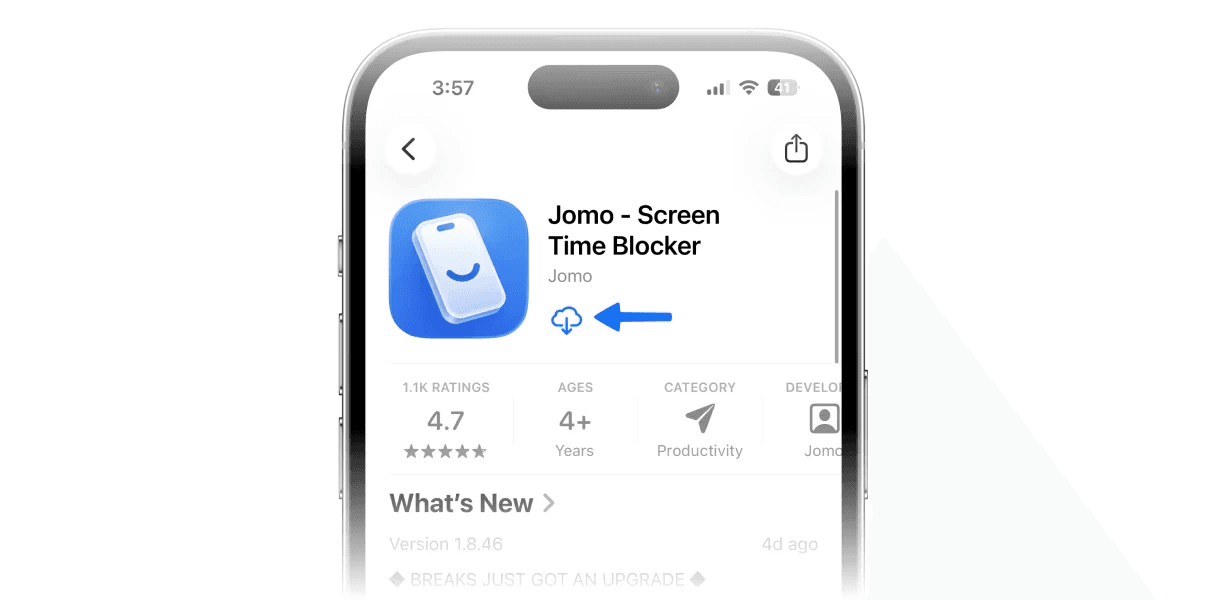
Download and install the Jomo app—it’s free.
Go to Rules, then in the Templates section, tap “Use with intention.”
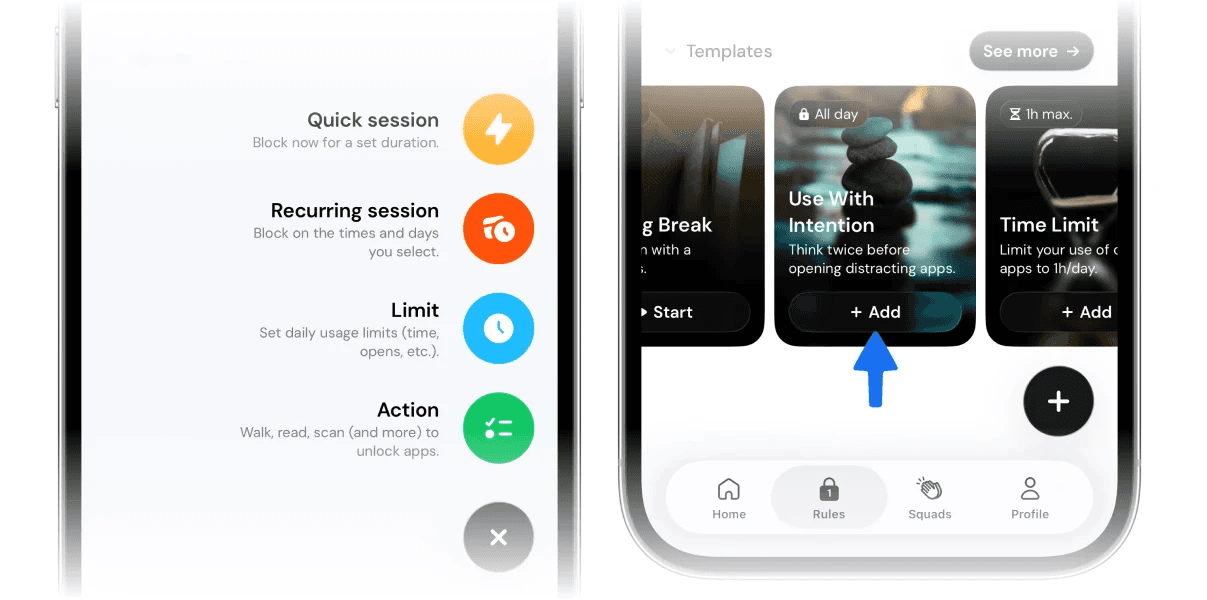
By default, it blocks distracting apps. To use them, you’ll have to ask Jomo to unlock them and choose for how long. And that changes everything: no more reflex usage, and you stop getting trapped in endless scrolling loops. When time’s up, it locks again.
3 – Reintroduce Boredom
A “TikTok brain” is a brain that can’t tolerate boredom anymore. So the goal is to teach it how again. The idea isn’t to waste an entire day doing nothing or go on 48-hour detox challenges (which, in my opinion, are pointless), but rather to gently change habits you already have:
Walk at least 3,500 steps without audio (no podcasts, no music, nothing). Just walk to clear your mind and observe your surroundings.
Eat, tidy up, or do the dishes without videos, audio, or anything. Use that quiet moment to focus on yourself and what you’re doing.
Wait without touching your phone (metro, bus, lines, etc.). Yes, it might feel a bit weird, but honestly—no one cares.
4 – Replace Your Habits
Obviously, just removing bad habits without replacing them won’t work. If you don’t put something in place, your (very lazy) brain will just fall back into its comfort zone and avoid effort. Here are a few ideas:
At night, in bed: phone → a book (something you actually want to read)
In the bathroom: phone → magazines
On public transport: phone → a book or a notebook
After work in the evening: phone → go outside
Weekend mornings when you wake up: phone → a short morning run
Try to think about yourself—especially your future self, the one you’re taking care of right now.
The Takeaway 🍔
“TikTok brain” isn’t inevitable—it’s just the result of repeated bad habits. And habits can always change. As always, the key is intentionality: stop using your phone on autopilot, stop accepting losing 4 hours “just because,” and stop building a debt your future self will have to pay.
Thanks so much for reading—it really means a lot. I wrote this article using my own brain, with a bit of help from the internet. I add sources when I can and when I remember, so you can keep exploring if you want. And if you’d like to try the Jomo app, you can use my referral code FG2HA9 to get 14 days free on the paid version.