Unplug
6 min
How to Stop Doomscrolling at Night
The other day, I came across a crazy statistic: 86% of Americans use their phone less than an hour before falling asleep, and scroll for an average of 38 minutes before finally crashing from exhaustion.
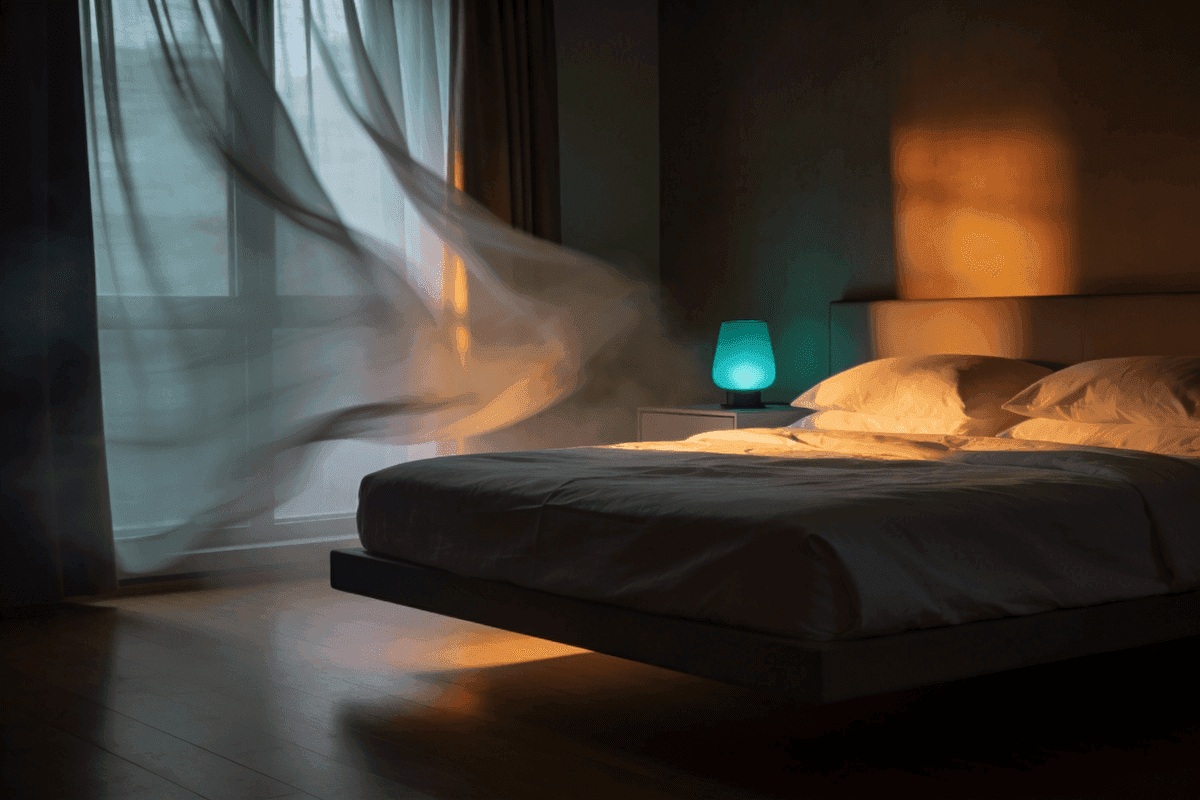
Basically, 8 out of 10 adults scroll to fall asleep, every single night. In a way, the smartphone has become the sleeping pill 2.0 for some people. Take it away from them and they’ll be convinced they’ve lost the ability to sleep forever. And maybe that’s your case, too. Maybe without it, you can’t fall asleep anymore. Maybe you can’t stop dark thoughts from creeping in. Maybe you toss and turn in bed, wanting only one thing: to close your eyes in front of a nice video.
Well, if that sounds familiar, this article is for you, because today we’re getting our hands dirty. We’re going to look at this new mechanism of nighttime doomscrolling, this bad habit that seems to have taken over our generation, its consequences, and most importantly, how to get rid of it.
But before we begin, let me introduce myself. The little voice you’re reading is Laureline. I’m the designer and co-founder of the Jomo app. For the past 10 years, I’ve been working in ergonomics and interface design. In 2022, we launched Jomo to finally bring a long-standing idea to life: a great app to help people stop mindless scrolling and take back control of their lives. I wrote this article myself, with my own two hands and my own brain. So if you enjoyed it or found it helpful, feel free to share it with people around you and send us your feedback!
What Is Doomscrolling?
Before going any further, let’s make sure we’re starting from the same place. To do that, we need to define what doomscrolling actually is. Because just like that, we may not really know, or worse, we may have the wrong definition.
Doomscrolling, from “doom” and “scroll,” means endlessly scrolling through content that is often shocking, anxiety-inducing, or worse, harmful. It usually happens on social media, and it’s rarely intentional.
You just wanted to watch one video. Okay, maybe two or three, but no more. Then each piece of content grabs your curiosity a little more, maybe shocks you, maybe plants a topic in your mind that you now want to dig into. Suddenly, it’s 1:32 AM. Two hours have passed, but you’re still not asleep. Your head is full of thoughts, and your eyes are burning. And the worst part? You barely remember any of it. It made you anxious and, on top of that, tomorrow you’ll be exhausted.
That is doomscrolling: Lost time x Empty feeling x Lack of control.
Why Is It a Problem?
The thing is, doomscrolling isn’t just “using your phone.” It goes deeper than that. The real problem is that it’s not some harmless activity that happens once in a while and can be stopped just like that, with a snap of your fingers. It’s a habit, repeated every day.
It means exposing your brain to intense, repeated stimulation with no natural endpoint. It means putting your brain in a state where it stays “hooked” on this free, endless stimulation. And every time you need to stop, your brain gets frustrated.
It’s like giving a child a huge bag of candy and expecting them to self-regulate. Not a chance. Like a child with sweets, our brain loves short-form content way too much: funny videos, drama, shocking content, novelty, satisfying content to watch, one after another.
And today’s apps know this. They understand it perfectly. Don’t worry, everything is optimized so you never feel like closing your iPhone.
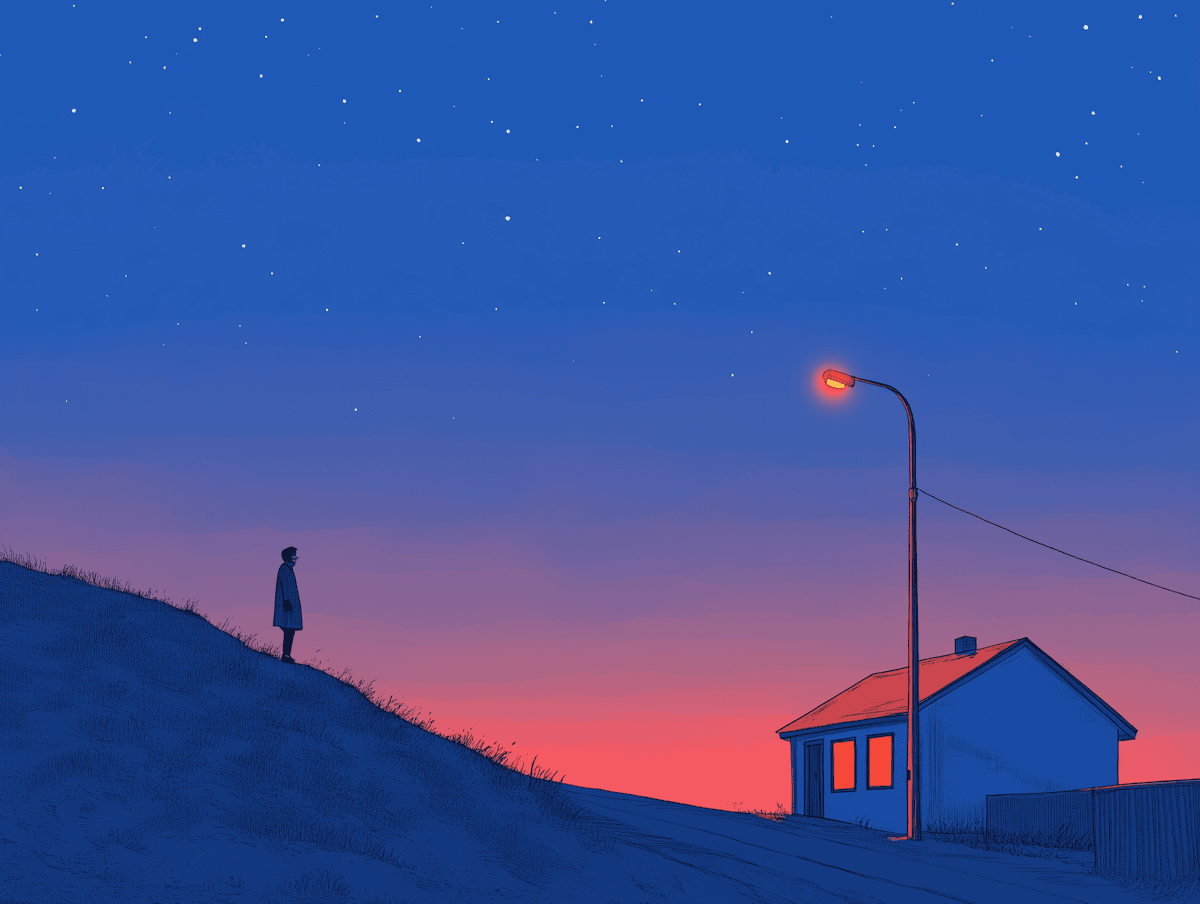
Art by Pablo Stanley
What Are the Consequences?
This is the part where we’re going to sound annoying. We’re going to talk about long-term things that may not feel very real to you right now. But they will have a delayed impact, meaning what you do today will affect you later, in 5, 10, maybe 20 years.
Scrolling, especially through polarized content late at night, opens the door to more fragmented attention, a brain that becomes too used to instant micro-rewards, a body that has a harder and harder time tolerating slow tasks, and an inability to handle silence and boredom, which are actually so important.
Because yes, the problem isn’t just the time you lose. It’s the person you become when your brain is constantly stimulated.
Who doesn’t want, at 20, 25, 30, or later, to have the time and desire to grow, launch projects, trust themselves and others, be more focused, and build a life that actually feels like their own?
Basically, 8 out of 10 adults scroll to fall asleep, every single night. In a way, the smartphone has become the sleeping pill 2.0 for some people. Take it away from them and they’ll be convinced they’ve lost the ability to sleep forever. And maybe that’s your case, too. Maybe without it, you can’t fall asleep anymore. Maybe you can’t stop dark thoughts from creeping in. Maybe you toss and turn in bed, wanting only one thing: to close your eyes in front of a nice video.
Well, if that sounds familiar, this article is for you, because today we’re getting our hands dirty. We’re going to look at this new mechanism of nighttime doomscrolling, this bad habit that seems to have taken over our generation, its consequences, and most importantly, how to get rid of it.
But before we begin, let me introduce myself. The little voice you’re reading is Laureline. I’m the designer and co-founder of the Jomo app. For the past 10 years, I’ve been working in ergonomics and interface design. In 2022, we launched Jomo to finally bring a long-standing idea to life: a great app to help people stop mindless scrolling and take back control of their lives. I wrote this article myself, with my own two hands and my own brain. So if you enjoyed it or found it helpful, feel free to share it with people around you and send us your feedback!
What Is Doomscrolling?
Before going any further, let’s make sure we’re starting from the same place. To do that, we need to define what doomscrolling actually is. Because just like that, we may not really know, or worse, we may have the wrong definition.
Doomscrolling, from “doom” and “scroll,” means endlessly scrolling through content that is often shocking, anxiety-inducing, or worse, harmful. It usually happens on social media, and it’s rarely intentional.
You just wanted to watch one video. Okay, maybe two or three, but no more. Then each piece of content grabs your curiosity a little more, maybe shocks you, maybe plants a topic in your mind that you now want to dig into. Suddenly, it’s 1:32 AM. Two hours have passed, but you’re still not asleep. Your head is full of thoughts, and your eyes are burning. And the worst part? You barely remember any of it. It made you anxious and, on top of that, tomorrow you’ll be exhausted.
That is doomscrolling: Lost time x Empty feeling x Lack of control.
Why Is It a Problem?
The thing is, doomscrolling isn’t just “using your phone.” It goes deeper than that. The real problem is that it’s not some harmless activity that happens once in a while and can be stopped just like that, with a snap of your fingers. It’s a habit, repeated every day.
It means exposing your brain to intense, repeated stimulation with no natural endpoint. It means putting your brain in a state where it stays “hooked” on this free, endless stimulation. And every time you need to stop, your brain gets frustrated.
It’s like giving a child a huge bag of candy and expecting them to self-regulate. Not a chance. Like a child with sweets, our brain loves short-form content way too much: funny videos, drama, shocking content, novelty, satisfying content to watch, one after another.
And today’s apps know this. They understand it perfectly. Don’t worry, everything is optimized so you never feel like closing your iPhone.
Art by Pablo Stanley
What Are the Consequences?
This is the part where we’re going to sound annoying. We’re going to talk about long-term things that may not feel very real to you right now. But they will have a delayed impact, meaning what you do today will affect you later, in 5, 10, maybe 20 years.
Scrolling, especially through polarized content late at night, opens the door to more fragmented attention, a brain that becomes too used to instant micro-rewards, a body that has a harder and harder time tolerating slow tasks, and an inability to handle silence and boredom, which are actually so important.
Because yes, the problem isn’t just the time you lose. It’s the person you become when your brain is constantly stimulated.
Who doesn’t want, at 20, 25, 30, or later, to have the time and desire to grow, launch projects, trust themselves and others, be more focused, and build a life that actually feels like their own?

For 30 min
Everyday
On weekends
During workhours
All the time
For 7 days
from 10 pm to 8 am
Votre téléphone, vos règles. Bloquez ce que vous voulez, quand vous voulez.
For 30 min
Everyday
On weekends
During workhours
All the time
For 7 days
from 10 pm to 8 am
Votre téléphone, vos règles. Bloquez ce que vous voulez, quand vous voulez.
Why Specifically at Night?
At night, the brain is even more vulnerable than during the day. It’s tired, cognitive control drops, emotions take up more space, and as a result, algorithms get an even more interesting playground.
That means you become hooked more easily, and stopping becomes harder. But the consequences are also more intense:
Sleep disruption: screens, especially the blue light they emit, disrupt melatonin production, the sleep hormone, and send your brain a constant signal telling it to stay awake as long as possible.
Brain on alert: even if you’re warm and cozy in bed, your brain is not in relaxation mode. By scrolling, you’re asking it to process hundreds of pieces of information, switch topics every 10 seconds, and jump between emotions that are sometimes completely opposite. That is extremely exhausting.
Emotional activation: all this content is trying to grab your attention by any means necessary. To do that, it needs you to stay on that content longer than another one, so the best strategy is to activate the “emotion” part of your brain. Social comparison, anxiety, anger, excitement, FOMO, stress, sexualized content, negative news, all of it keeps you there and keeps you scrolling a little longer.
Stealing time from your brain: scrolling steals your brain’s rest time. Don’t overthink it, you need 8 hours of sleep. During that recovery time, you consolidate memory, regulate emotions, recover cognitively, and more. It’s the same for everyone. And when you choose to scroll at night, you’re choosing to give your time to tech giants instead of your health.
And long term?
It trains your body to go to bed later, sleep more lightly, and even develop chronic fatigue with major difficulty recovering.
It weakens your mental health by increasing anxiety, stress, irritability, feelings of emptiness, lack of motivation, and potentially mental overload.
It affects your attention span and cognitive abilities. In practical terms, it becomes harder to read for long periods, work deeply, and stop seeking constant stimulation, which means more procrastination.
It affects your emotions, with more social comparison, lower satisfaction, a feeling of “wasted time,” guilt, and even difficulty mentally disconnecting.
It makes you neglect your body: sedentary behavior can cause neck pain, eye strain, and sometimes increased late-night snacking.
If It’s That Serious, Why Is No One Talking About It?
Because it has become “normal.” We live in a world where everyone, or almost everyone, has a phone and scrolls. On the other side, platforms are getting more and more aggressive in the way they capture your attention. And as a society, we are increasingly “accepting” problematic behaviors.
So when everyone gets something out of it, and the consequences are quickly pushed aside or carefully hidden, how do you expect a collective wake-up call to happen? This comes down to personal and individual responsibility. It’s up to us, and only us, to act.
Need motivation? Let’s do a simple calculation:
1.5 hours lost every night = 550 hours/year = 22 full days… just SCROLLING!

Art by Stan Stoof
Okay. But How Do You Change Simply?
Before going any further, the most important thing is this: it’s not about being perfect. It’s about making small changes that, when combined, make a big difference.
We’re going to give you simple tips that are easy to add to your daily life. Small tips to help you regain control and sleep better. And most importantly, to STOP DOOMSCROLLING AT NIGHT TO FALL ASLEEP.
Tip 1: Avoid the “Just 5 Minutes” in Bed
Realistically, telling yourself you’ll scroll for just a few minutes, usually “just 5 minutes,” is impossible. Your phone in bed is a trap. Once you start, it’s extremely hard to resist. So the best thing is not to bring it into the bedroom. If you use it as an alarm clock, that’s acceptable, but it should be more than 6 feet away from you.
Tip 2: Add More Friction
Your brain could probably open certain apps with its eyes closed. It knows exactly where to tap to launch them. It knows how much dopamine, how much instant happiness that service can bring, without having to do anything in return. That’s why we recommend breaking the automatic loop as quickly as possible.
Even if your brain opens the app, that won’t mean it can access it just like that anymore. Quite the opposite.
To do this, you can use Jomo for free, available on iPhone, iPad, and Mac. With the app, you can block the social media apps you scroll on at night during a specific time range, for example overnight.
Go to Rules ▸ + ▸ Recurring Session.
In Block, choose the apps you want to block.
In Active, choose the time range during which blocking should apply.
In Breaks, choose No.
Tap Schedule!
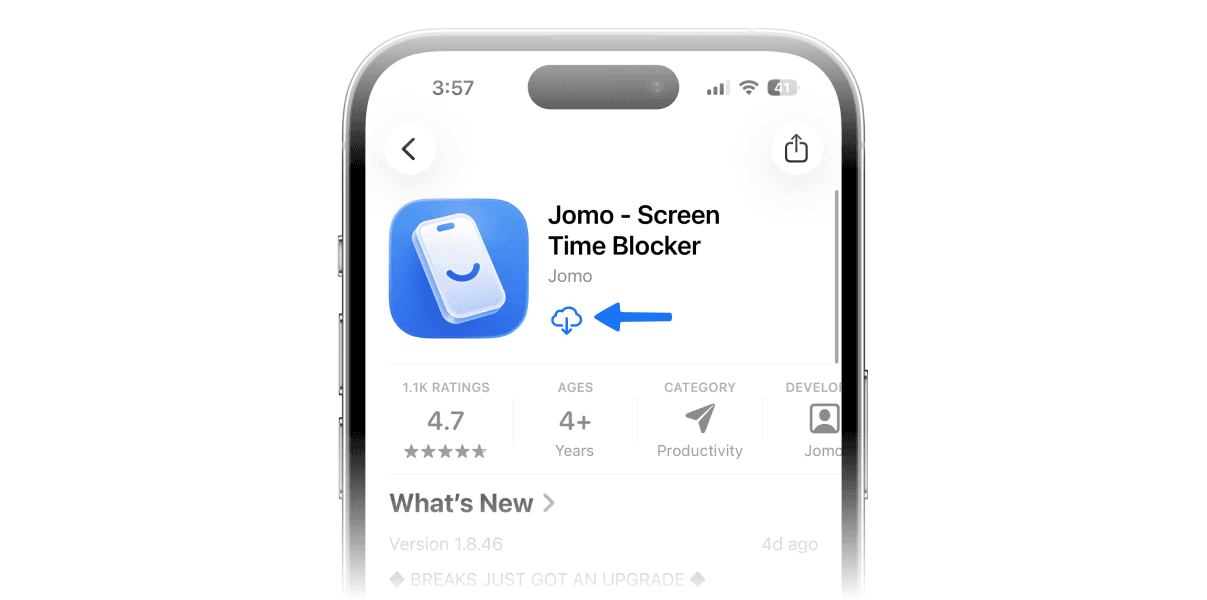
Much more effective than relying on willpower alone.
Tip 3: Reduce Your Screen Time During the Day, Too
Of course, disconnecting at night will be much harder if you’re very hooked during the day. So what we recommend is gradually reducing your daytime usage too, so disconnecting at night feels more natural.
And we’re not only talking about total time. It’s also about what you consume during that time, and that may actually be the most important part.
Reduce the number of short, and ultra-short, videos you watch each day. Really try to avoid spending too much time on highly stimulating content, and maybe favor longer formats that require more effort.
Avoid spending hours on apps with infinite feeds and no search engine, or where search is minimized. Each piece of content you see should be intentional. I searched for this content, I watched it. It was MY decision.
Keep your total screen time reasonable. At first, you can look at the average usage in your country. For example, in the US in 2025, average phone time was 5 hours and 16 minutes. That’s a first benchmark. Then you can challenge yourself by trying to reduce your use by 15 minutes a day at first, and gradually increase that reduction if you feel able to.
Tip 4: Replace Your Evening Ritual
If you remove scrolling without putting anything in its place, it rarely sticks. And that makes sense. So it’s important to find activities you can do without your phone to make the transition work properly and, most importantly, last over time.
Here are a few simple examples:
Listen to music on a separate device.
Read a book, something easy at first.
Listen to a podcast or the radio.
Stretch to relax your body.
Write down your thoughts, journal, and prepare for the next day.
Tip 5: Do the Math
Maybe you’ve read this far and thought, “Yeah… idc,” and maybe in the end you don’t really care and scrolling until 2 AM doesn’t bother you that much. This tip often helps people change their mind: calculate your wasted time and your sleep debt.
In a notebook, write down the following every day for one week to start:
Your total screen time, including your phone and all other devices.
Your bedtime and wake-up time.
Your mental state after each app session, which you can also track with Jomo.
And every day, force yourself to look at those numbers. Goal: sleep should matter more than your total screen time, and most importantly, your mental state should stay in the green.
The Takeaway 🍔
Scrolling super late at night can feel like a good solution for insomnia, but it’s like a sleeping pill: you get used to it. And more importantly, you get used to the dose, which means you’ll always need to increase it for it to keep working. So we hope this article helped you see things more clearly and inspired you to make a change.
In any case, thank you so much for reading this far. I wrote this article myself, in a small cafe in my city on a Monday afternoon. I enjoyed doing the research for you and laying it all out. If you want to try the Jomo app, you can use my referral code: FG2HA9 to get a 14-day free trial of the Plus version!
If you have topic ideas you’d like us to cover, or if you have questions, you can write to us at [email protected]!
Why Specifically at Night?
At night, the brain is even more vulnerable than during the day. It’s tired, cognitive control drops, emotions take up more space, and as a result, algorithms get an even more interesting playground.
That means you become hooked more easily, and stopping becomes harder. But the consequences are also more intense:
Sleep disruption: screens, especially the blue light they emit, disrupt melatonin production, the sleep hormone, and send your brain a constant signal telling it to stay awake as long as possible.
Brain on alert: even if you’re warm and cozy in bed, your brain is not in relaxation mode. By scrolling, you’re asking it to process hundreds of pieces of information, switch topics every 10 seconds, and jump between emotions that are sometimes completely opposite. That is extremely exhausting.
Emotional activation: all this content is trying to grab your attention by any means necessary. To do that, it needs you to stay on that content longer than another one, so the best strategy is to activate the “emotion” part of your brain. Social comparison, anxiety, anger, excitement, FOMO, stress, sexualized content, negative news, all of it keeps you there and keeps you scrolling a little longer.
Stealing time from your brain: scrolling steals your brain’s rest time. Don’t overthink it, you need 8 hours of sleep. During that recovery time, you consolidate memory, regulate emotions, recover cognitively, and more. It’s the same for everyone. And when you choose to scroll at night, you’re choosing to give your time to tech giants instead of your health.
And long term?
It trains your body to go to bed later, sleep more lightly, and even develop chronic fatigue with major difficulty recovering.
It weakens your mental health by increasing anxiety, stress, irritability, feelings of emptiness, lack of motivation, and potentially mental overload.
It affects your attention span and cognitive abilities. In practical terms, it becomes harder to read for long periods, work deeply, and stop seeking constant stimulation, which means more procrastination.
It affects your emotions, with more social comparison, lower satisfaction, a feeling of “wasted time,” guilt, and even difficulty mentally disconnecting.
It makes you neglect your body: sedentary behavior can cause neck pain, eye strain, and sometimes increased late-night snacking.
If It’s That Serious, Why Is No One Talking About It?
Because it has become “normal.” We live in a world where everyone, or almost everyone, has a phone and scrolls. On the other side, platforms are getting more and more aggressive in the way they capture your attention. And as a society, we are increasingly “accepting” problematic behaviors.
So when everyone gets something out of it, and the consequences are quickly pushed aside or carefully hidden, how do you expect a collective wake-up call to happen? This comes down to personal and individual responsibility. It’s up to us, and only us, to act.
Need motivation? Let’s do a simple calculation:
1.5 hours lost every night = 550 hours/year = 22 full days… just SCROLLING!
Art by Stan Stoof
Okay. But How Do You Change Simply?
Before going any further, the most important thing is this: it’s not about being perfect. It’s about making small changes that, when combined, make a big difference.
We’re going to give you simple tips that are easy to add to your daily life. Small tips to help you regain control and sleep better. And most importantly, to STOP DOOMSCROLLING AT NIGHT TO FALL ASLEEP.
Tip 1: Avoid the “Just 5 Minutes” in Bed
Realistically, telling yourself you’ll scroll for just a few minutes, usually “just 5 minutes,” is impossible. Your phone in bed is a trap. Once you start, it’s extremely hard to resist. So the best thing is not to bring it into the bedroom. If you use it as an alarm clock, that’s acceptable, but it should be more than 6 feet away from you.
Tip 2: Add More Friction
Your brain could probably open certain apps with its eyes closed. It knows exactly where to tap to launch them. It knows how much dopamine, how much instant happiness that service can bring, without having to do anything in return. That’s why we recommend breaking the automatic loop as quickly as possible.
Even if your brain opens the app, that won’t mean it can access it just like that anymore. Quite the opposite.
To do this, you can use Jomo for free, available on iPhone, iPad, and Mac. With the app, you can block the social media apps you scroll on at night during a specific time range, for example overnight.
Go to Rules ▸ + ▸ Recurring Session.
In Block, choose the apps you want to block.
In Active, choose the time range during which blocking should apply.
In Breaks, choose No.
Tap Schedule!
Much more effective than relying on willpower alone.
Tip 3: Reduce Your Screen Time During the Day, Too
Of course, disconnecting at night will be much harder if you’re very hooked during the day. So what we recommend is gradually reducing your daytime usage too, so disconnecting at night feels more natural.
And we’re not only talking about total time. It’s also about what you consume during that time, and that may actually be the most important part.
Reduce the number of short, and ultra-short, videos you watch each day. Really try to avoid spending too much time on highly stimulating content, and maybe favor longer formats that require more effort.
Avoid spending hours on apps with infinite feeds and no search engine, or where search is minimized. Each piece of content you see should be intentional. I searched for this content, I watched it. It was MY decision.
Keep your total screen time reasonable. At first, you can look at the average usage in your country. For example, in the US in 2025, average phone time was 5 hours and 16 minutes. That’s a first benchmark. Then you can challenge yourself by trying to reduce your use by 15 minutes a day at first, and gradually increase that reduction if you feel able to.
Tip 4: Replace Your Evening Ritual
If you remove scrolling without putting anything in its place, it rarely sticks. And that makes sense. So it’s important to find activities you can do without your phone to make the transition work properly and, most importantly, last over time.
Here are a few simple examples:
Listen to music on a separate device.
Read a book, something easy at first.
Listen to a podcast or the radio.
Stretch to relax your body.
Write down your thoughts, journal, and prepare for the next day.
Tip 5: Do the Math
Maybe you’ve read this far and thought, “Yeah… idc,” and maybe in the end you don’t really care and scrolling until 2 AM doesn’t bother you that much. This tip often helps people change their mind: calculate your wasted time and your sleep debt.
In a notebook, write down the following every day for one week to start:
Your total screen time, including your phone and all other devices.
Your bedtime and wake-up time.
Your mental state after each app session, which you can also track with Jomo.
And every day, force yourself to look at those numbers. Goal: sleep should matter more than your total screen time, and most importantly, your mental state should stay in the green.
The Takeaway 🍔
Scrolling super late at night can feel like a good solution for insomnia, but it’s like a sleeping pill: you get used to it. And more importantly, you get used to the dose, which means you’ll always need to increase it for it to keep working. So we hope this article helped you see things more clearly and inspired you to make a change.
In any case, thank you so much for reading this far. I wrote this article myself, in a small cafe in my city on a Monday afternoon. I enjoyed doing the research for you and laying it all out. If you want to try the Jomo app, you can use my referral code: FG2HA9 to get a 14-day free trial of the Plus version!
If you have topic ideas you’d like us to cover, or if you have questions, you can write to us at [email protected]!
Sources
[1] Osmun, Americans Spend 38 Minutes on Their Phones Before Bed, and It’s Wrecking Their Sleep, Amerisleep, 2021.
[2] Arshad and Al., The adverse impact of excessive smartphone screen-time on sleep quality among young adults: A prospective cohort, 2021.
[3] Are You Addicted to Your Phone? American Phone Usage & Screen Time Statistics, Harmony, 2024.
[4] McMahon, Screen time in bed linked to worse sleep, study finds, BBC, 2025.
Illustrations and photographies by Lummi and Unsplash.
Continue reading
Continue reading



The Joy Of Missing Out

Développé en Europe
Tous droits réservés à Jomo SAS, 2025
The Joy Of Missing Out
Développé en Europe
Tous droits réservés à Jomo SAS, 2025