Understand
8 min
What Your Phone Is Doing to Your Body
Today’s article starts with this observation: there’s the attention economy for the mind, and the tension economy for the body. Two sides of the same coin.

We’ve often explored here how excessive or unbalanced tech use impacts focus, memory, or sleep. But digital habits can also leave physical marks—ones that have been growing rapidly in recent years.
It’s something I completely underestimated when I started digging into our relationship with technology. Yet it makes perfect sense: in France, we spend an average of 56 hours a week in front of screens. That’s 122 full days a year. And that number’s even higher for people whose work is entirely screen-based (like me 🤯).
A large chunk of our time goes into using digital tools. Naturally, it starts to show. Our physical posture during this overconsumption has real physiological consequences. To adapt to the way we use screens—their format and placement—our bodies often settle into awkward, unnatural positions.
Sometimes, we hold these postures for hours without moving.
Certain positions put a huge strain on muscles and joints, which build up tension and eventually become painful. Today, I want to focus on the most well-known consequence: “text neck syndrome.” Literally, the syndrome of texting neck. It refers to neck, shoulder, and back pain caused by the posture we take when using our smartphones.
And you know exactly which posture I mean. That hunched position, head tilted forward, neck tucked into the shoulders.
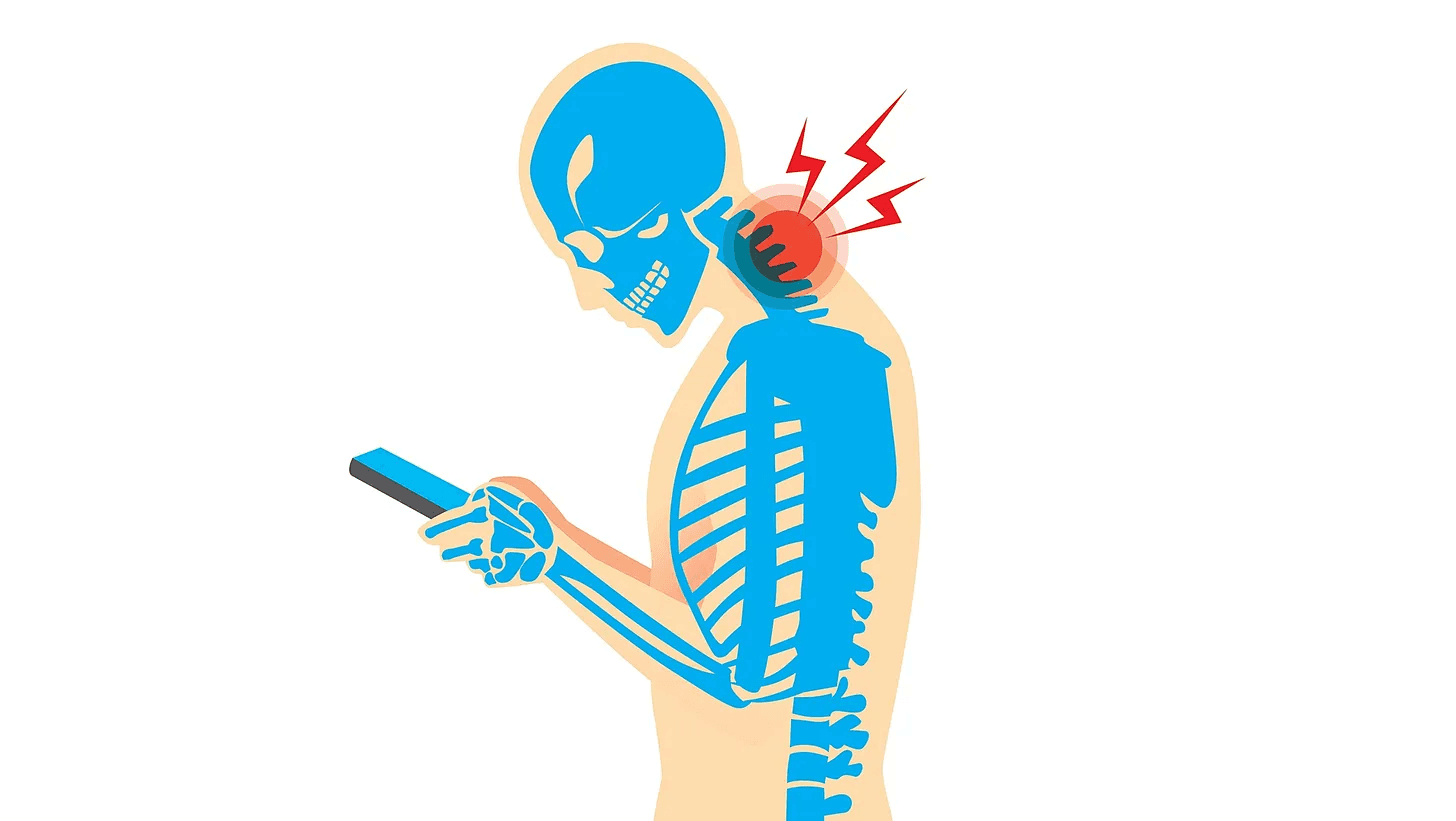
That one.
You see it everywhere—it’s become universal and a powerful symbol of the hyper-connected era. But we’re starting to realize it has serious consequences when it becomes frequent and prolonged.
It increases the pressure on the upper vertebrae in the spine. Which causes imbalances.
In 2014, a U.S. study by Dr. Kenneth Hansraj measured the actual load placed on the cervical spine when leaning forward:
At a 15° angle, the force exerted is 12 kg (26 lbs).
At a 60° angle, it jumps to 27 kg (60 lbs).
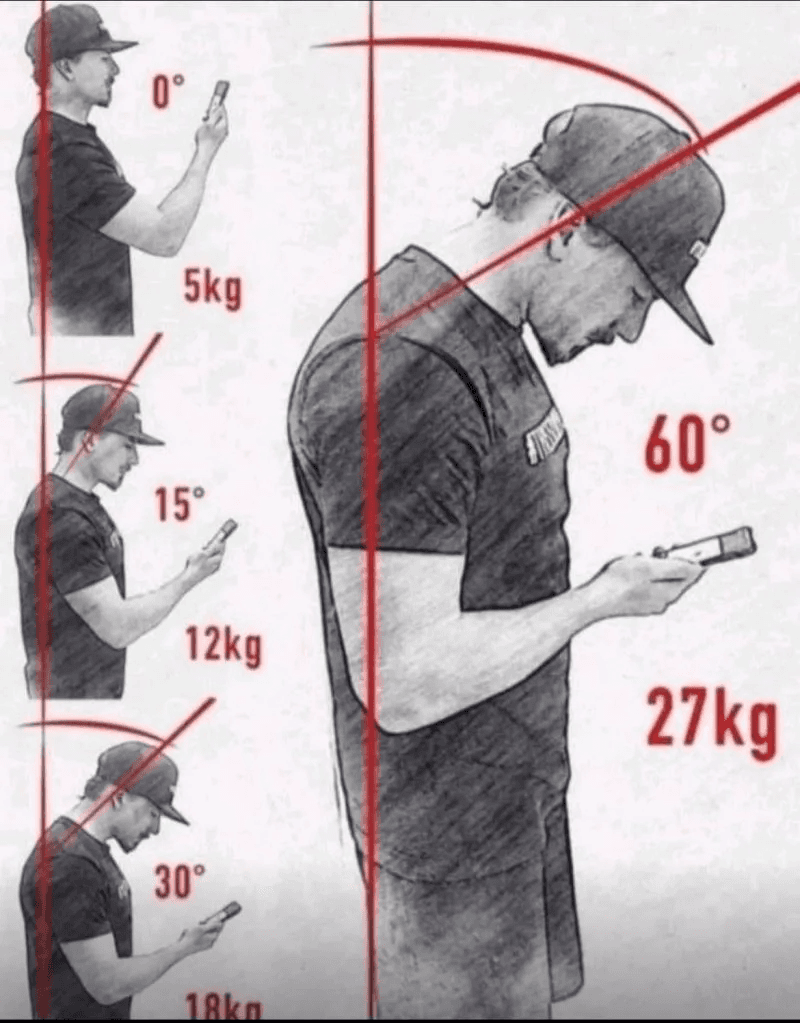
You get the idea: the more you tilt your head forward, the more pressure your neck has to bear. A significant portion of the population is putting their cervical spine under pressure far beyond its natural limits.
On average, the study found that we spend between 700 and 1,400 hours per year placing excessive strain on the cervical spine. Chiropractor Dr. Dominique Dufour recently warned:
“This premature wear can go unnoticed and painless for a long time. That’s what makes it sneaky. Some of the resulting symptoms can include numbness radiating to the arms or hands, headaches, neck pain, increased susceptibility to rotator cuff tendinitis (shoulder pain), and stiffness in the upper back’s muscles and joints.”
We often scroll or text hunched over our screens. By the way, how are you reading this article right now?The real problem isn’t the occasional bad posture. It’s holding it for long, repeated periods.
Smartphones are incredibly addictive, and we spend more and more time on them. These digital habits directly affect our bodies, which adapt—and morph. The posture that causes “text neck” leads to pain and risks. But it also brings about other, sometimes surprising, changes.
Wrinkles and Bumps
Over the past few years, several studies have shown that “text neck” is contributing to the early formation of a crease under the chin—a line that deepens over time.
It’s even been nicknamed the “smartphone wrinkle.” The neck is a particularly delicate area, and this repeated posture speeds up skin aging. According to facialist Jeanne Casimir, our neck has 200 to 300 lymph nodes that get compressed when the chin is lowered:
“Lymph flow stagnates, leading to the appearance of wrinkles and a double chin—everything gets congested, nothing circulates.”

Some beauty giants have turned this wrinkle into a business.
In Asia, Clarins launched a multi-regenerating neck cream back in 2021 to meet “growing demand.” We’re treating the symptoms without addressing the root cause.
Aesthetic concerns may seem secondary, fair enough. But this highlights the visible signs of hyperconnection showing up on our bodies. In 2018, Australian researchers analyzed X-rays of people aged 18 to 30. They discovered that 41% of them had developed a small bony growth at the base of the skull, at the top of the neck—a tiny bump.

This type of bone growth used to appear in much older patients, as it stems from long-term skeletal load.

A more scientific explanation:
“When the head is tilted forward, its weight shifts from the spine’s bones to the neck muscles. This increased load leads to remodeling of both tendons and bone at their attachment point. The tendon’s anchor to the bone becomes larger to spread the load over a wider area.” — Dr. David Shahar, lead researcher of the study
There’s growing awareness and personal responsibility around posture issues—that much is clear.

But it’s not just on the individual. If you’re an employee, the company also plays a role in supporting physical well-being.
The Company’s Role
With the rise of digital work, musculoskeletal disorders (MSDs) have become increasingly common among employees—especially those working primarily on screens. Back pain, neck stiffness, wrist tingling… the list goes on.
According to a 2022 study by IFOP:
86% of employees experience at least one MSD.
77% attribute their pain to work-related activity.
Back pain is the most common (69%), followed by neck pain (58%).
These are major issues in occupational health. And yet:
47% of employees say their workplace lacks proper ergonomic conditions.
73% of remote workers (especially part-timers) want companies to fund ergonomic chairs.
The workplace needs to support both productivity and well-being. It’s the best investment a company can make: helping people perform at their best. The word posture comes from the Latin positura, meaning not just position, but also disposition.
Educating employees on good posture is about putting them in the right disposition to work well and feel well. Working on a screen keeps the neck under constant tension. So it’s not just about optimizing the desk setup—it’s about encouraging regular breaks to avoid static positions for too long.
Whether in the office or working from home. Digital well-being should be a top priority to protect both physical and mental health. It reminds me of a conversation I had a few months ago with Ingrid Vacquerie, founder of Aum World, a booming sit-stand desk company.
Straightening Things Out
I’m not a scientist or chiropractor. But I have found some helpful tips for improving posture. First, this complete diagram on posture while working on a laptop, from an article by INRS (France’s National Institute for Research and Safety).
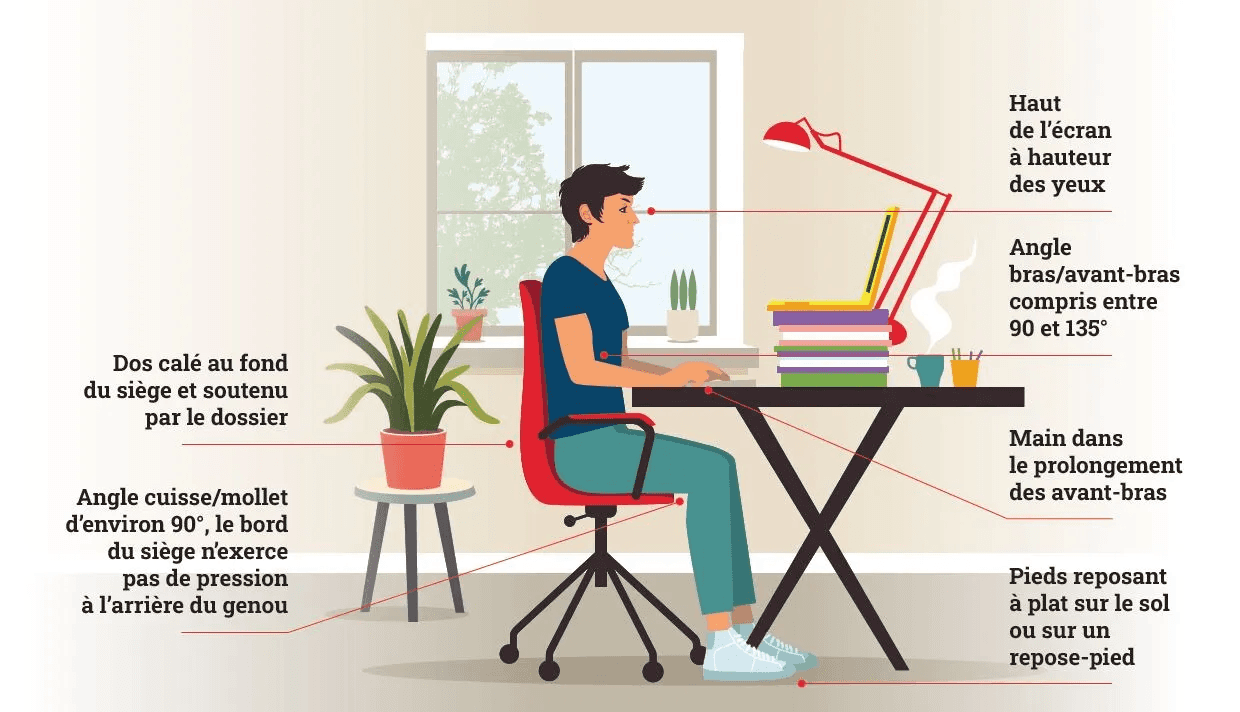
Optimal posture for working on screens, Source: INRS
The main thing I try to stick to now is keeping my screen at eye level—and I try to follow the rest of the advice as closely as I can. I also make it a point to take regular breaks to rest both my mind and my body. The body loves movement and hates staying still too long.
For smartphone use, here are two things I now do every day:
Hold it higher. I try to bring it to eye level without tilting my head forward. It feels odd at first, but you get used to it quickly.
Posture awareness. Whenever I catch myself in “text neck,” I straighten up immediately. Conscious correction. After becoming aware of the issue, I now check my posture several times a day. Some people even set alarms as reminders.
There are many other postural exercises out there—but I’ll leave that to the professionals.
Take Regular Breaks
It might sound obvious, and yet… sometimes we forget to take a break. I mean a real break. The kind where you go to the bathroom, grab a coffee, get some fresh air for five minutes, or simply stand up and stretch. Because most of the time, we interrupt our main task just to scroll on our phone or switch straight to our computer… but that’s not a break! No, because your muscles don’t relax at all and your body stays stuck in that hunched “shrimp mode” 🦐.
That’s why you can download the app for free on your iPhone and Mac right now. With it, you can block your apps (whether for work or distractions) at regular intervals for a short period, forcing yourself to take a proper break.
Not sure? Don’t know how to do it? Here’s a quick tutorial—takes two seconds, really:
Tap “+ Start blocking”
Select “Create a schedule”
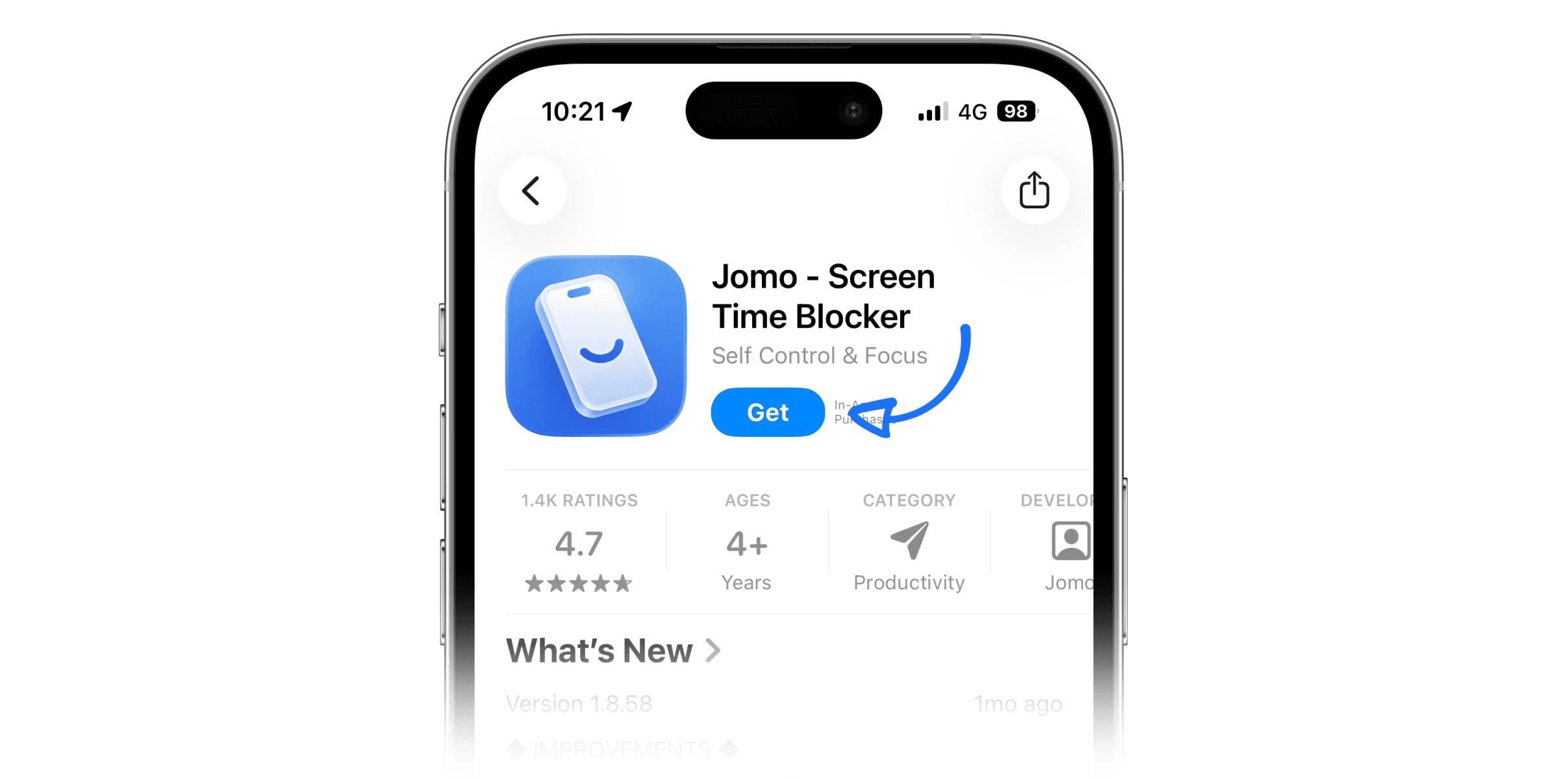
Set it to 10 minutes and pick a time when you know you’ll be on your computer or phone—and when you should probably step away. For example, let’s say 3:15 PM.
Choose the apps to block
Tap “Schedule” — and you’re good to go!
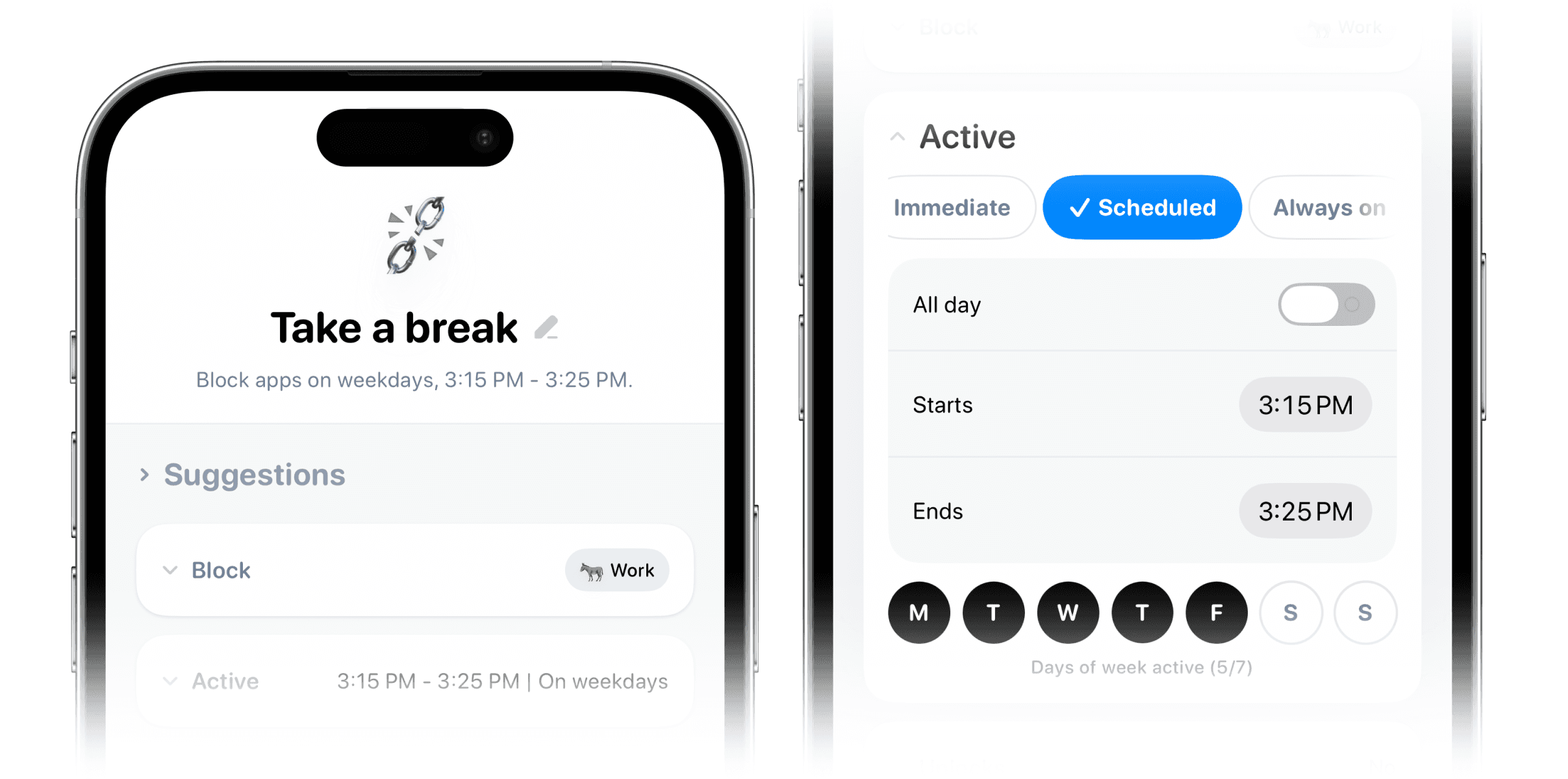
The ultimate tip is to set up several of these, spaced 1 to 1.5 hours apart, so you actually force yourself to look away from your screen and get out of your chair (see? super simple!).
From my perspective, it’s becoming urgent to reclaim proper posture in our digital lives—and in general. Unbalanced or excessive screen use is a ticking time bomb for our physical and mental health. We’re only just beginning to grasp its full impact.
Screens are everywhere in our lives, and they may well be reshaping us in every way—including physically. In front of them, we should keep our heads held high—not bowed down. Tomorrow, will we all be Quasimodo? Either way, chiropractic and osteopathy are in for a bright future.