Understand

7 min

Why Do I Keep Watching Content That Makes Me Angry?

The other night, while browsing YouTube, I noticed something: even when a video annoys me, I feel almost compelled to keep watching.

Against my better judgment. I could stop after five seconds, because everything about the person gets on my nerves. Sometimes even the topic does. And if only it stopped there… But no! I go on to read the comments. And not just any comments: I look for someone who agrees with me that it’s terrible, that it’s a waste of time, that nothing about it is right.

Am I weird? Nope. This is exactly the reaction rage bait is designed to provoke.

In other words, content created specifically to get a rise out of us. A provocative claim, an outrageous remark, an offensive take: the aim is to make people angry enough to keep watching. Or, better yet, to react and share.

This week, we’re taking a closer look at the topic. And, most importantly, we’ll explore how to resist these tactics and find a little more peace on our favorite social apps.

But first, if this is the first time you’re reading one of my articles, let me introduce myself. The little voice behind these words is Laureline, designer and co-founder of Jomo, a screen time app that helps you take back control of your phone. Since 2022, I’ve been sharing my thoughts, tutorials, and tips every week to help you build a healthier relationship with technology.

Ready? Let’s take a closer look at how rage bait works.

What Exactly Is Rage Bait?

According to Oxford, the earliest recorded use of the term dates back to 2002. Today, it describes online content deliberately created to provoke anger or outrage, usually to attract more traffic or engagement. Oxford even named it its Word of the Year for 2025.

But why would anyone create content specifically to make people angry? The answer is pretty depressing: to get more views, more reactions, and a shot at going viral. Clickbait plays on surprise or curiosity. Rage bait goes straight for outrage.
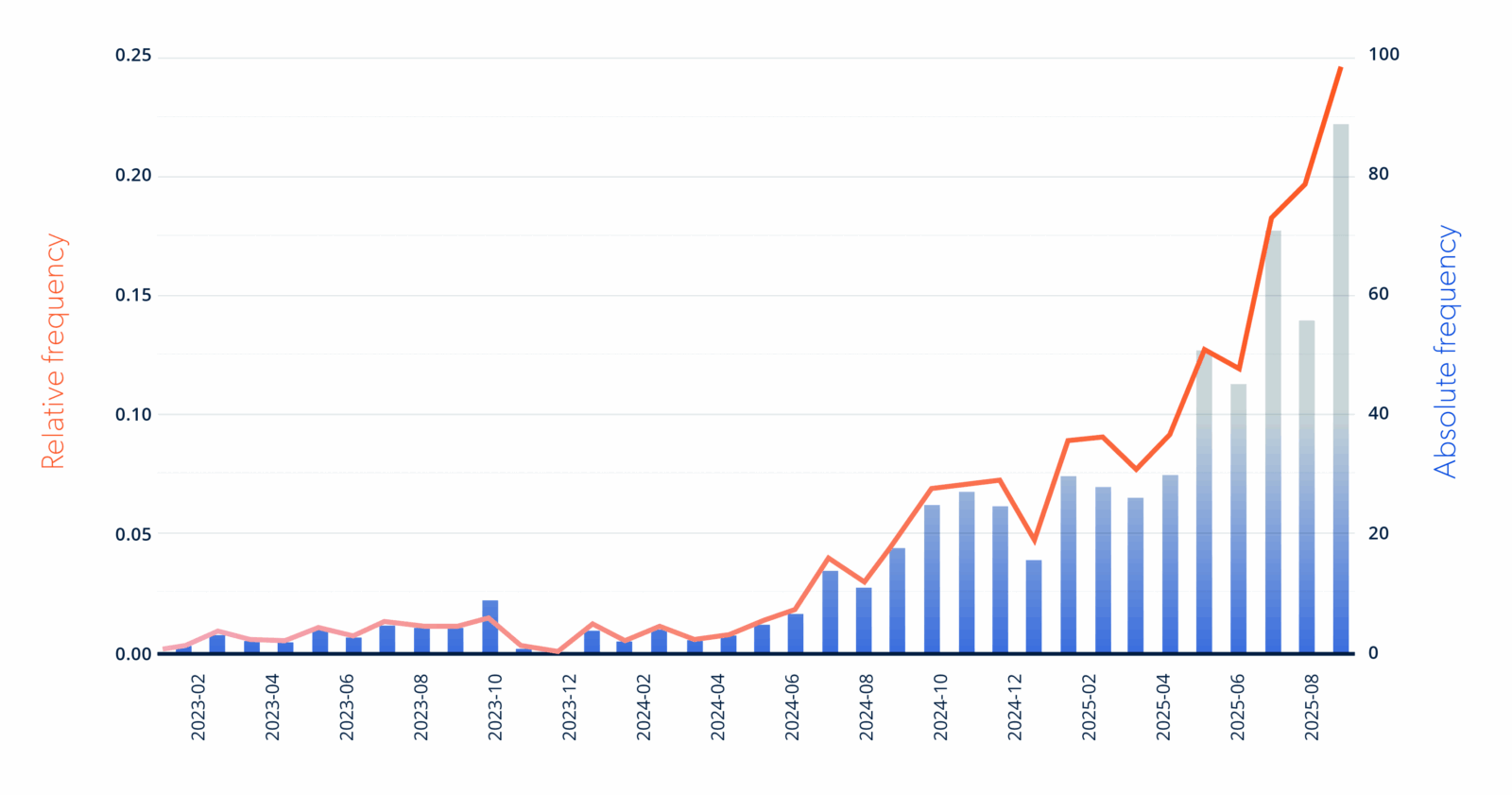

Oxford Languages chart showing the rise in usage of the term “rage bait”.
Source
Chart by Oxford Languages / Oxford University Press.

Oxford’s chart shows the sharp increase in use of the term in recent years. It’s a sign that more people are recognizing and talking about the tactic.

Rage bait is no longer some obscure internet trick. It has become a widely recognized part of online culture.

How Can You Recognize Rage Bait?

Careful: not every negative or upsetting post is rage bait. Intent matters. But content designed to provoke often follows familiar patterns, with the same recipe repeated from one post to the next. Here are a few common examples:

  • Someone presenting an exaggerated, deliberately provocative opinion.

  • Someone behaving outrageously rudely.

  • A clip taken out of context.

  • Someone openly trying to provoke a particular community.

  • A claim that is demonstrably false.

  • Political content built around insults and contempt.

As humans, it’s natural to feel outraged, leave a comment, correct the facts, or come to someone’s defense. And that’s where the bait works.

The most frustrating part? The person behind the content may know exactly what they’re doing. They know it’s wrong, misleading, or harmful. They simply want you to react.

Because: Comment = interaction = Positive signal to the recommendation algorithm = Buzz = Money.

Why Is It So Hard to Stop Watching?

Once again, we’re human. We’re curious. And this content taps into some very human tendencies, which can make it surprisingly difficult to resist.

You might think: if I don’t like it, I’ll just move on and fill my feed with things I enjoy. Sounds easy enough. But our emotional reactions, and the way platforms respond to our behavior, can make it a little more complicated.

Art by Mariana Pedroza

Strong Emotions Grab Our Attention

In 2012, Jonah Berger and Katherine Milkman studied which New York Times articles were most widely shared. Their findings were interesting: content that stirred up certain strong emotions, both positive and negative, was more likely to be shared.

“Virality is partially driven by physiological arousal. Content that evokes high-arousal positive (awe) or negative (anger or anxiety) emotions is more viral. Content that evokes low-arousal, or deactivating, emotions (e.g., sadness) is less viral.”

— Jonah Berger & Katherine L. Milkman

In other words, emotions that get us worked up, including anger and anxiety, were associated with more sharing.

A 2023 study of online news headlines explored another part of the picture. In experiments using Upworthy headlines, negative wording increased the likelihood of a click. In that setting, a more negative headline could make people more likely to open the article.

Anger Makes Us Want to Act

When content clashes with our values, touches a nerve, or challenges the way we see things, we may want to defend ourselves, push back, or set the record straight. Researchers have described a “confrontation effect.”

“While the prevailing sentiment is that people prefer to engage with ideology-consistent content and avoid content that clashes with their personal beliefs (Hart et al., 2009), we show that there are circumstances when the opposite pattern emerges, a phenomenon we call the confrontation effect.”

— Daniel Mochon & Janet Schwartz

Their research suggests that, under certain conditions, outrage can make people engage more with content that goes against their beliefs. Disagreement can be a powerful reason to engage.

We Look for Reassurance

The question that naturally comes to mind is: “Am I the only one who thinks this is awful?” And where do we go to find out? The comments, of course.

Sometimes, we find people defending the content and feel almost obliged to argue with them. Other times, we find people who agree with us and are just as critical of it.

Either way, we may end up trying to affirm our position, almost as though we need to join one of two opposing camps.

Okay, but What’s the Problem?

Your first thought might be: “Fine, I get annoyed every thirty seconds by someone talking nonsense. So what?”

One irritating video isn’t necessarily a big deal. What deserves our attention is how often this happens, how much provocative content we’re exposed to, and how that repeated exposure may affect us over time.

Problem #1: Our Mood

When we keep scrolling through negative news, we can fall into doomscrolling. We won’t unpack the whole topic here, but you can read our dedicated article about doomscrolling.

A 2024 study involving participants in Iran and the United States found an association between doomscrolling and existential anxiety: worries about life, meaning, and our place in the world.

“The appetite for negative news is fueled by negativity bias, which compels people to prioritize negative over positive stories.”

— Reza Shabahang et al.

And it’s worth asking ourselves: if we spend three hours a day scrolling through content that leaves us furious, how do we feel afterward? What does that do to the rest of our day?

Problem #2: The Way We See the World

It can also affect the way we see the world around us. A constant stream of negativity may leave us feeling as though everything is hopeless.

Think about it. If my feed keeps showing me:

  • People behaving foolishly.

  • Extreme, polarizing opinions.

  • Conflict and war.

  • Rude, inconsiderate, or inappropriate behavior.

  • Injustice.

  • People showing nothing but hostility toward one another.

…I may start mistaking the version of the world in my feed for the world as a whole.

An endless stream of outrage can make hostility feel everywhere. And if the accounts and comments I turn to keep reinforcing the same beliefs, that can resemble an echo chamber: an environment where the information we encounter repeatedly confirms what we already think.
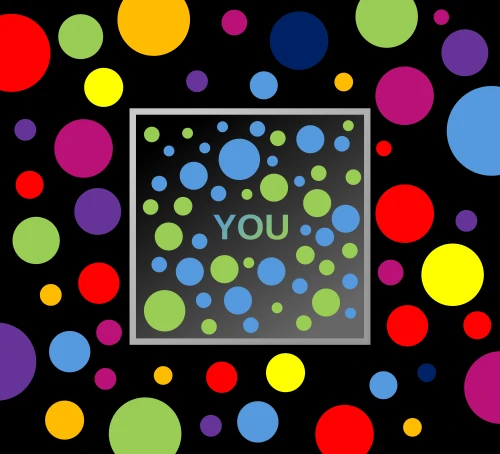

Diagram showing how a social media echo chamber reinforces existing beliefs.
Source

Problem #3: An Idea I Reject Starts to Feel Familiar

This brings us to the illusory truth effect.

In plain English: repeated information can start to feel more credible, whether it is true or false.

A 2023 study found that even a single previous exposure to misinformation could make participants more willing to share it. This was linked to an increase in its perceived accuracy.

In other words, finding a claim ridiculous the first time you see it doesn’t necessarily make you immune to the effects of repetition.

“Misinformation can negatively impact people’s lives in domains ranging from health to politics. […] That is, repetition of misinformation biased people’s judgment of accuracy and as a result fuelled the spread of misinformation. The effect was observed in the domain of health and general knowledge, suggesting it is not tied to a specific domain.”

— V. Vellani et al.

There’s also a broader question here: can ideas that once seemed unacceptable start to feel more normal? The Overton window describes the range of political ideas considered acceptable in public debate. That’s a different concept from the illusory truth effect, but both invite us to think about what repeated exposure can make feel familiar or acceptable.
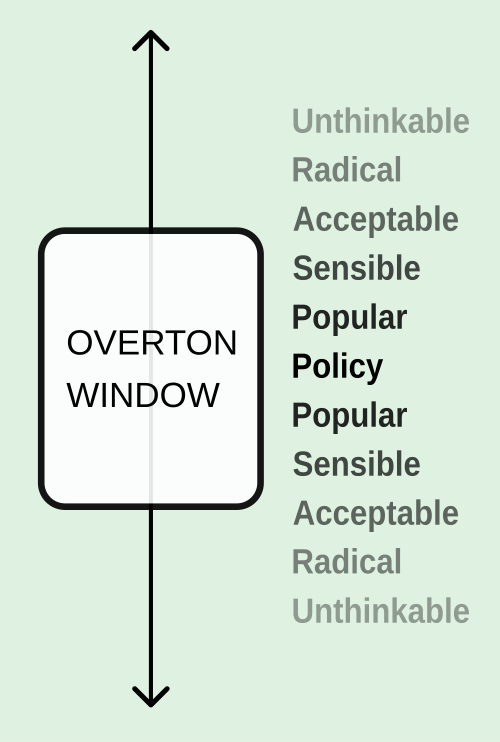


Diagram of the Overton window, showing a range of ideas from unthinkable to accepted policy.
Source

Against my better judgment. I could stop after five seconds, because everything about the person gets on my nerves. Sometimes even the topic does. And if only it stopped there… But no! I go on to read the comments. And not just any comments: I look for someone who agrees with me that it’s terrible, that it’s a waste of time, that nothing about it is right.

Am I weird? Nope. This is exactly the reaction rage bait is designed to provoke.

In other words, content created specifically to get a rise out of us. A provocative claim, an outrageous remark, an offensive take: the aim is to make people angry enough to keep watching. Or, better yet, to react and share.

This week, we’re taking a closer look at the topic. And, most importantly, we’ll explore how to resist these tactics and find a little more peace on our favorite social apps.

But first, if this is the first time you’re reading one of my articles, let me introduce myself. The little voice behind these words is Laureline, designer and co-founder of Jomo, a screen time app that helps you take back control of your phone. Since 2022, I’ve been sharing my thoughts, tutorials, and tips every week to help you build a healthier relationship with technology.

Ready? Let’s take a closer look at how rage bait works.

What Exactly Is Rage Bait?

According to Oxford, the earliest recorded use of the term dates back to 2002. Today, it describes online content deliberately created to provoke anger or outrage, usually to attract more traffic or engagement. Oxford even named it its Word of the Year for 2025.

But why would anyone create content specifically to make people angry? The answer is pretty depressing: to get more views, more reactions, and a shot at going viral. Clickbait plays on surprise or curiosity. Rage bait goes straight for outrage.


Oxford Languages chart showing the rise in usage of the term “rage bait”.
Source
Chart by Oxford Languages / Oxford University Press.

Oxford’s chart shows the sharp increase in use of the term in recent years. It’s a sign that more people are recognizing and talking about the tactic.

Rage bait is no longer some obscure internet trick. It has become a widely recognized part of online culture.

How Can You Recognize Rage Bait?

Careful: not every negative or upsetting post is rage bait. Intent matters. But content designed to provoke often follows familiar patterns, with the same recipe repeated from one post to the next. Here are a few common examples:

  • Someone presenting an exaggerated, deliberately provocative opinion.

  • Someone behaving outrageously rudely.

  • A clip taken out of context.

  • Someone openly trying to provoke a particular community.

  • A claim that is demonstrably false.

  • Political content built around insults and contempt.

As humans, it’s natural to feel outraged, leave a comment, correct the facts, or come to someone’s defense. And that’s where the bait works.

The most frustrating part? The person behind the content may know exactly what they’re doing. They know it’s wrong, misleading, or harmful. They simply want you to react.

Because: Comment = interaction = Positive signal to the recommendation algorithm = Buzz = Money.

Why Is It So Hard to Stop Watching?

Once again, we’re human. We’re curious. And this content taps into some very human tendencies, which can make it surprisingly difficult to resist.

You might think: if I don’t like it, I’ll just move on and fill my feed with things I enjoy. Sounds easy enough. But our emotional reactions, and the way platforms respond to our behavior, can make it a little more complicated.

Art by Mariana Pedroza

Strong Emotions Grab Our Attention

In 2012, Jonah Berger and Katherine Milkman studied which New York Times articles were most widely shared. Their findings were interesting: content that stirred up certain strong emotions, both positive and negative, was more likely to be shared.

“Virality is partially driven by physiological arousal. Content that evokes high-arousal positive (awe) or negative (anger or anxiety) emotions is more viral. Content that evokes low-arousal, or deactivating, emotions (e.g., sadness) is less viral.”

— Jonah Berger & Katherine L. Milkman

In other words, emotions that get us worked up, including anger and anxiety, were associated with more sharing.

A 2023 study of online news headlines explored another part of the picture. In experiments using Upworthy headlines, negative wording increased the likelihood of a click. In that setting, a more negative headline could make people more likely to open the article.

Anger Makes Us Want to Act

When content clashes with our values, touches a nerve, or challenges the way we see things, we may want to defend ourselves, push back, or set the record straight. Researchers have described a “confrontation effect.”

“While the prevailing sentiment is that people prefer to engage with ideology-consistent content and avoid content that clashes with their personal beliefs (Hart et al., 2009), we show that there are circumstances when the opposite pattern emerges, a phenomenon we call the confrontation effect.”

— Daniel Mochon & Janet Schwartz

Their research suggests that, under certain conditions, outrage can make people engage more with content that goes against their beliefs. Disagreement can be a powerful reason to engage.

We Look for Reassurance

The question that naturally comes to mind is: “Am I the only one who thinks this is awful?” And where do we go to find out? The comments, of course.

Sometimes, we find people defending the content and feel almost obliged to argue with them. Other times, we find people who agree with us and are just as critical of it.

Either way, we may end up trying to affirm our position, almost as though we need to join one of two opposing camps.

Okay, but What’s the Problem?

Your first thought might be: “Fine, I get annoyed every thirty seconds by someone talking nonsense. So what?”

One irritating video isn’t necessarily a big deal. What deserves our attention is how often this happens, how much provocative content we’re exposed to, and how that repeated exposure may affect us over time.

Problem #1: Our Mood

When we keep scrolling through negative news, we can fall into doomscrolling. We won’t unpack the whole topic here, but you can read our dedicated article about doomscrolling.

A 2024 study involving participants in Iran and the United States found an association between doomscrolling and existential anxiety: worries about life, meaning, and our place in the world.

“The appetite for negative news is fueled by negativity bias, which compels people to prioritize negative over positive stories.”

— Reza Shabahang et al.

And it’s worth asking ourselves: if we spend three hours a day scrolling through content that leaves us furious, how do we feel afterward? What does that do to the rest of our day?

Problem #2: The Way We See the World

It can also affect the way we see the world around us. A constant stream of negativity may leave us feeling as though everything is hopeless.

Think about it. If my feed keeps showing me:

  • People behaving foolishly.

  • Extreme, polarizing opinions.

  • Conflict and war.

  • Rude, inconsiderate, or inappropriate behavior.

  • Injustice.

  • People showing nothing but hostility toward one another.

…I may start mistaking the version of the world in my feed for the world as a whole.

An endless stream of outrage can make hostility feel everywhere. And if the accounts and comments I turn to keep reinforcing the same beliefs, that can resemble an echo chamber: an environment where the information we encounter repeatedly confirms what we already think.


Diagram showing how a social media echo chamber reinforces existing beliefs.
Source

Problem #3: An Idea I Reject Starts to Feel Familiar

This brings us to the illusory truth effect.

In plain English: repeated information can start to feel more credible, whether it is true or false.

A 2023 study found that even a single previous exposure to misinformation could make participants more willing to share it. This was linked to an increase in its perceived accuracy.

In other words, finding a claim ridiculous the first time you see it doesn’t necessarily make you immune to the effects of repetition.

“Misinformation can negatively impact people’s lives in domains ranging from health to politics. […] That is, repetition of misinformation biased people’s judgment of accuracy and as a result fuelled the spread of misinformation. The effect was observed in the domain of health and general knowledge, suggesting it is not tied to a specific domain.”

— V. Vellani et al.

There’s also a broader question here: can ideas that once seemed unacceptable start to feel more normal? The Overton window describes the range of political ideas considered acceptable in public debate. That’s a different concept from the illusory truth effect, but both invite us to think about what repeated exposure can make feel familiar or acceptable.


Diagram of the Overton window, showing a range of ideas from unthinkable to accepted policy.
Source

Votre téléphone, vos règles. Bloquez ce que vous voulez, quand vous voulez.

Votre téléphone, vos règles. Bloquez ce que vous voulez, quand vous voulez.

Why Is It Worth Protecting Yourself?

There are two main reasons: for yourself, and for the people around you.

For yourself: does being angry all the time make your everyday life better? Does a constant state of outrage make you happy? You might not notice the effect at first, but little by little, it can start to take a toll.

For everyone else: rage bait is often created to attract attention and make money. But it can also fuel division and hostility. Do we really want to keep rewarding content that encourages people to hate one another?

How Can You Stop Taking the Bait?

As always, we like to leave you with a few practical ways to take back control. Here are four things you can try.

1. Pause and Look at What the Content Is Doing

Before commenting, sharing, or even watching the whole thing, ask yourself: “What is this content trying to do? Inform me, or provoke a reaction?”

Even watching a video all the way through can be a signal to a recommendation system. Taking a moment to consider the quality and purpose of the information gives you a chance to decide whether it deserves more of your attention.

2. Don’t Feed the Beast

Sometimes, ignoring it is the most useful response. No comment, no argument, no extra attention helping the post spread.

Art by Berryone

If someone is deliberately trying to provoke you, a furious reply is unlikely to change their mind. It may simply give them exactly what they came for. So let it pass. Less attention makes the tactic less rewarding.

You can also use “Not interested” or block the account. Those actions tell the platform that you want less of this kind of content.

3. Clean Up Your Feed

After we’ve watched a few provocative posts, recommendations can start sending us more of the same. It helps to do a little housekeeping from time to time. No magic formula, just a few practical changes:

  • Unfollow accounts that regularly post rage bait, including those that keep reposting it. Give yourself fewer opportunities to get pulled into the same arguments.

  • Mute accounts and use the feedback controls available on your platform. Make it clear that you don’t want more of this content.

  • Browse with a little more intention. Give your time to creators you actually value, instead of letting the next recommendation make every decision for you.

  • Turn off notifications if you need to. Sometimes, they’re simply invitations to rush back into an app and see whatever is trending. It’s rarely as urgent as it feels.

4. Take Back Control

One useful approach is to set up a Lock with Jomo, which is free to download on iPhone, iPad, and Mac.

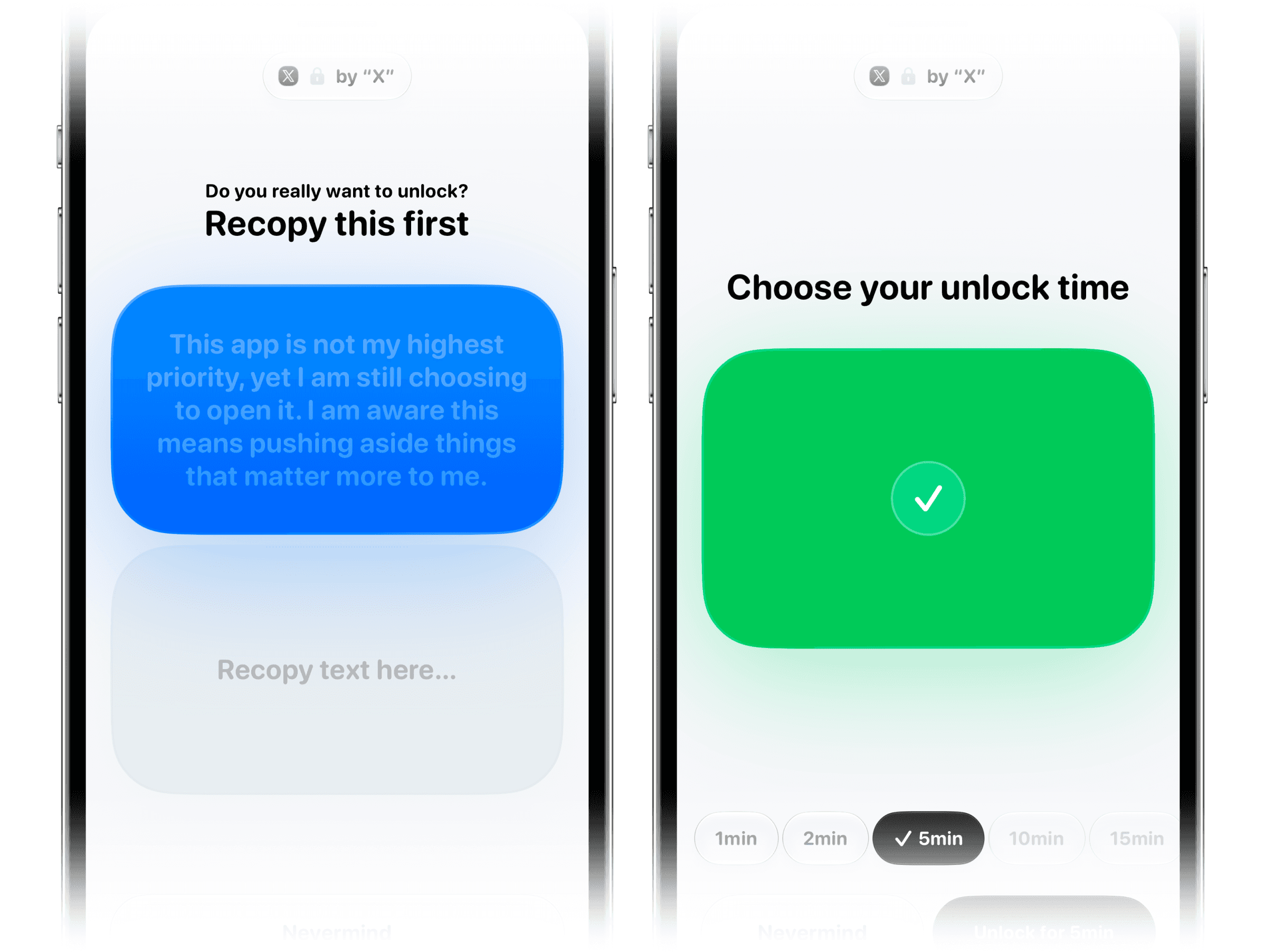
The idea is simple: keep the app where you encounter the most rage bait blocked by default. When you want to use it, complete a short exercise in Jomo before unlocking it.

Why do I like this so much? It gives you a moment to ask why you want to open the app. Is this really a good time? Am I going there to do something worthwhile, or am I about to lose another half hour?

That little pause can help you put some distance between yourself and your apps, without having to delete them from your phone.

The Takeaway 🍔

We know that not reacting to awful content can be a challenge. Sometimes, the urge feels stronger than we are. But before responding in the heat of the moment, try taking a few seconds to ask: what is this content actually doing for me? And if I comment to defend my point of view, am I giving its creator exactly what they want?

I hope you enjoyed this article. I enjoyed digging into the research, writing it, and finding practical ideas to share with you. As always, the writing comes from my own little fingers tapping away at the keyboard, the thinking comes from my own brain, and the research comes from the internet. I use AI tools to help with translation and proofreading, so everything gets a final polish ✨

If you’d like to try Jomo Plus free for 14 days, feel free to use my referral code: FG2HA9.

And since we’re starting to run a little low on fresh article ideas, we’d love to hear yours! You can send them our way right here.

🫡 See you next Monday!


Sources & Credits
Written by Laureline, designer and co-founder of Jomo. Translation and proofreading supported by AI tools. Images by Lummi and Unsplash.
[1] Oxford University Press — The Oxford Word of the Year 2025 is rage bait, 2025.
[2] J. Berger & K. L. Milkman — What Makes Online Content Viral?, Journal of Marketing Research, 2012.
[3] C. E. Robertson et al. — Negativity drives online news consumption, Nature Human Behaviour, 2023.
[4] D. Mochon & J. Schwartz — The confrontation effect: When users engage more with ideology-inconsistent content online, Organizational Behavior and Human Decision Processes, 2024.
[5] R. Shabahang et al. — Doomscrolling evokes existential anxiety and fosters pessimism about human nature? Evidence from Iran and the United States, Computers in Human Behavior Reports, 2024.
[6] Wikipedia — Echo chamber (media).
[7] Wikipedia — Illusory truth effect.
[8] V. Vellani, S. Zheng, D. Ercelik & T. Sharot — The illusory truth effect leads to the spread of misinformation, Cognition, 2023.
[9] Wikipedia — Overton window.

The Joy Of Missing Out

Développé en Europe

Tous droits réservés à Jomo SAS, 2025

The Joy Of Missing Out

Développé en Europe

Tous droits réservés à Jomo SAS, 2025