Understand
6 min
How to Stop Using Your Phone So Much
Smartphones have revolutionized the way we communicate, learn, work and play: thats’s a fact.

For many of us, this is our social lifeline, our source of entertainment and our primary work tool (maybe an extension of our hands for others).
BUT… (Because there’s one), but the downside is that we often end up spending hours each day glued to our screens. A recent study estimated that adults spend about 3.25 hours per day on their smartphones, and many people feel they cannot function without them. Not surprisingly, 37 % of the world’s population shows signs of problematic smartphone use.
Let’s be clear: using a phone isn’t inherently bad. It helps us stay connected and productive. But when screen time crowds out sleep, exercise, hobbies and face‑to‑face conversation, it can affect our mental health, productivity and relationships.
And you know what? Recognizing the problem is the first step toward change.
But before we begin, let me introduce myself. The little voice you’re reading is Laureline. I’m the designer and co-founder of the Jomo app. For the past 10 years, I’ve been working in ergonomics and interface design. In 2022, we launched Jomo to finally bring a long-standing idea to life: a great app to help people stop mindless scrolling and take back control of their lives. I wrote this article myself, with my own two hands and my own brain. So if you enjoyed it or found it helpful, feel free to share it with people around you and send us your feedback!
Why We Spend So Much Time on Our Phones
The Smartphone’s Design Hooks Us
Smartphones (and more specifically apps) are designed to capture and steal our attention. They use bright colors, infinite scroll and notifications to trigger dopamine release, the neurotransmitter associated with pleasure and reward. Each of these triggers offers a small promise of novelty, whether it’s a message from a friend or a just a like. And bad news: over time, these micro‑rewards can reinforce habits and lead to compulsive checking.
Researchers describe the smartphone as a “digital slot machine”: because notifications arrive unpredictably, we keep checking in the hope of a reward. This effect is compounded by FOMO (fear of missing out), which encourages us to stay connected at all times. Social media feeds show highlights of other people’s lives, so we scroll endlessly to see what we might miss.
If you want to dive deeper, I can only recommend Tristan Harris’s talks on this topic.
The Habit Loop and Self‑Control
Habits are formed through repetition and reinforced by rewards. An analysis of habit formation found that it takes an average of 59–66 days for a new behavior to become automatic. Because the smartphone is always within reach, the habit loop can form quickly. Every time you check your phone and see a notification, your brain reinforces the idea that checking is rewarding.
Excessive phone use is also linked to lower self‑control. Some studies reports that smartphone addiction can predict academic procrastination. Why? because it weakened self‑control and academic self‑efficacy. When we constantly reach for our phones, we train our brains to crave instant gratification, making it harder to focus on long‑term tasks.
Overestimation of Value and Underestimation of Time
We often overestimate how productive or necessary our phone time is. Even if we pick up the phone to check one message, we might end up spending 20 minutes on social media or news feeds. This time is often perceived as “just a few minutes,” but it adds up. Many people don’t realize how much of their day is consumed by notifications and mindless scrolling until they track it.

But Why Phone Overuse Matters?
While moderate smartphone use can be beneficial, excessive use has real consequences for mental health, sleep, productivity and relationships.
Mental Health & Well‑Being
Multiple studies link heavy smartphone use to depression, anxiety and reduced life satisfaction. A large trial published in 2025 asked one group to reduce screen time to two hours per day for three weeks. Participants reported small to medium improvements in depressive symptoms, stress, sleep quality and overall well‑being.
Digital detox programs—periods in which participants intentionally reduce or abstain from phone use—show promising results. But not really in the long run. So far, the “best method” seems to be cutting down your screen time by an hour a day while adding more physical activity. This combination tends to deliver more noticeable results and boosts your job satisfaction, work-life balance, and mental health.
Productivity & Procrastination
Constant notifications and the temptation of entertainment apps make deep work difficult. Students who scored higher on smartphone addiction measures reported lower self‑control and greater academic procrastination. When we switch tasks frequently or multitask, we overload our working memory and slow our cognitive processing. A study reported a negative relationship between technology use and academic performance , suggesting that frequent phone use can erode our ability to focus and learn.
Sleep Disruption
Using the phone right before bed can wreak havoc on sleep. A study found that screen use in the hour before bedtime was associated with a 33 % higher risk of poor sleep quality and shorter sleep duration. People who used screens at night slept about 7.6 minutes less per weeknight on average. The blue light emitted by screens suppresses melatonin, the hormone that regulates sleep, delaying the time it takes to fall asleep.
Social Connection & Well‑Being
Heavy smartphone users often feel lonelier and more socially isolated. A survey across generations found that smartphone overuse and distraction were negatively correlated with general well‑being. Excessive social media use can also lead to social comparison, FOMO and reduced self‑esteem. While phones connect us globally, they may disconnect us from the people physically present with us.
Practical Tips to Spend Less Time on Your Phone
If you’ve recognized that your phone use might be out of balance, here are some simple tips to regain control. You don’t have to apply them all; start with a few that resonate with you.
Increase Awareness with Tracking
Awareness is the first step to change. Most phones have built‑in tools that track screen time and show how often you pick up your device and which apps you use most. Apps like Jomo (available on iPhone, iPad and Mac) provide detailed statistics. Simply seeing the numbers can be eye‑opening and motivate you to change.
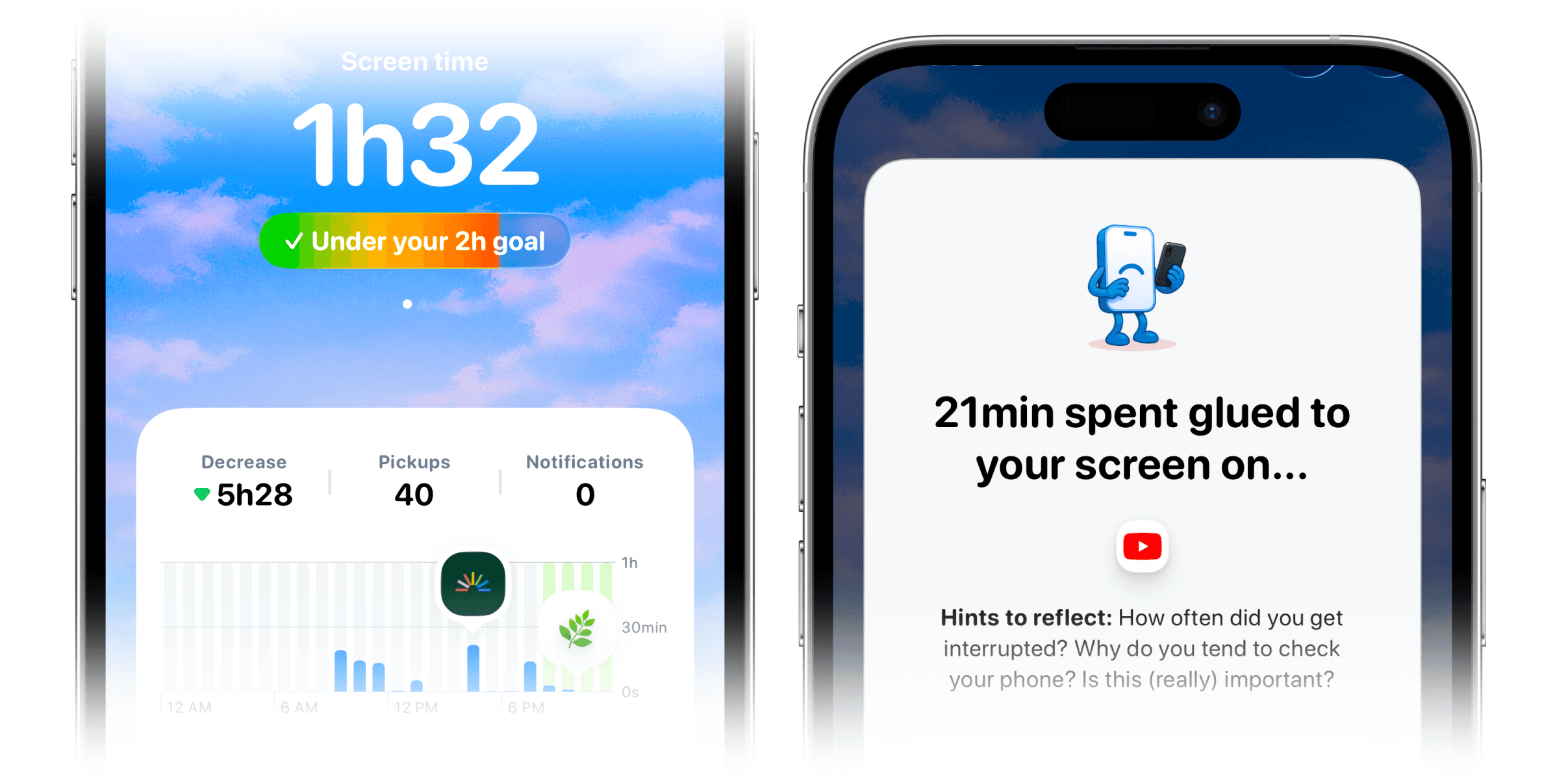
But you can take it a step further by filling out your Screen Time Journal every day. For each app you use, try linking it to an activity and ask yourself if it was truly “useful” time or just a complete “waste of time.” It’s a great way to judge how you actually spend your time on your phone.
Limit Notifications & Remove Distractions
Notifications are designed to interrupt and to make you come back on an app (very) very often. So simple advise here: turn off ALL non‑essential alerts or group them to arrive at specific times. Consider disabling notifications from social media, games and news apps, leaving only messages and calls from important contacts. The goal is to reduce “attention switches,” which fragment your focus.
Place distracting apps in folders or remove them from your home screen. You can even delete social media apps and access them through a browser, adding extra steps that make impulsive usage less likely.
Add Friction to the Process
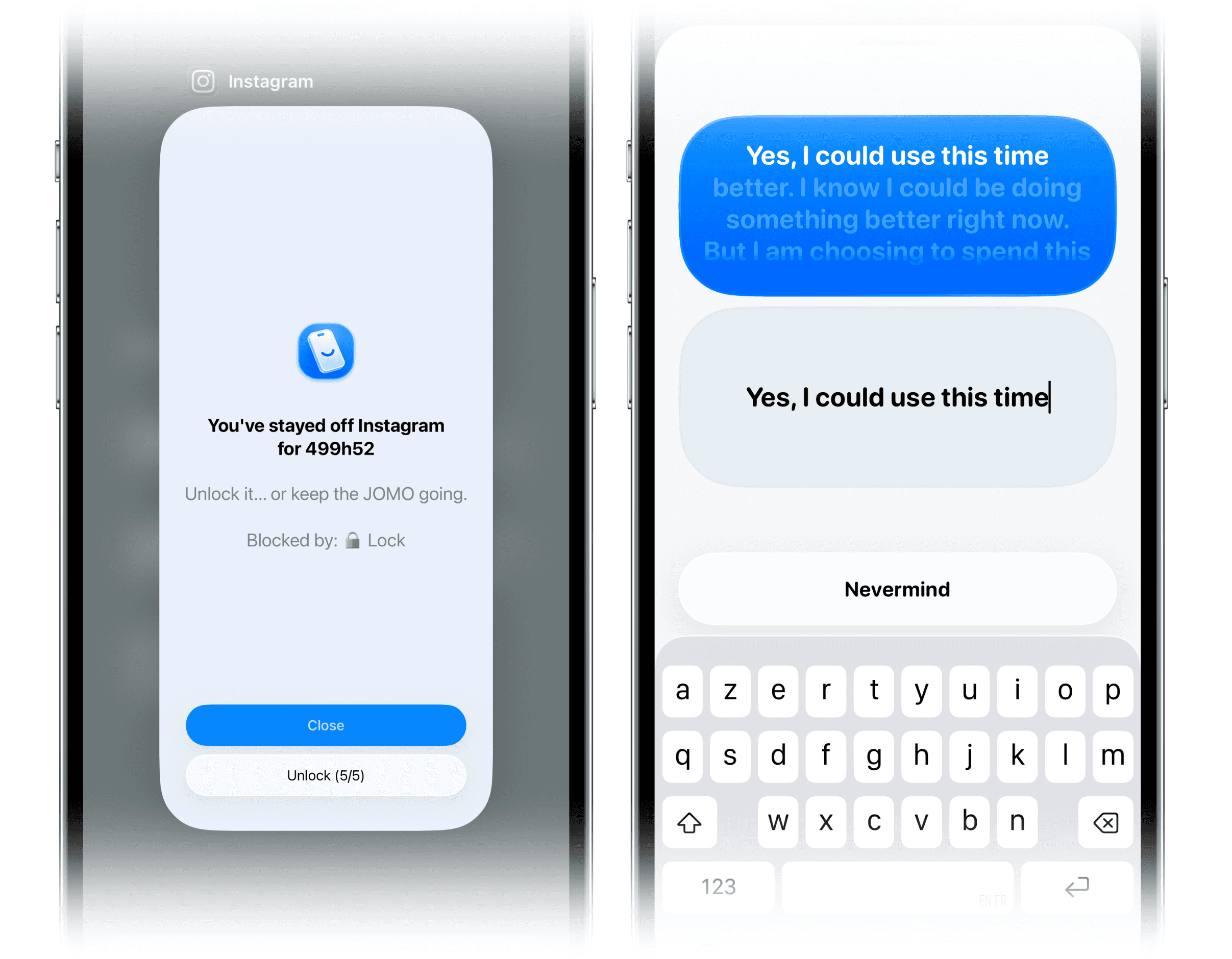
Using certain apps has become way too easy—so much so that for many of us, it’s just a reflex. When you’re bored, waiting around… basically anytime your brain isn’t overstimulated by real life, it instantly gets pulled into these apps (Instagram, TikTok, etc.) without you even noticing.
The best thing you can do is bring back a little friction so they’re not so effortless to use. With Jomo on your iPhone, iPad, or Mac, you can block them by default. Then, every time you try to open one, you’ll need to complete a small exercise first. It’s a great way to pause and ask yourself if you actually need that app right now.
Create Phone‑Free Zones & Times
Designate certain spaces or times as phone‑free. Meal times, the bedroom and the first hour after waking are good candidates. Keeping the phone out of reach during these periods reduces temptation.
In many digital detox interventions, participants committed to specific time blocks without digital devices. Qualitative feedback showed that people often felt relief and pleasure once they adapted to the detox. They reported greater awareness of their communication patterns and implemented measures such as deleting apps or logging out . You can start small—try 30‑minute phone‑free intervals and gradually extend them.
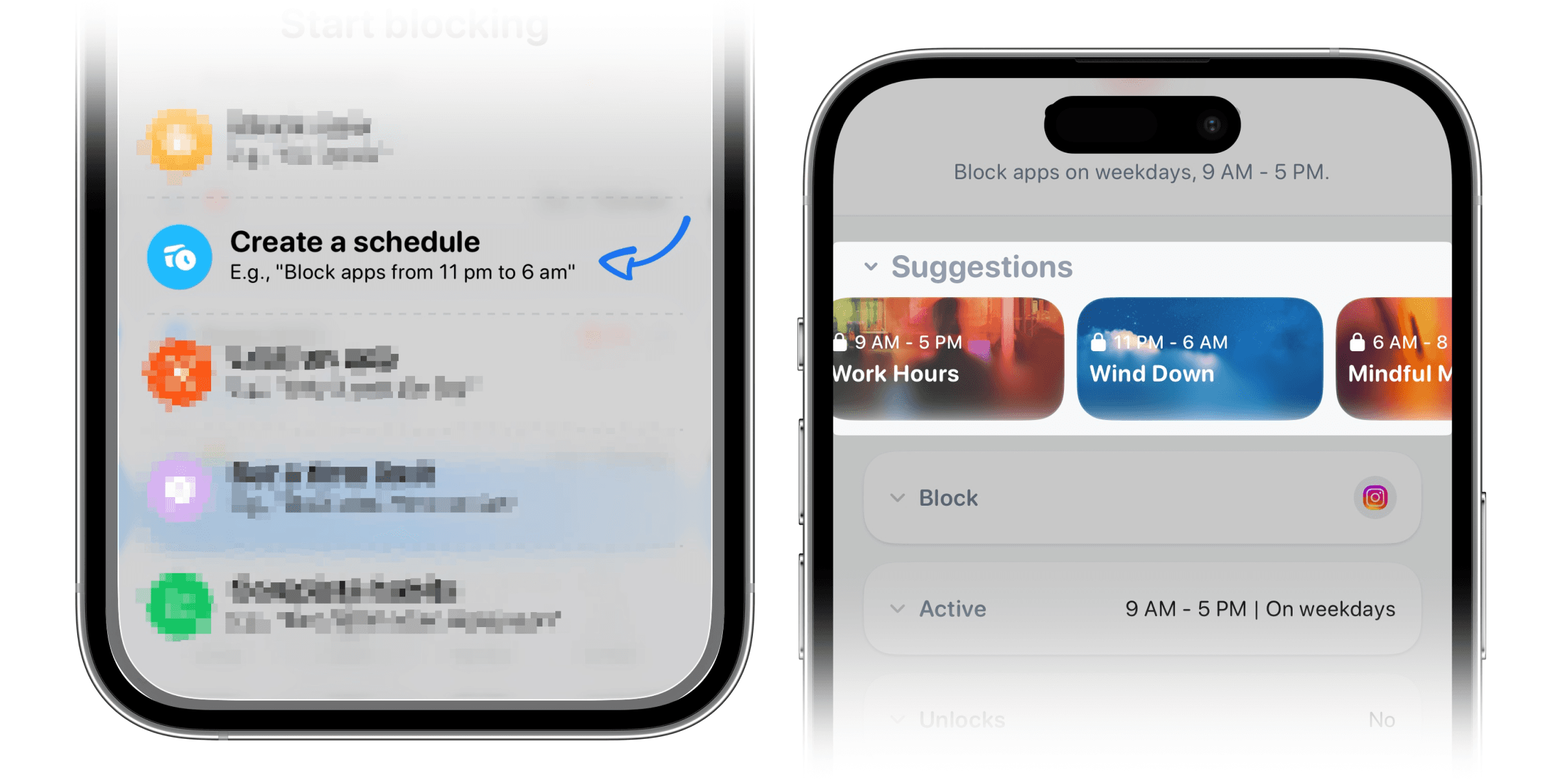
For that, you can also use the Jomo app (perfect for this kind of scenario!). In just 10 seconds, set up a screen-free evening by creating a Session that blocks your apps from 9 PM to 7 AM the next morning.
We don’t really recommend quitting “cold turkey”. For us “digital detox” doesn’t have to be total abstinence. It can also mean setting daily limits (e.g., ≤2 hours of screen time). Small reductions usually make bigger differences.
Replace Phone Use with Meaningful Activities
It’s easier to cut down on phone time if you have other activities that nourish you. Physical activity is a great improvement for your well‑being. Options include:
🏃♀️ Physical activity: Exercise releases endorphins and reduces stress. Even a short walk can boost mood.
👩🎨 Creative hobbies: Reading, drawing, cooking or learning a new skill engages your mind.
🙋♀️ Face‑to‑face interaction: Plan coffee with friends or family time without devices.
🧘♀️ Mindfulness or meditation: Practices that cultivate awareness help break the autopilot of picking up the phone.
Spending less time on your phone isn’t about rejecting technology; it’s about reclaiming your attention and prioritizing what matters most. Research shows that reducing screen time—whether through structured detoxes, increased friction, physical activity or simple habit changes—can improve mental health, enhance work satisfaction, reduce anxiety and depression and protect your sleep .
The Takeaway 🍔
Habits do not change overnight; the process can take weeks or months. Start small: track your usage, turn off a few notifications and set one phone‑free time each day. Celebrate the victories when you spend more time with friends, read a book or simply enjoy a moment of quiet without a screen. If you slip up, be compassionate with yourself and try again.
Thanks for reading this far. I hope this helped you understand your habits a little better and maybe even inspired you to change them. If that’s the case, you can use my referral code to get a 14-day free trial of Jomo: FG2HA9. Feel free to give it a try.