Unplug
4 min
5 Tips to Improve Your Attention Span in 2026
A goldfish has an attention span of 9 seconds. Humans? Just 8 seconds. No, you're not dreaming. We are officially one second worse than a goldfish in staying focused. But how did we get here? More importantly: how do we bounce back?
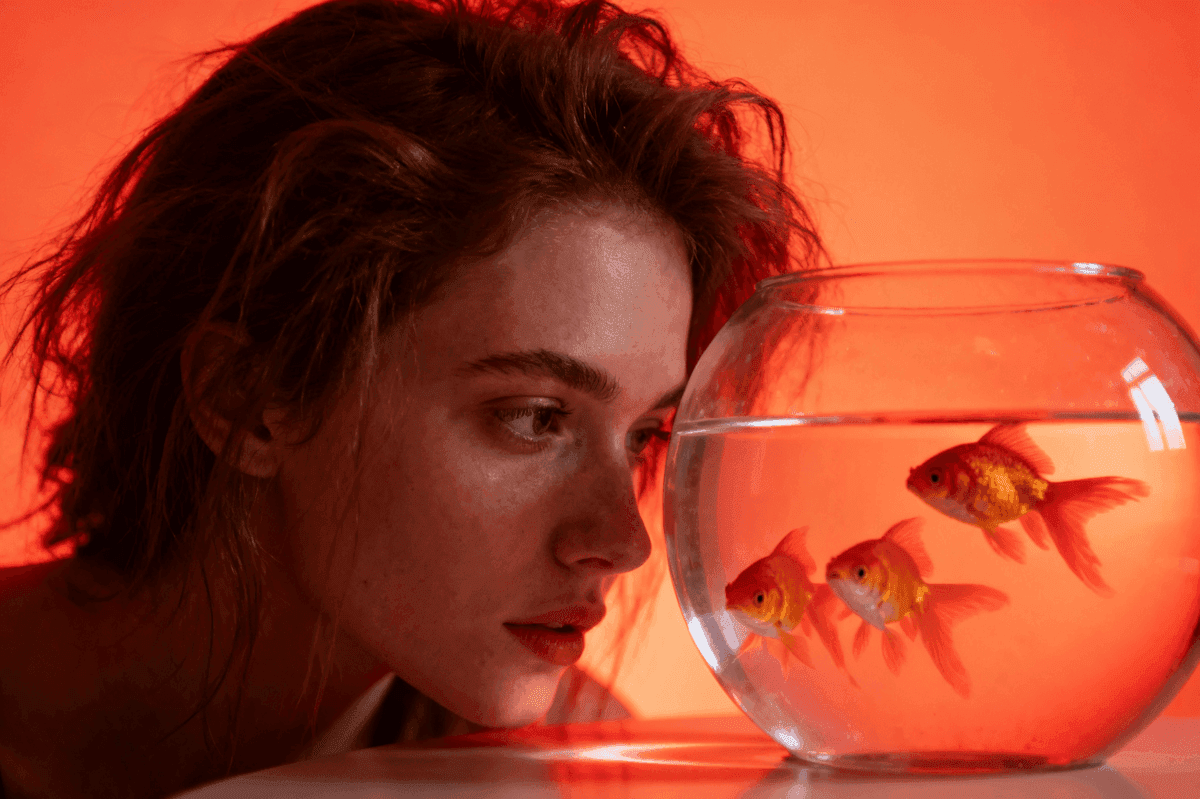
Yes, it's true—our concentration and attention skills are in freefall. We’re no longer truly capable of focusing for long, and our optimal attention span barely stretches beyond 8 seconds. We're living through this alarming reality, and unfortunately, it's not slowing down anytime soon.
The problem is that many companies have built their business models around our attention. In other words, our time and focus are monetized by the services we use. The longer they keep us on their platforms, the more money they make. And these businesses are highly profitable. 🤑
So, everything's on the table: algorithms, enticing interfaces, reward systems, gamification... you name it! The result? It’s hard to resist, especially since they exploit so many cognitive biases. So, the big question is: how can we avoid damaging our attention span in this world full of distractions?
But before we continue, it might be time for me to introduce myself! I’m Thomas, co-founder of Jomo. Over the last 4 years, I’ve spent most of my time thinking about screen time habits and building an app that’s used by more than 250,000 people.
Based on our most recent 100,000 users, the average Jomo user reduces their daily screen time by about 1 hour and 39 minutes.
Not because they suddenly gain superhuman willpower, but because they change a few small habits that make mindless scrolling harder and intentional phone use easier.
What’s Affecting Our Attention Span?
Today, in 2024, we can say with certainty that screens are the number one reason for our diminishing attention span. These services are designed to grab our attention, “sell” us content, and steal our time. Every effort is made to bring us back as quickly as possible—notifications, alerts, daily reminders. There are countless ways they remind us that these services exist and that we need to return. So, how much uninterrupted time do we really have? In a recent study, Gloria Mark explains that the average uninterrupted time went from 2 minutes 30 seconds in 2004 to just 47 seconds in 2024.
But beyond the constant reminders, it’s also the content we consume that’s becoming increasingly problematic for our attention. Fifteen seconds—that’s the recommended length if you want your content to be shared more often on social media. Why? Because content under 15 seconds has a 37% higher chance of being shared. And yet, of those 15 seconds, 20% of viewers have already moved on to the next video within the first 10 seconds.
Not only is content shorter, but there’s so much of it that users can simply scroll for the next thing. It’s estimated that TikTok hosts around 8.6 billion videos per year, which breaks down to 16,000 videos per minute. And who wouldn’t want to be one of TikTok’s 220,000 content creators today?

How to Fight Back? Our 5 Tips for Protecting Your Attention Span
This battle isn’t someone else’s to fight for you, and you can’t wait for industries to start caring. It’s up to you to take control. If you’re motivated, you’ll find the tools that work for you, no doubt. But if you’re feeling lost and don’t know where to start, here are our 5 tips for protecting your attention span:
🫨 Stop/Limit Multitasking
There’s a myth—yes, a myth—that says the more tasks you complete in a day, the more efficient and productive you are. The key is supposedly mastering the art of multitasking.
Sorry to disappoint: that’s not true. Studies show that the brain isn’t equipped to handle multiple tasks at once. It doesn’t have the structure to process them simultaneously. It processes one, then moves on to the next.
If you think you can do several things at once, you’re actually just “task-switching,” rapidly jumping between task A and task B. This can have more negative effects than it seems. According to Gloria Mark, it takes an average of 25 minutes for the brain to fully transition from one task to another.
“Multitasking creates a dopamine-addiction feedback loop, effectively rewarding the brain for losing focus and for constantly searching for external stimulation.” — Daniel J. Levitin
The ideal approach is to focus on one task at a time, develop deep work, and aim for work sessions of 2–3 hours without interruptions.
🔒 Block & Protect Your Time
One of the biggest issues we face today is poor organization. Some parts of the day are more or less planned, others aren’t. The problem is that the services we use know this and have turned it to their advantage. Who can resist checking TikTok while in the bathroom? Or scrolling through a few stories while waiting for the bus? Almost no one!
The same goes for work: if you don’t have a clear plan for the day, those little gaps are often filled by... checking your phone. So how do you avoid that?
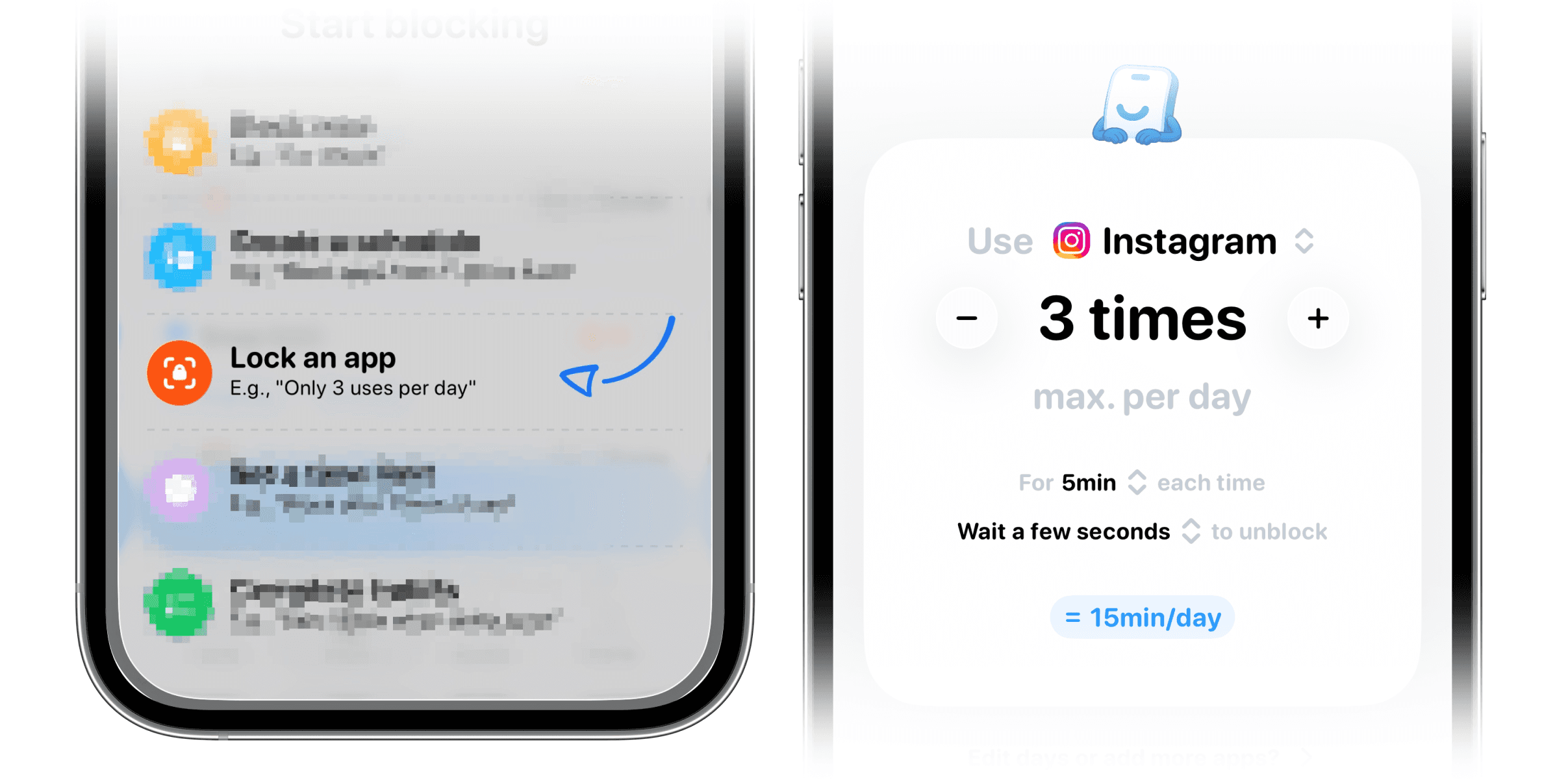
You can try the Jomo app, available for iPhone, iPad, and Mac. Jomo’s goal is to help you develop a more intentional use of your phone. We recommend one of the methods that works best in our community: the "Lock" method. In short, the app of your choice is blocked by default. When you want to use it, a screen pops up. If you really feel the need, you’ll have to request a break from Jomo and specify how long you’ll use the apps. Once the time is up, Jomo will block them again.
🍅 Pomodoro Method
Symbolized by a tomato, the Pomodoro technique breaks work into intervals separated by short breaks. At first, it may seem contradictory to take breaks when you’re trying to focus more... But actually, think again—good breaks equal good productivity.
It’s simple. Set clear, achievable goals for a 25-minute work period. Then, take a timer and set it for 25 minutes. Work until the timer goes off, then take a 5-minute break. Ideally, stay away from screens: grab a snack, stretch, water plants, or relax outside.
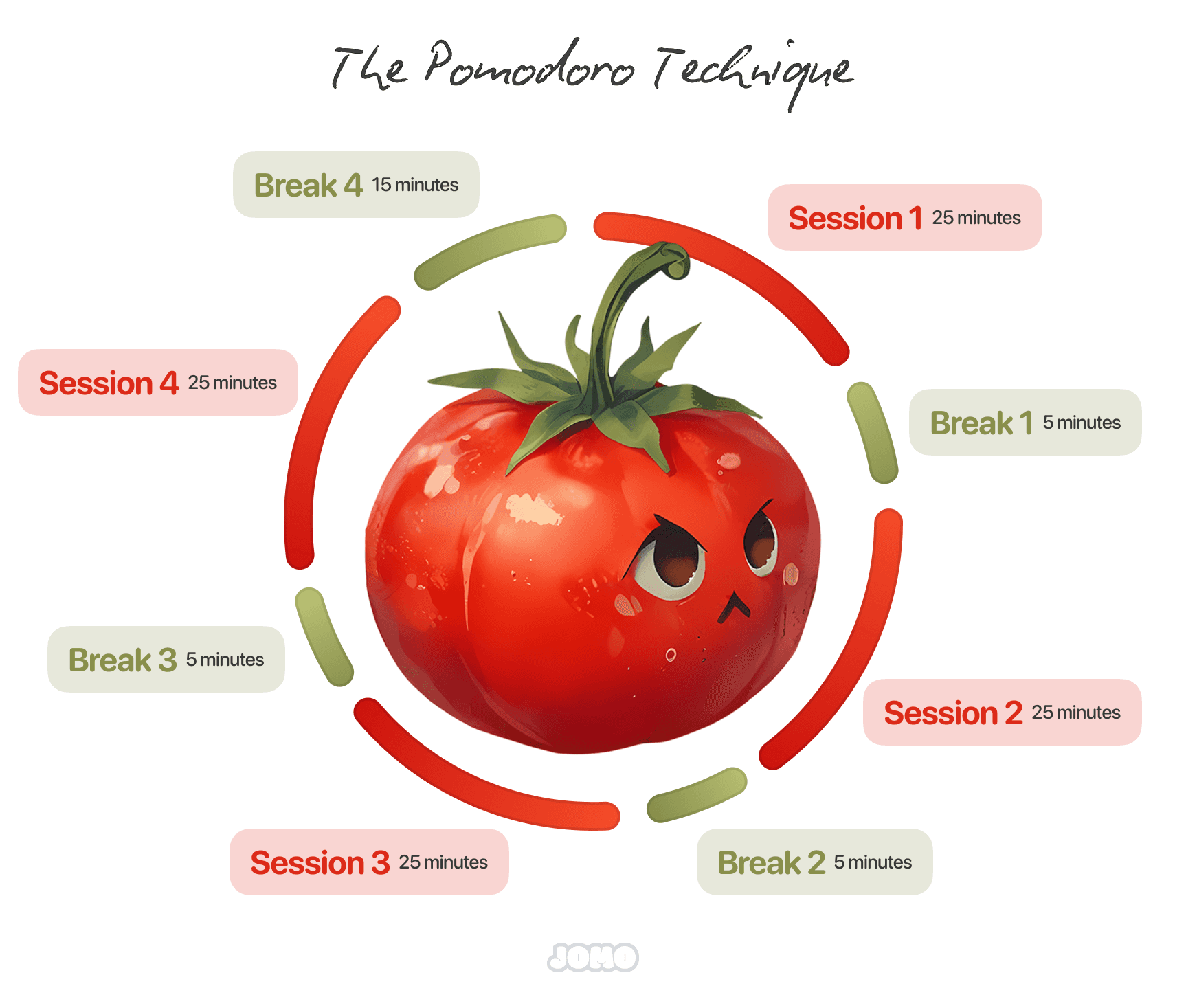
Repeat this four times, then after the fourth session, take a longer break—15 minutes.
"A Pomodoro cannot be interrupted: It signifies 25 minutes of pure work. A Pomodoro cannot be divided: Half a Pomodoro does not exist." — Francesco Cirillo
Studies show this method makes big workloads more manageable by creating clear rules for your brain. Knowing it’s allowed a break helps it push through focused work!
🌱 Healthy Lifestyle Choices
Everything you do, from the simplest actions to the most complex, shapes your personality and who you are. If your daily life is spent consuming quick content and breaking news, these habits will inevitably affect your mental health and brain capacity.
"Most enjoyable activities are not natural; they demand an effort that initially one is reluctant to make. But once the interaction starts to provide feedback to the person's skills, it usually begins to be intrinsically rewarding.” ― Mihaly Csikszentmihalyi
If you want to protect your attention span and optimize your focus, you need to make choices, take decisions, and engage in activities that support this goal. Of course, it's easy and even tempting to go on those platforms. They are designed, improved, and constantly optimized to keep you hooked.
It’s up to you to say “stop” and dedicate your time to activities that will stimulate your brain (reading, meditation, reflection through board games, for example… The possibilities are endless).
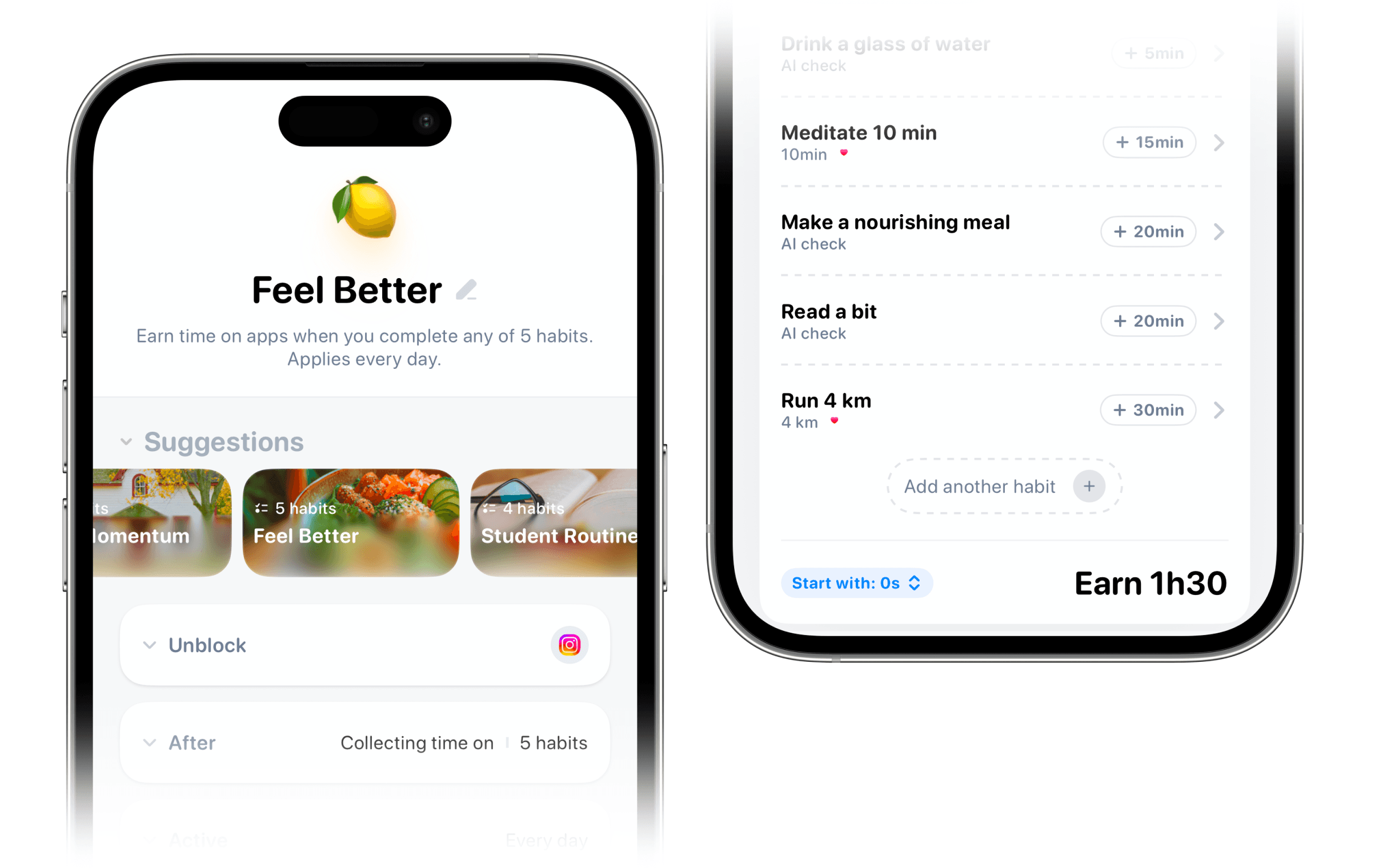
You can use the Jomo app once again. We're convinced that your phone can help enhance your brain's capabilities when used wisely. That's why we created a blocking rule called "Routine". The concept is very simple: you must first do tasks or use positive apps (of your choice) before you can access to distracting apps.
🔌 Disconnect from Time to Time
Living in constant distraction is exhausting. But the tricky part is that you might not feel this exhaustion right now. And that’s normal. But it will hit, sooner or later.
Your brain is a muscle, and like all muscles, if it's not trained, it weakens. To regain its full capacity, you’ll have to work twice as hard if you’ve let it deteriorate.
“Attention is like energy in that without it no work can be done, and in doing work is dissipated. We create ourselves by how we use this energy." ― Mihaly Csikszentmihalyi
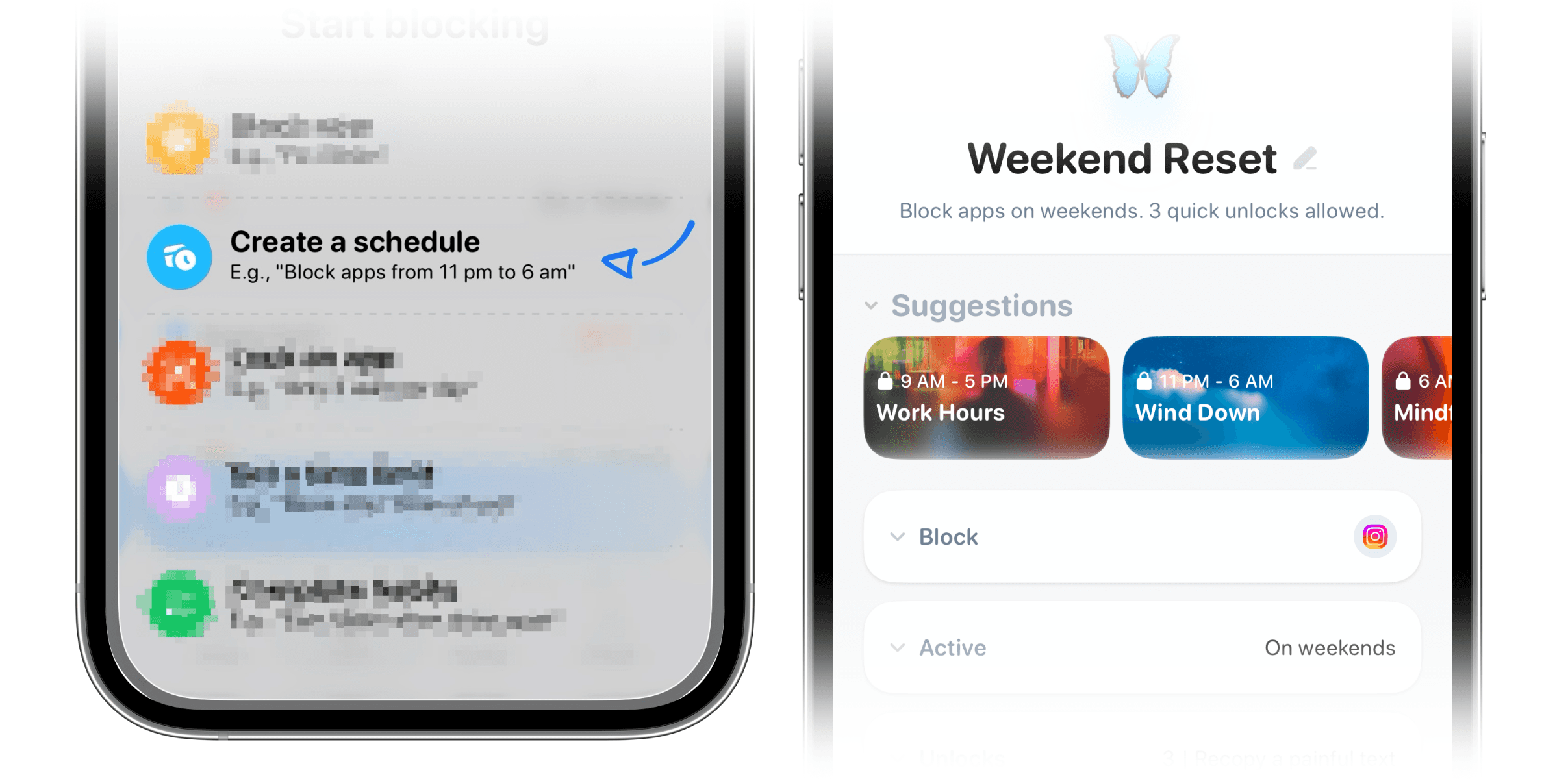
So, start by planning small “off-screen” moments during your week. You can schedule Jomo to block your apps for a set period. During this time, engage in stimulating activities: learn chess, read, do puzzles, or even exercise!
Your brain is your most valuable asset—don’t destroy it with mindless scrolling. Protect it, protect yourself, and don’t let yourself become more distracted than a goldfish.
Thanks for reading so far! If you want to give my app Jomo a try, download it from the App Store and use my code JZ5RP5 to try the Plus plan free for 14 days.